#1 Overall Winner
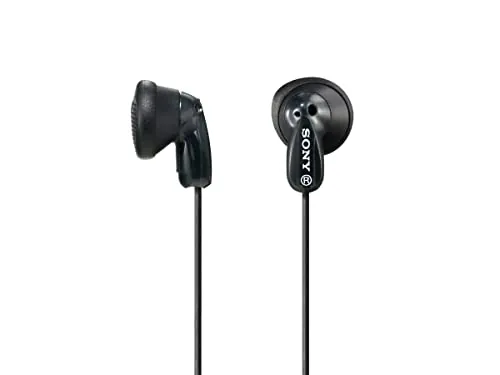
Sony MDRE9LP/BLK Ear Buds,Black
- Excellent value focus based on scoring, with standout value and portability results for basic wired listening.
Comparison
The Sony MDR-E9LP (MDRE9LP/BLK) and MDREX15AP are both budget-friendly wired earbuds with 3.5 mm connectivity and very large review histories. The MDR-E9LP leans toward simple, lightweight listening with standout value, while the MDREX15AP adds a microphone/controls and tends to score higher for audio performance and usability. If you need calls and a more tunable in-ear fit, the MDREX15AP is usually the better match; if you want the simplest low-cost wired option, the MDR-E9LP is hard to ignore.
#1 Overall Winner
Contender
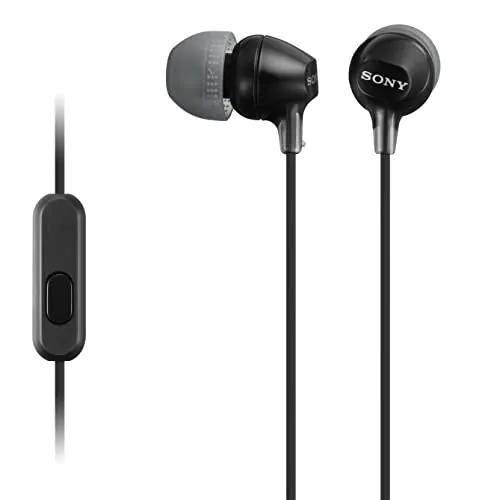
Choose the Sony MDREX15AP if you want a budget wired earbud with an integrated mic/controls, multiple tip sizes for fit, and stronger audio/usability scoring.
Choose the Sony MDR-E9LP if you want a no-frills, lightweight wired earbud that scores exceptionally well for value, and you’re okay with more mixed feedback on fit and sound.
Overall winner
Depends on your needs
| Metric | Sony MDR-E9LP (MDRE9LP/BLK) | Sony MDREX15AP (MDREX15AP/B) | Winner | Explanation |
|---|---|---|---|---|
| Overall score | 72 | 72 | Tie | Both score similarly overall; strengths differ by use case. |
| Audio approach | Hybrid driver system; mixed sound feedback | 9 mm driver; many reviews praise clear sound | MDREX15AP | Higher audio score and stronger consistency in sound-related praise. |
| Microphone & controls | Not emphasized in listing | Integrated mic + playback control | MDREX15AP | More practical for calls and media control. |
| Fit tuning | Silicone earbuds; extra earbuds included | S/M/L silicone tips included | MDREX15AP | Multiple sizes make it easier to dial in a seal and comfort. |
| Noise control | None listed | Sound isolation (passive) | MDREX15AP | Passive isolation is a potential advantage, though user results vary. |
| Portability (weight) | 6 g | 3 g | MDREX15AP | Both are light; MDREX15AP is lighter on paper. |
| Connectivity | Wired 3.5 mm | Wired 3.5 mm | Tie | Same fundamental connection type; no pairing/charging. |
| Value positioning | Very high value scoring | Strong value but lower than MDR-E9LP | MDR-E9LP | Scoring indicates MDR-E9LP is the more value-focused option. |
| Customer satisfaction | 4.2/5 from 10,858 reviews | 4.3/5 from 28,294 reviews | MDREX15AP | Slightly higher rating and much larger review count, with similar satisfaction scoring. |
| Durability feedback | Mixed; some long-life, some early breakage | Mixed; multiple reports of breaking after ~1 month | MDR-E9LP | Both are mixed, but MDREX15AP has more repeated durability concern in the summary; MDR-E9LP scores higher for durability/reliability. |
For wired earbuds, real-world performance is mostly about how consistently they deliver acceptable sound across devices and how stable the fit is during normal movement. The MDREX15AP scores higher for performance and audio quality, and many reviews describe clear sound with satisfying bass for the price. The MDR-E9LP can also satisfy for casual listening, but customer sentiment is more split, with some users reporting a tinny presentation or weaker bass.
Fit is part of performance too: the MDREX15AP’s included tip sizes make it easier to get a seal, which can affect both bass and perceived loudness. The MDR-E9LP is often comfortable, but has more mixed fit feedback, including reports of earbuds falling out for some users.
Both earbuds show mixed reliability sentiment typical of budget wired models. The MDR-E9LP scores higher for reliability and has many reviews describing them as dependable, but it also has reports of early failure. The MDREX15AP has repeated mentions of quality inconsistency (including one earbud failing) and durability concerns, which align with its lower reliability score.
Both earbuds are easy to use because they’re wired: plug into a 3.5 mm jack and start listening. The MDREX15AP scores higher for usability, helped by its inline controls and included tip sizes that can reduce trial-and-error on fit. The MDR-E9LP still rates well for usability and has a very strong setup score, but it lacks the same call-and-control convenience.
One usability consideration from reviews is cable handling: the MDREX15AP’s Y-type cord and cord-slider are intended to reduce tangles, though some users still describe the cable as thin. The MDR-E9LP’s wire is also described as thin and easy to maneuver by some reviewers.
The MDR-E9LP is a minimalist, lightweight in-ear earbud intended for straightforward portability, with a rounded-tip earpiece shape. The MDREX15AP takes a more modern “in-ear seal” approach with hybrid silicone tips (multiple sizes included) and a two-tone style option in the line (your variant listed is black). In practice, the MDREX15AP’s tip options make it easier to tailor comfort, while the MDR-E9LP may feel simpler but can be more dependent on your ear shape for stability.
Neither model is positioned as rugged, and both have mixed durability sentiment—common for low-cost wired earbuds where cable strain can be an issue. The MDR-E9LP scores slightly higher for build quality, reliability, and durability, and some customers report long-term use. The MDREX15AP has a larger body of reviews overall, but its aggregated feedback specifically flags multiple reports of early breakage and occasional quality issues (such as one earbud not working).
Neither is a guaranteed long-term investment, and buyer feedback indicates that durability can vary significantly. The MDR-E9LP has slightly stronger durability scoring and some users report they last a long time (including repeat buyers over many years), though others report quick breakage.
The MDREX15AP has multiple durability complaints in the aggregated summary (including breaking after about one month for some), even while other buyers repurchase them and consider them acceptable for the price. If you’re hard on cables (snagging, yanking, sleeping on them), expect wear sooner.
Both are excellent portable options: small, light, and easy to pack. The MDREX15AP is listed at 3 g and scores extremely high for portability, while the MDR-E9LP is also very light at 6 g with a very strong portability score. If you want a pair to stash in a bag, desk, or travel kit, either works—your decision should hinge more on the need for a mic and fit options.
The feature gap is clear. The MDREX15AP includes an inline microphone and smartphone playback control, making it more useful for calls, meetings, and switching tracks without touching your device. It also includes multiple ear tip sizes to fine-tune fit.
The MDR-E9LP focuses on basics: a wired 3.5 mm connection, lightweight build, and silicone earbuds. If you don’t need a mic/remote and want the simplest possible setup, this may be enough—but it’s less versatile for modern phone-first use.
Setup is a major strength for both: plug them in and they work. The MDREX15AP and MDR-E9LP both score extremely high for setup, reflecting the simplicity of wired earbuds. The only real “setup” work is choosing the right ear tip size (more relevant on the MDREX15AP) and ensuring your device has a 3.5 mm port or the right dongle.
Both earbuds are compatible anywhere a 3.5 mm audio jack is supported. The MDREX15AP is listed as compatible with smartphones and includes a mic/remote that may be important for call use, while the MDR-E9LP is listed for portable media players and is often used as a simple wired option.
If you plan to use them with newer phones, confirm you have the correct adapter and that your device supports audio output through it. For computer use, verify whether your PC requires separate mic/headphone jacks or a combo jack when choosing a mic-equipped earbud.
The MDREX15AP is the more consistent audio pick on paper and in scoring: it has the higher audio-quality score and reviews commonly describe clear sound with satisfying bass for the price. Sony’s product details also emphasize bass response and treble/midrange clarity from its 9 mm drivers and neodymium magnets.
The MDR-E9LP can still sound good for many listeners—especially for podcasts and casual music—but its review sentiment is more divided. Some buyers report a tinny character or lack of bass, while others consider it excellent for the money. Fit can strongly influence bass and tonal balance, so individual results may vary.
Both models use a wired 3.5 mm headphone jack, which keeps things simple and avoids Bluetooth pairing or battery concerns. Device compatibility can depend on whether your phone, tablet, or laptop still has a 3.5 mm port; if not, you’ll need an adapter/dongle.
The MDREX15AP is explicitly positioned for smartphone use and includes a mic/remote for playback control. The MDR-E9LP is also straightforward for wired listening but is listed as compatible with portable media players and doesn’t emphasize phone-call controls in the same way.
As wired earbuds, both avoid battery management entirely, which is a practical “efficiency” advantage versus wireless models. In the provided scoring, both rate very highly for power efficiency, reflecting that they don’t require charging and have minimal operational overhead.
Both products are positioned as budget earbuds with strong customer satisfaction at the price. The MDR-E9LP scores higher for value, mainly because it delivers a very simple wired experience with good portability and broad acceptance for basic listening.
The MDREX15AP is still strong value if you will use its mic/controls and benefit from the included tip sizes. However, durability and mic consistency are recurring concerns in reviews, so “value” depends on how demanding your use is and how hard you are on cables.
Both are Sony products and score similarly high for brand trust. Each also has a very large review base, which can increase buyer confidence for budget purchases. The practical difference is less about brand and more about model-specific tradeoffs: the MDREX15AP adds features (mic/remote, tip sizes), while the MDR-E9LP is a simpler, value-driven design.
Customer satisfaction is strong for both given their price class. The MDR-E9LP holds a 4.2/5 average from 10,858 reviews, with many customers praising comfort and reliability, but with mixed sound, fit, and durability feedback. The MDREX15AP has a slightly higher 4.3/5 from 28,294 reviews, with frequent praise for comfort and value, plus mixed opinions on noise isolation, mic quality, and durability.
No clear warranty or support policy details are provided in the product data. The scoring indicates limited clarity/strength in warranty/support for both models, with the MDREX15AP slightly higher. If warranty coverage matters, check the Amazon listing’s warranty section, return window, and whether you’re buying from an authorized seller.
The Sony MDR-E9LP and Sony MDREX15AP land at the same overall score, but they serve slightly different buyers. If you want the more versatile everyday option, the MDREX15AP is the better choice thanks to its stronger audio/usability scoring, built-in mic and controls, and multi-size ear tips that help you dial in comfort and seal.
The MDR-E9LP remains a strong alternative if you don’t need a microphone and want a straightforward, value-driven wired earbud that’s easy to replace and carry. In either case, the biggest “watch-outs” are the mixed durability feedback and making sure your device setup supports 3.5 mm audio (or the correct adapter).
Overall winner
Depends on your needs
Based on the provided scoring, they tie on overall score. The better choice depends on your needs: the MDREX15AP scores higher for audio quality, usability, connectivity, and features (notably the built-in mic/controls), while the MDR-E9LP scores exceptionally well for value and remains a simple, lightweight pick for basic wired listening.
The Sony MDREX15AP is the safer pick for sound based on its higher audio-quality score and many reviews describing clear, robust sound and strong bass for the price. The Sony MDR-E9LP has more mixed sound feedback—some users like the sound, while others describe it as tinny or light on bass—so results may depend more on fit and expectations.
Neither product is listed with active noise cancelling. The MDR-E9LP specifies Noise Control: None. The MDREX15AP lists Sound Isolation, which is passive isolation from the in-ear seal, but customer feedback is mixed on how much outside noise it actually reduces.
The Sony MDREX15AP is the better option for calls because it includes an integrated microphone and smartphone playback controls, and some reviewers specifically mention good call performance. That said, microphone feedback is mixed, so results can vary by device and fit. The MDR-E9LP listing does not emphasize a mic feature.
Comfort is positive for both, but they take different approaches. The MDREX15AP includes small/medium/large silicone tips to fine-tune fit, which can help comfort and stability. The MDR-E9LP is frequently described as comfortable, but fit is more mixed overall, with some customers reporting it can fall out depending on ear shape.
Both have mixed durability sentiment. The MDR-E9LP has a slightly higher durability/reliability scoring than the MDREX15AP, and some customers report long-term use. However, the MDREX15AP also has many repeat buyers while still showing recurring complaints about breaking after a month for some users. If durability is critical, consider handling habits and cable strain.
Both are wired 3.5 mm earbuds. If your phone lacks a 3.5 mm port, you’ll likely need an adapter/dongle. This is also reflected in user feedback (for example, using a connector with a phone). Compatibility can vary by phone and adapter type, so it’s worth confirming your device supports audio output through the chosen adapter.
Both are positioned as budget wired earbuds with strong customer satisfaction for the price. The MDR-E9LP has the higher value scoring and is often treated as a basic, replaceable everyday pair. The MDREX15AP can still be compelling value if you need the mic/controls and prefer having multiple tip sizes included, even though durability feedback is a common concern.
Check our rankings and expert guides to find the best electronics products for your goals.