#1 Overall Winner
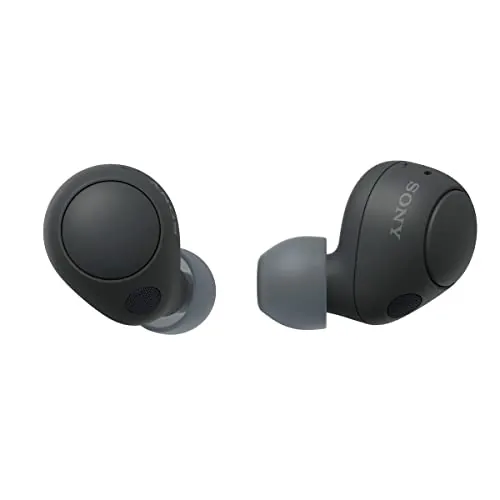
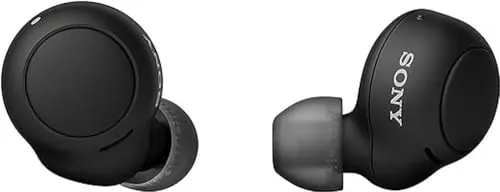
Sony WF-C500 True Wireless Earbuds
- Strong overall balance for the price with a higher overall score and strong value score.
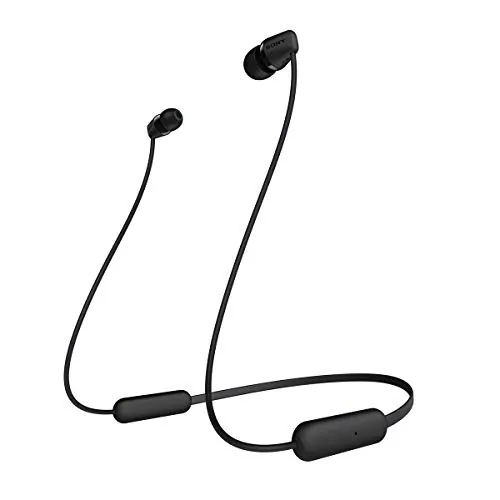
Comparison
The Sony WF-C500 and Sony WI-C200 target budget-friendly wireless listening, but they take very different approaches: true wireless with a charging case versus a neckband-style Bluetooth headset. Based on the provided scores and review data, the WF-C500 is the stronger overall option for most buyers, while the WI-C200 mainly appeals if you want a tethered design and a lower price.
#1 Overall Winner
Contender
Choose the Sony WF-C500 if you want a compact true-wireless set with strong battery performance, better-rated sound, and app EQ/DSEE tuning.
Choose the Sony WI-C200 if you prefer a neckband-style headset for convenience (harder to lose) and you’re satisfied with basic wireless listening—while accepting more mixed durability and Bluetooth feedback.
Overall winner
Depends on your needs
| Metric | Sony WF-C500 | Sony WI-C200 | Winner | Explanation |
|---|---|---|---|---|
| Overall score | Higher | Lower | WF-C500 | WF-C500 leads clearly on overall scoring in the provided dataset. |
| Audio quality | Higher | Lower | WF-C500 | Higher audio score and includes DSEE plus app EQ/presets for tuning. |
| Battery life | Higher | Good but lower | WF-C500 | Both are positioned for long battery life, but scoring favors WF-C500. |
| Portability | Excellent | Moderate | WF-C500 | True wireless buds + compact case score much higher for portability. |
| Features | Moderate | Moderate | WF-C500 | App-based sound customization and DSEE give WF-C500 an edge. |
| Connectivity stability | Mixed | Mixed to weak | WF-C500 | Both show complaints, but WF-C500 scores higher and has stronger overall satisfaction. |
| Reliability & durability | Below average | Weaker | WF-C500 | WF-C500 has reported earbud failures; WI-C200 has frequent wire/build issues and lower scores. |
| Customer satisfaction (Amazon) | 4.2/5 from 15,071 | 3.6/5 from 7,445 | WF-C500 | WF-C500 is rated higher and has more reviews supporting broad acceptance. |
| Value score | Higher | Lower | WF-C500 | Despite higher price, the scoring indicates a stronger value proposition overall. |
| Design preference | True wireless | Neckband/cabled earbuds | Depends | Choose WF-C500 for pocketable true wireless; choose WI-C200 if you want a tether to reduce loss. |
For real-world everyday listening, the WF-C500 comes out ahead on the provided performance and audio scoring, and reviews commonly describe punchy sound and strong battery endurance for the price. It also adds tuning flexibility (EQ/DSEE) that can help tailor the sound to music or podcasts.
The WI-C200 can perform well for simple use—many reviewers use it for mowing, work, or podcasts—but the experience is less consistent. The provided data includes more reports of Bluetooth instability and durability problems, which can impact day-to-day performance even if the sound is acceptable when everything is working properly.
“Speed” in earbuds usually shows up as general responsiveness and connection behavior. The provided data suggests the WF-C500 is more consistent overall (higher speed score), but it still has reports of pairing/connectivity friction.
The WI-C200 has more frequent complaints that can feel like “slowness,” such as lag during video playback and unstable Bluetooth connections, which can make the headset feel less responsive in daily use.
Reliability is a concern for both, but the WF-C500 rates better on the provided reliability and durability scores. Still, customer feedback includes recurring issues like a right earbud failing or intermittent behavior, which matches its below-average reliability scoring.
The WI-C200 is riskier for reliability based on the data: low reliability/durability scores plus repeated review themes around wires coming loose, buds failing within months, and Bluetooth instability. If you want to minimize the chance of replacement hassles, WF-C500 is the safer (not perfect) bet.
The WF-C500 scores higher for usability and is designed around everyday convenience: compact case, physical buttons, and voice assistant access. However, usability isn’t perfect—some reviews mention non-configurable button mapping and occasional charging/contact finickiness.
The WI-C200 is often described as straightforward to pair and operate, and the tethered design can be convenient for taking earbuds out frequently. The usability downside is that some owners report Bluetooth lag (lip-sync issues) and random disconnects, which can quickly become more annoying than any control quirk.
Design is the biggest practical difference. The WF-C500 is a true-wireless design with a compact case and an ergonomic surface design intended to fit snugly. It’s better suited to pocket carry and minimal cable management.
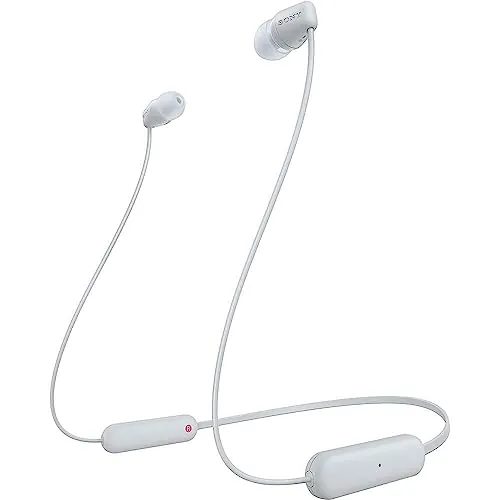
The WI-C200 uses a neckband/tethered approach. That can feel less “clean” than true wireless, but it’s also less stressful for people who worry about losing a bud. Some reviews also note physical balance/comfort quirks (e.g., parts shifting around the neck) and inconsistent in-ear stability.
Neither product is positioned as premium in the provided data, but the WF-C500 scores higher for build quality overall. Reviews still include durability concerns and early failures, so it’s not a “set and forget” recommendation.
The WI-C200 fares worse: build quality and durability scores are low, and the aggregated review overview specifically calls out poor wire quality and earbuds breaking over time. If you’re hard on gear, this is an important differentiator.
The WF-C500 has mixed durability feedback. Some users report long life, while others describe failures within a year, and the durability score is low enough to flag a real risk.
The WI-C200 looks weaker on durability in both scores and review themes, where physical wear and wire-related failures are a common complaint. If you expect heavy daily use, the provided data suggests the WI-C200 is more likely to develop physical issues over time.
If portability means pocketability and minimal bulk, the WF-C500 is the clear winner, with a very high portability score and a compact charging case meant for bags and pockets.
The WI-C200 is portable in a different way: it can be worn around your neck between uses and is less likely to be lost. But it’s not as compact as true wireless earbuds and has a notably lower portability score.
The WF-C500 has the clearer feature advantage in the provided data: it supports the Sony Headphones Connect app with presets and custom EQ, includes DSEE, and uses a charging case designed for on-the-go recharging. It also offers on-bud controls and voice assistant access.
The WI-C200 focuses more on basic functionality. Its practical “feature” is really the neckband/tethered design, which some users prefer for quick on/off use and reduced loss risk. Beyond that, the data provided doesn’t list app-driven sound tuning or comparable extras.
The WF-C500 includes the Sony Headphones Connect app experience for EQ and presets, and its app-experience score is higher. Some users do mention app-related connectivity/preset issues in passing, so it’s not universally flawless.
The WI-C200 does not have app functionality described in the provided data and has a lower app-experience score, so buyers should assume a simpler, less configurable experience.
The WF-C500 is the more clearly “smart” option in the provided data, with voice assistant compatibility and app-based sound customization (presets and custom EQ). Those features are reflected in its higher smart-features and app-experience scores.
The WI-C200 is more basic overall. The provided data doesn’t highlight comparable app-based controls, and its smart-feature/app scores are lower.
Both products score reasonably for setup, with the WF-C500 slightly higher overall usability and the WI-C200 still performing adequately on setup. Many WI-C200 reviewers describe quick pairing, and WF-C500 users often say pairing is easy—until it isn’t.
Where the difference shows up is consistency: WF-C500 has some reports of iPhone pairing and charging-case contact quirks, while WI-C200 has more frequent Bluetooth stability complaints after initial setup.
The WF-C500 lists broad compatibility (smartphones, laptops, tablets, smart speakers, TVs, telephones, and car audio systems). Despite that, the review summary notes pairing issues (particularly with iPhone), so real-world compatibility may vary by device.
The WI-C200 edges ahead on compatibility scoring, and several reviewers mention easy connection to phones (for example, Samsung). Still, Bluetooth stability complaints can undercut that advantage in practice.
Audio is one of the clearest wins for the WF-C500. It scores higher for audio quality and adds sound-shaping tools via the Sony app (EQ presets/custom EQ) plus DSEE. Review sentiment frequently highlights solid sound, bass/volume, and good value.
The WI-C200 has more mixed audio feedback: some users find the sound great for the price and for tasks like mowing or shop work, while others call it poor. With its lower audio score and higher rate of negative durability/connectivity reports, it’s harder to count on for consistently good listening.
On connectivity, both products have caveats. The WF-C500 uses Bluetooth 5.0 with a stated 10-meter range, but the review summary includes complaints about connectivity and pairing (including iPhone pairing issues), reflected in a modest connectivity score.
The WI-C200 is more problematic in the provided review overview, with repeated reports of disconnecting and inconsistent behavior, and it scores lower for connectivity. If stable wireless performance is your top priority, neither is flawless, but WF-C500 appears more consistently acceptable from the data.
The WF-C500 leads on battery scoring and is positioned for all-day use with a charging case. Reviews frequently praise battery life, though some users report shorter real-world endurance than expected and mention needing to keep the case charged.
The WI-C200 also does reasonably well for battery in the scoring and several reviewers mention lasting through a full work shift. However, battery feedback is mixed and some reviews complain about reduced battery life compared with older pairs.
The provided scores suggest the WF-C500 is slightly more efficient overall, pairing strong battery performance with solid power-efficiency scoring.
The WI-C200 is also decent here, but with more mixed battery feedback in reviews and lower overall performance, the practical advantage goes to WF-C500 in the dataset.
Even though the WI-C200 costs less in the provided pricing, the WF-C500 rates higher for value because it combines better audio performance, stronger portability, better customer satisfaction, and app-based sound tuning.
The WI-C200 can still be “good enough” value if your needs are simple and you specifically want the neckband design. But its lower build/durability scores and more frequent quality complaints reduce its value proposition for many buyers.
Both are Sony products, so brand trust is broadly similar. In the provided scoring, the WF-C500 is higher for brand trust.
That said, customer feedback for both includes reliability and durability complaints, which can affect confidence. If you prioritize the least risky purchase within these two, the dataset (scores and higher overall satisfaction) leans toward WF-C500.
The WF-C500 shows stronger customer satisfaction in both the provided score and Amazon rating: 4.2/5 across 15,071 reviews. Praise often focuses on sound, battery life, and value, while recurring negatives include connectivity and right-earbud failures.
The WI-C200 is lower at 3.6/5 across 7,445 reviews, with more frequent complaints about durability (wires/earbuds breaking), Bluetooth disconnects, and inconsistent sound/fit. Overall sentiment is more mixed.
The Sony WF-C500 is the better overall buy in this matchup based on the provided scores and review data. It leads on audio quality, battery life, portability, value, and customer satisfaction, and it adds meaningful extras like app-based EQ/presets and DSEE—features that can improve daily listening without moving into a premium price tier.
The Sony WI-C200 is best viewed as a niche alternative: it’s cheaper and the neckband design can be more convenient for people who frequently take earbuds in and out or worry about losing a bud. However, its lower build/durability scores and more frequent complaints about disconnects and physical wear make it harder to recommend unless the form factor is your top priority.
Overall winner
Depends on your needs
Based on the provided scoring and review data, the Sony WF-C500 is the stronger overall pick (higher overall score, higher audio and value scores, and a higher Amazon star rating). The WI-C200 can still make sense if you specifically prefer a neckband-style headset and want a lower-priced option, but it scores lower in build, durability, and customer satisfaction.
The Sony WF-C500 rates higher for audio quality in the provided scores and includes DSEE plus EQ/presets through the Sony Headphones Connect app. The WI-C200 has mixed sound-quality feedback in reviews (some say it’s great, others say it’s poor). If you want more predictable tuning options, the WF-C500 is the safer choice from the available data.
The WF-C500 product data lists noise control: none, so it does not claim active noise cancelling. For the WI-C200, reviews and the listing mention “noise isolating,” which typically refers to passive isolation from the in-ear seal rather than active noise cancelling. If ANC is a must-have, neither product’s provided data clearly supports that requirement.
Both are positioned as strong on battery, but the WF-C500 scores higher for battery life and the listing highlights long, all-day use with its charging case. The WI-C200 also has a solid battery-life score and multiple reviewers mention lasting through long shifts, but battery experiences are mixed. On balance, the provided scoring favors WF-C500.
Neither looks perfect for long-term reliability based on the provided data. The WF-C500 has multiple reports of the right earbud failing and pairing issues, reflected in a low reliability score. The WI-C200 also has frequent durability complaints, especially around wire/build quality, and it scores even lower for reliability and durability. If reliability is your top concern, WF-C500 rates better but still has noted risks.
The WF-C500 offers on-bud buttons, voice assistant access, and app-based sound controls, and it scores higher for usability. That said, some owners mention quirks like non-configurable buttons and needing to keep charging contacts clean. The WI-C200 is often described as easy to pair and simple to operate, but some reviews cite lag and disconnects that can hurt daily usability.
For travel convenience, the WF-C500 is the better fit in the provided data thanks to its compact true-wireless design, pocketable case, and higher portability score. The WI-C200 can still be practical if you like having the earbuds connected by a neckband (reducing the chance of losing one bud), but it’s less pocket-friendly and has more mixed durability feedback.
While the WI-C200 is cheaper by the provided price, the WF-C500 scores substantially higher for value because it pairs stronger audio/battery performance and higher customer satisfaction with its feature set (like app EQ and DSEE). If your goal is the lowest cost for basic wireless audio, WI-C200 may fit. If you want the best overall package per the data, WF-C500 is better value.
Check our rankings and expert guides to find the best electronics products for your goals.