#1 Overall Winner
Soundcore Liberty 4 Pro by Anker
- Strong overall noise cancelling focus with a 7-sensor system and real-time adaptive adjustments.
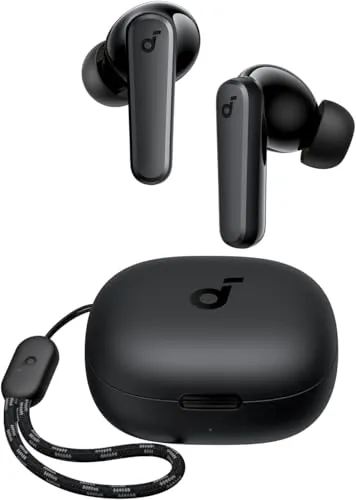
Comparison
Soundcore Liberty 4 Pro and Soundcore P20i target very different buyers: Liberty 4 Pro focuses on adaptive ANC, premium features, and higher-scoring audio , while P20i is built around simplicity, battery life, portability, and standout value . If you want real noise cancelling and a deeper feature set, Liberty 4 Pro is the clearer fit; if you want an inexpensive daily pair with strong satisfaction and battery scores, P20i tends to win.
#1 Overall Winner
Contender
Choose Soundcore P20i if you want the best low-cost everyday earbuds: strong battery scoring, compact carry, easy setup, and excellent value.
Choose Soundcore Liberty 4 Pro if you want real ANC for commuting/travel plus a more advanced feature set and higher-scoring audio performance.
Overall winner
Depends on your needs
| Metric | Soundcore Liberty 4 Pro | Soundcore P20i | Winner | Explanation |
|---|---|---|---|---|
| Overall score | 83 | 88 | P20i | Higher overall score, largely driven by value, battery, portability, and satisfaction metrics. |
| Noise control type | Active Noise Cancellation (adaptive, 7 sensors) | Sound isolation | Liberty 4 Pro | Liberty 4 Pro is explicitly ANC-focused; P20i is not listed as ANC. |
| Audio quality score | Higher (88) | Lower (84) | Liberty 4 Pro | Liberty 4 Pro scores higher and lists a more complex acoustic/driver architecture. |
| Battery life (stated) | Up to 10h buds / 40h with case | Up to 10h buds / 30h with case | Liberty 4 Pro | Both state 10 hours on the buds; Liberty 4 Pro lists a larger total with the case. |
| Battery life (score) | 84 | 91 | P20i | Scoring data favors P20i for battery life performance. |
| Charging quick top-up (stated) | 5 minutes for 4 hours | 10 minutes for 2 hours | Liberty 4 Pro | Liberty 4 Pro’s stated quick-charge benefit is stronger. |
| Features score | 90 | 78 | Liberty 4 Pro | Liberty 4 Pro is positioned as feature-rich (adaptive ANC, on-case controls, advanced audio tuning). |
| Portability score | 88 | 94 | P20i | P20i is described as compact/light with a lanyard and scores higher for portability. |
| Customer satisfaction | 84 (4.2/5 from 3,181 reviews) | 90 (4.4/5 from 105,225 reviews) | P20i | P20i has stronger satisfaction scoring and far more review volume with a slightly higher star rating. |
| Best for budget buyers | Mid-price | Ultra-budget | P20i | P20i is designed for maximum value, reflected by its value score and pricing. |
For real-world earbud performance, the largest gap is noise handling. Liberty 4 Pro is built around active noise cancelling with adaptive adjustments and is repeatedly described as strong for travel environments in the provided product details and reviews. P20i focuses on passive isolation and doesn’t claim ANC.
On sound, Liberty 4 Pro rates higher for audio quality in the scoring and emphasizes a more complex acoustic architecture, while P20i prioritizes boosted bass via 10mm drivers and relies on EQ presets for tailoring. If your “performance” priority is blocking external noise and maximizing features, Liberty 4 Pro leads; if your priority is consistent day-to-day basics for minimal spend, P20i’s overall scoring and satisfaction are stronger.
For “speed” in this category, charging and responsiveness matter most. Liberty 4 Pro highlights faster charging (including a stated 5-minute charge for 4 hours) and is positioned as a quick top-up option for travel days. P20i also offers fast charging (10 minutes for 2 hours) and emphasizes instant pairing/reconnection.
If your priority is quick charging bursts, Liberty 4 Pro has the stronger stated claim. If your priority is fast, low-friction pairing and day-to-day operation, P20i’s higher setup/usability scoring is the advantage.
Neither model is flawless on reliability in the provided data. Liberty 4 Pro’s score interpretation explicitly calls out occasional reliability issues (including mic or channel failures), and reviews include complaints like a mic stopping after months or one side losing sound. P20i also has mixed reliability feedback, including reports of one earbud failing.
If reliability risk is a major concern, P20i’s higher customer satisfaction score and enormous review volume may feel more reassuring, but both products have documented failure complaints. It’s wise to prioritize retailers/return windows you’re comfortable with.
P20i scores higher for usability and setup, and its product description emphasizes quick pairing and automatic reconnection. Reviews also commonly describe it as easy to connect and easy to live with.
Liberty 4 Pro adds convenience via the on-case touch bar/display, but usability feedback is mixed around touch/slide controls being inconsistent for some users. If you value a simpler learning curve, P20i is the safer choice; if you like adjusting ANC levels frequently and want those controls close at hand, Liberty 4 Pro’s case interface can be genuinely useful.
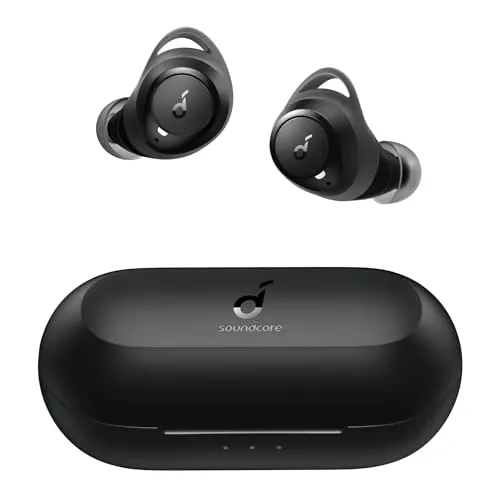
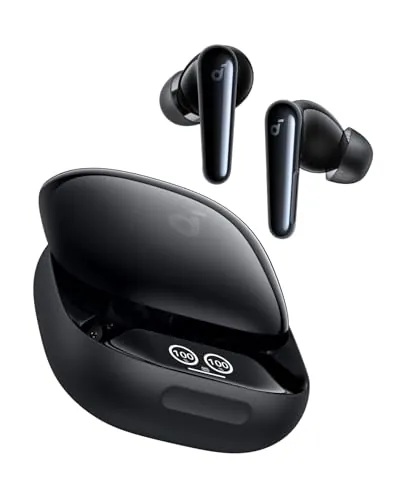
Liberty 4 Pro leans into a more premium, interaction-heavy design: in-ear earbuds plus a glossy case with a touch bar and display for adjusting ANC levels. It includes a large set of ear tip sizes, which can help dial in fit.
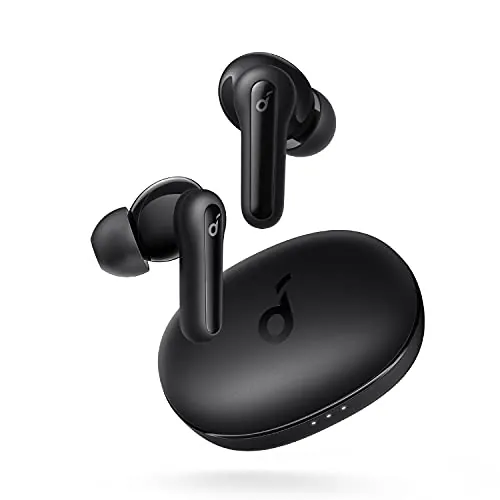
P20i is designed for portability and simplicity, with a compact case and a lanyard. If you want a small grab-and-go pair, P20i’s design and higher portability score make it easier to carry. If you want more control surfaces and a feature-forward case design, Liberty 4 Pro is the more distinctive option.
Both models have mid-range build quality scores for the category, with Liberty 4 Pro scoring slightly higher. However, each has some caution flags in reviews: Liberty 4 Pro has reliability-related complaints (including mic/channel issues), and P20i has a notable user report about the earbuds separating when dropped (plus mixed reports of one earbud failing).
If you’re particularly sensitive to long-term toughness, neither looks perfect from the provided feedback; Liberty 4 Pro may feel like the more premium physical package, while P20i’s low price and huge review base suggest “good enough” build for many, with some outliers.
Durability feedback is mixed for both. Liberty 4 Pro has moderate durability scoring and generally “normal” earbud materials (plastic enclosure/case), while P20i has a lower durability score and includes at least one review describing the earbuds separating when dropped.
For buyers who are rough on gear, P20i’s low price can make replacement less painful, but if you want a more premium-feeling build and slightly better durability scoring, Liberty 4 Pro has the edge based on the provided scores.
P20i is the portability winner. It scores higher and is explicitly described as compact and lightweight, with a lanyard for clipping to bags or keys.
Liberty 4 Pro is still portable (high portability score) but its case is more feature-rich (touch bar/display) and may be more of a “premium carry” item than the smallest possible pocket setup. If you want the easiest earbuds to toss in a pocket every day, P20i is the better match.
Liberty 4 Pro is the more feature-complete option, with adaptive ANC, on-case touch bar/display control for noise modes, wireless charging support, and a more advanced call system (6 mics plus AI and wind reduction). It also highlights sound personalization tools referenced in reviews (fit/leak style testing and EQ personalization).
P20i keeps features simpler but practical: 22 EQ presets, control customization in the app, “Find My Earbuds” beeping, and instant pairing behavior. If you want a deep feature set and ANC controls without always opening your phone, Liberty 4 Pro wins; if you want essential features without complexity, P20i is more straightforward.
Both models support the Soundcore app and have identical app experience scores in the provided data. P20i emphasizes 22 preset EQs and control customization. Liberty 4 Pro is frequently described in reviews as feature-rich in-app (including EQ, hearing-style personalization, and fit/leak testing), plus it adds certain controls on the case itself.
If you mainly want easy EQ preset selection, P20i’s approach is straightforward. If you want deeper tuning and more ANC-related controls, Liberty 4 Pro is the more expansive ecosystem experience.
Liberty 4 Pro is the more “smart-feature” oriented option in the provided scoring, mainly because of its adaptive ANC behavior, multi-mic processing, and richer control options. It also has on-case controls that reduce reliance on the phone for certain adjustments.
P20i keeps smart features lighter, focusing on practical app EQ presets, customizable controls, and a “Find My Earbuds” sound feature. If you want minimal smart features and maximum simplicity, P20i fits; if you want more adaptive behavior and control, Liberty 4 Pro is stronger.
P20i is the clearer winner for setup based on scoring and the “instant pairing” description (open case, remove earbuds, pairing mode; then auto-connect to last device). Users also often describe easy connection.
Liberty 4 Pro still scores well for setup and includes firmware updates and app-driven configuration (mentioned in reviews). That’s useful for advanced features but can feel more involved than a basic budget pair. If you want the simplest first-day experience, choose P20i.
Both earbuds list compatibility with cellphones, desktops, laptops, and tablets over Bluetooth and do not include a headphone jack. P20i reviews also remind that these are Bluetooth-only (so older non-Bluetooth PCs may need an adapter), which is a general compatibility consideration for both models.
Compatibility scores are relatively close, with Liberty 4 Pro slightly higher. In practice, both should fit typical Bluetooth device ecosystems similarly, with most differences coming from features (ANC) rather than device support.
Liberty 4 Pro leads on audio scoring and is built around an enhanced ACAA acoustic architecture with a 10.5mm bass driver, titanium-coated tweeter, and digital crossover. Reviews frequently praise crisp highs and an engaging sound, with some users comparing its sound favorably to higher-end benchmarks (while still noting preferences can vary).
P20i focuses on “big bass” with 10mm drivers and leans on app EQ presets to tailor the sound signature (including options to reduce bass). Reviews generally describe the sound as impressive for the price, but it’s positioned as less “audiophile” than premium models. If sound quality is the top priority, Liberty 4 Pro is the better bet; if price-to-sound is the goal, P20i shines.
Both earbuds use Bluetooth 5.3 with a stated 10-meter range. In the scoring, P20i rates higher for connectivity and many reviews mention easy, reliable pairing—though some connectivity issues still appear in aggregated feedback.
Liberty 4 Pro has more mixed connectivity feedback in the provided summary and a lower connectivity score. If you prioritize fuss-free connection above all else, P20i looks more consistent based on the data given; if you prioritize ANC/features and can accept some mixed reports, Liberty 4 Pro may still be worth it.
Both products state up to 10 hours of listening on a single charge. With the case, Liberty 4 Pro states up to 40 hours, while P20i states up to 30 hours.
However, battery scoring favors P20i, and reviews commonly praise its battery longevity and recharge convenience. Liberty 4 Pro also gets praise for battery life and especially fast charging, but user feedback includes at least one report of uneven drain between earbuds in a particular setup. If you want the best-rated battery experience overall, P20i leads; if you want the biggest stated total with case plus very fast top-ups, Liberty 4 Pro stands out.
Power-efficiency scoring favors P20i. Both have similar stated single-charge listening time (up to 10 hours), but P20i’s higher efficiency/battery scoring suggests it delivers stronger day-to-day endurance for the category.
Liberty 4 Pro counters with very fast charging claims, which can be more important than raw efficiency for some users. If you want fewer charging moments overall, P20i leads; if you want quick “save me” top-ups, Liberty 4 Pro stands out.
Soundcore P20i is the value winner by a wide margin in the provided scoring and context. It pairs a very low price with strong customer satisfaction and battery life scoring, plus app EQ presets and a practical “Find My Earbuds” feature.
Liberty 4 Pro can still be good value for the right buyer—especially if you will use active noise cancelling, adaptive behavior, on-case controls, and the upgraded call mic system. But if you mainly want solid sound, long battery life, and basic app tuning, P20i delivers more per dollar.
Both products come from Soundcore (Anker), so baseline brand trust is broadly similar. In the scoring, P20i is slightly higher, and its massive review volume can increase confidence for cautious buyers.
Liberty 4 Pro, as a more complex model with more advanced features, has more “moving parts” where user experiences can vary (connectivity, app behavior, and reliability reports). If you prefer the simplest expression of the brand’s earbuds, P20i is easier to recommend.
P20i leads clearly on customer satisfaction indicators: a higher satisfaction score, a higher star rating (4.4 vs 4.2), and a dramatically larger review count. Reviews often highlight sound, comfort, and battery life as standout positives for the price.
Liberty 4 Pro is still well-rated with many positive comments on sound, ANC, and battery, but it shows more mixed feedback around connectivity and longer-term issues like mic/channel failures. If you want the “safer” crowd-validated buy, P20i has the advantage.
Warranty/support details are not provided for either product beyond scoring. Based on the scores, Liberty 4 Pro rates higher for warranty/support than P20i, but both are relatively low compared with other category scores.
If warranty support is important to you, verify the seller’s return policy and any included manufacturer coverage before buying—especially given that both models have some reports of single-earbud failures.
If you’re choosing strictly by the provided overall scoring and buyer sentiment at scale, Soundcore P20i is the best overall pick. It combines very strong value, battery life, portability, and customer satisfaction, and it’s easy to recommend as a simple everyday earbud for music, videos, and calls.
Soundcore Liberty 4 Pro remains the better choice when your requirements go beyond the basics—especially if you want active noise cancelling, adaptive noise reduction, faster stated top-up charging, and a more premium feature set. The trade-off is that reviews and scoring highlight more mixed experiences around connectivity and reliability. In short: P20i for maximum practicality and value; Liberty 4 Pro for ANC and advanced features.
Overall winner
Depends on your needs
Based on the provided scores, Soundcore P20i has the higher overall score (88 vs 83), driven by standout value, battery life, portability, and customer satisfaction. Liberty 4 Pro is the better pick if you specifically want active noise cancelling and a more premium, feature-heavy design (including adaptive ANC and on-case controls).
No. Liberty 4 Pro is explicitly an active noise cancelling model and highlights a 7-sensor system with real-time adaptive noise reduction. P20i lists sound isolation (not ANC). If your priority is reducing cabin/commute noise, Liberty 4 Pro is the model built around that use case.
It depends on whether you look at stated totals or category scoring. Liberty 4 Pro states up to 10 hours on the earbuds and up to 40 hours with the case. P20i also states up to 10 hours on the earbuds, and up to 30 hours with the case. In the scoring data, P20i rates higher for battery life.
Liberty 4 Pro is designed more aggressively for calls on paper: it lists 6 mics, an AI noise-reduction algorithm, and a wind-noise reduction algorithm. P20i lists 2 mics with AI clear calls. Reviews for Liberty 4 Pro include praise for call clarity, but there are also mixed reliability reports (including mic issues after months) to keep in mind.
On scores, Liberty 4 Pro rates higher for audio quality (88 vs 84) and emphasizes a more complex driver/acoustic design (10.5mm driver, titanium-coated tweeter, digital crossover). P20i focuses on big bass from 10mm drivers and offers 22 EQ presets in the app. If you want a more feature-rich, higher-scoring audio setup, Liberty 4 Pro is the safer bet.
P20i scores higher for usability and setup and includes an “instant pairing” description (open the case, remove earbuds, they enter pairing mode; afterward they reconnect to the last device). Liberty 4 Pro remains fairly strong in setup scoring and adds on-case controls, but user feedback mentions some touch/slide interactions can be hit or miss, which may add friction for some people.
P20i is the clear value leader in the provided scoring (value score 96 vs 86) and also has far more reviews with a slightly higher star rating. Liberty 4 Pro can still be the better “value for your needs” if you’ll actually use its premium extras—especially ANC, adaptive behavior, and the more advanced call/feature set.
Both products have mixed reliability feedback in the provided review summaries. Liberty 4 Pro’s score interpretation notes occasional reliability issues like mic or channel failures, and reviews include a report of one side losing sound. P20i’s aggregated feedback also mentions some cases where one earbud stopped working. If reliability is critical, consider buying from a seller/return window you’re comfortable with.
Liberty 4 Pro is typically the better travel/commute tool because it’s built around active noise cancelling and adaptive noise reduction, and reviews mention strong ANC performance on planes. P20i can still be a good commuter option for lighter needs thanks to portability, battery life, and sound isolation—but it is not listed as ANC.
Check our rankings and expert guides to find the best electronics products for your goals.