#1 Overall Winner
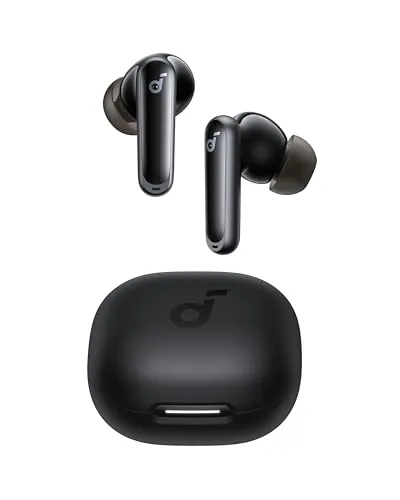
Soundcore P40i by Anker
- Excellent total battery life: rated for 12 hours per charge and up to 60 hours with the case.
Comparison
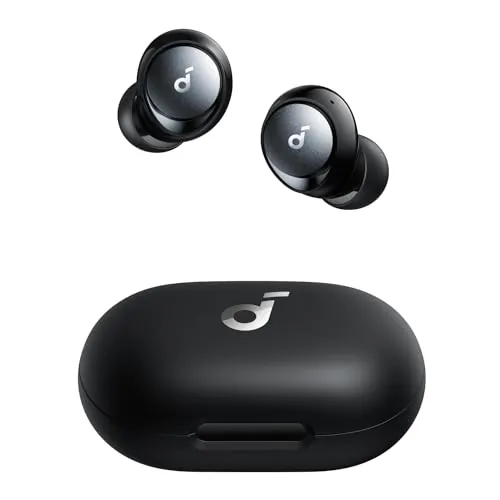
Soundcore P40i and Soundcore Space A40 are budget-friendly ANC wireless earbuds from Anker that compete on sound customization, long battery life, and everyday portability. P40i’s main advantage is its longer rated runtime and phone-stand case, while Space A40 leans harder into adaptive noise cancelling and LDAC support. Overall scores are extremely close, so the better choice depends on whether you prioritize battery/value (P40i) or a more performance-led ANC/audio package (A40).
#1 Overall Winner
Contender
Choose Soundcore P40i if you want the longest rated battery life, a bass-forward sound with BassUp, IPX5 water resistance, and the handy phone-stand case.
Choose Soundcore Space A40 if you want LDAC support, a comfort-first small/light design, fast-charge convenience, and a more performance-leaning overall tuning/ANC package.
If fit security is your biggest concern, pay close attention to the mixed fit feedback on both models and take advantage of return windows.
Overall winner
Depends on your needs
| Metric | Soundcore P40i | Soundcore Space A40 | Winner | Explanation |
|---|---|---|---|---|
| Overall score | 85 | 84 | P40i | P40i is slightly higher overall, but the gap is small. |
| Battery (single / total) | 12h / 60h (rated) | 10h / 50h (rated) | P40i | P40i leads on both single-charge and total playtime specifications. |
| Audio quality score | 88 | 89 | Space A40 | Both rate highly, with a small scoring edge to Space A40. |
| Noise cancelling positioning | Adaptive ANC | Adaptive ANC; “reduce noise by up to 98%” | Space A40 | Space A40 is more explicitly ANC-led in its claims and performance scoring. |
| Bluetooth version / range | 5.3 / 10m | 5.2 / 15m | Split | P40i has the newer Bluetooth version; Space A40 lists longer range. |
| Charging features | Wireless charging; USB-C; case is a phone stand | Wireless charging; USB-C; fast charge claim | Split | P40i adds the phone-stand case; Space A40 emphasizes fast charging convenience. |
| Fit/comfort feedback | Mixed; some report falling out | Mixed; many call them comfortable, others report falling out | Space A40 (slight) | Space A40 is positioned as smaller and lighter for all-day comfort, though fit varies for both. |
| Water resistance info | IPX5 | Water resistant listed (no IP rating provided) | P40i | P40i provides a clear IPX rating in the supplied data. |
| Value score | 92 | 90 | P40i | Both are strong values, with P40i edging it on the scoring data. |
| Customer satisfaction | 4.3/5 (15,380 reviews) | 4.2/5 (23,600 reviews) | P40i | P40i has a slightly higher star rating; Space A40 has more total reviews. |
In real-world performance terms (sound + noise reduction + daily stability), both models score well, but they lean in different directions. Space A40 has the higher performance score and is marketed around an upgraded, adaptive noise cancelling system, which aligns with review feedback that often praises its ANC and customization.
P40i performs strongly for its class as well, with particularly strong battery performance and many reviews praising sound quality and easy pairing. Where it can lag is consistency: aggregated feedback points to mixed experiences with fit, ANC strength, and occasional reliability problems, which can directly impact day-to-day performance if you’re frequently adjusting or reseating earbuds.
Reliability is a mixed area for both, but the data suggests Space A40 has more pronounced long-term reliability concerns. The aggregated summary mentions reports of earbuds stopping, and a detailed long-term review includes episodes of crackling/static, cutouts, and replacement cycles (alongside periods of strong performance and praise).
P40i also has mixed reliability feedback in the aggregated overview (including reports of stopping or not working properly), though the provided reviews include many positive experiences. If you need maximum peace of mind, treat both as “great when you get a good fit and a good unit,” and plan around return/support.
Setup appears straightforward on both models, and both are supported by the Soundcore app. In the scoring data, Space A40 rates slightly higher for usability and setup. Reviews for Space A40 frequently mention the app experience—hearing test, EQ profiles, and control customization—working well.
P40i is also described as easy to pair, but usability can be affected by touch control sensitivity and fit adjustments (with some users triggering unintended actions). If you tend to adjust earbuds often during the day, Space A40’s design and control approach may feel less fussy, while P40i can be excellent when the fit works for your ears.
The design difference is clear: P40i uses a stem-style (“tail”) in-ear design and emphasizes a multifunction case, while Space A40 is positioned as smaller and exceptionally light for comfort. Weight specs also favor Space A40 (0.04 lb vs 0.12 lb listed for P40i).
Design is also tied closely to fit. Both have mixed fit feedback, but Space A40’s emphasis on ergonomic, smaller sizing is aimed at reducing fatigue over long sessions. If you dislike stem-style earbuds or frequently wear them for hours, Space A40’s design goal is better aligned with that use case.
Build quality scores are similar in the provided scoring (both sit in the mid-range), and both use plastic enclosures. P40i has a notable durability anecdote in reviews (survived an accidental wash after drying), but this is a single user experience rather than a guaranteed outcome.
Overall, neither model is presented as a premium-materials product in the data. If long-term robustness is your top concern, the more important takeaway from the reviews is that both have some reliability complaints, so buying with a comfortable return/support path matters.
Durability scoring is slightly higher for P40i than Space A40 in the provided data. P40i also has a notable user report of surviving an accidental wash cycle after being dried thoroughly. Space A40 has fewer durability-specific claims in the provided data beyond general satisfaction and the standard portable use context.
Still, both models have mixed reliability feedback, and neither is marketed here with rugged certifications beyond P40i’s IPX5 water resistance. For durability, P40i’s clearer water rating and higher durability score give it a modest edge.
Both models are portable, but Space A40 is the more travel-friendly option on size/weight alone: it’s marketed as smaller and very light, and its listed weight is substantially lower. It also has a strong portability score.
P40i remains an easy carry and adds practical portability for media consumption via its phone-stand case. If you value the lightest in-pocket feel, Space A40 wins; if you like the idea of propping up your phone while traveling, P40i’s case is a clever advantage.
Both earbuds cover core features expected in the category: active noise cancelling, wireless charging, app-based sound personalization, and long battery life. Space A40 differentiates itself with LDAC for Hi-Res Audio Wireless and strong emphasis on adaptive ANC that tailors itself to your environment.
P40i counters with a very practical hardware feature: the 2-in-1 case that doubles as a phone stand, plus a bass-forward sound feature set (BassUp) and an explicit 6-mic/AI call setup. If you care about media consumption on the go, P40i’s case is a unique extra; if you care about codec support and deep tuning options, Space A40 has the clearer advantage.
Both use the Soundcore app, but Space A40 gets more consistent praise in the provided reviews for app features such as hearing test-based personalization, EQ presets and custom profiles, fit testing, and flexible control mapping. Its app experience score is also slightly higher.
P40i reviews also mention app value (including a volume limit feature and sound improvement after an “ear test”), but complaints about touch sensitivity can reduce the “whole system” feel if you rely heavily on tap controls.
Both earbuds lean on the Soundcore ecosystem for smart features like personalization and mode control. Space A40 has stronger review emphasis around app-driven customization (hearing test, fit test, EQ profiles, and control remapping). P40i also benefits from app features (including volume cap mentioned in a review) but has more mixed feedback on touch-control behavior.
If “smart features” to you means ongoing tuning and customization, Space A40 comes across as the more app-centric choice based on the provided reviews.
Both are typically easy to set up. Space A40 reviews mention pairing quickly after removing the small protective stickers on charging contacts, and describe the app setup as straightforward. P40i is also repeatedly described as easy to pair, with users connecting to phones and laptops without much effort.
In the scoring, Space A40 is slightly higher for setup, but in practice either should be a low-friction first-use experience for most buyers.
Both models are designed for broad everyday compatibility with phones and other Bluetooth devices. P40i explicitly lists compatibility with cellphones, desktops, laptops, and tablets. Space A40 lists compatibility with devices supporting Bluetooth 5.2 and a USB-C port (for charging).
If you plan to use LDAC, that’s a practical compatibility consideration that favors Space A40—but only on devices that support it. If you just need a straightforward pair for common devices, both are appropriate.
Audio quality is a strength for both, with Space A40 edging ahead in the score data (89 vs 88). Space A40 also promotes double-layer diaphragm drivers and LDAC, and reviews emphasize that the Soundcore app makes them highly customizable (EQ profiles and a hearing test-based sound profile).
P40i leans more explicitly into heavy bass with 11mm drivers and BassUp. Reviews often praise its sound and punch, though one detailed comparison suggests bass character and control may vary by listener and tuning. If you want codec support and a more “audiophile features” checklist, Space A40 has the clearer edge; if you want an energetic bass-forward sound and strong value, P40i is very competitive.
P40i uses Bluetooth 5.3 with a listed 10-meter range, while Space A40 uses Bluetooth 5.2 with a listed 15-meter range. Reviews for both mention easy pairing, and both are associated with multipoint-style usage (Space A40 lists multipoint; P40i has reviews describing being connected to a phone and laptop simultaneously).
In the scoring, P40i rates higher for connectivity overall. If you’re choosing purely on spec sheet “range,” Space A40 lists the longer number; if you care more about connectivity scoring and newer Bluetooth version, P40i has the advantage.
Battery is the clearest separation. Soundcore P40i is rated for 12 hours on a single charge and 60 hours total with the case, supported by many reviews praising how rarely they need charging. Space A40 is rated for 10 hours per charge and 50 hours total, and adds a strong fast-charge claim (4 hours from 10 minutes).
If you routinely go many days between charges or want a backup pair for travel, P40i’s longer rated total runtime is the more compelling battery story. If you tend to top up frequently, Space A40’s fast-charge messaging may matter more than the total-hour gap.
On the scoring data, P40i rates higher for power efficiency. That aligns with its standout battery performance and review sentiment describing long stretches between charges.
Space A40 is still strong for battery and adds fast-charge convenience, but its overall power efficiency score is lower in the provided scoring. If you want the most “set it and forget it” runtime, P40i is the better match.
Both earbuds rate as strong values for buyers who want ANC, wireless charging, and app-based tuning without moving into premium pricing. In the provided scoring, P40i has the higher value score, largely driven by its long battery specs and feature set (including the phone-stand case) relative to its category position.
Space A40 is also excellent value if you will use its differentiators—particularly LDAC, fast charging, and its comfort-first design. Value here should be judged less on the small price difference and more on which model’s features you’ll actually use day to day.
This is effectively a tie on brand: both are Soundcore by Anker, and the provided scores show identical brand trust ratings. Reviews for Space A40 include at least one detailed account of responsive support/refund behavior, while other long-term comments highlight logistical constraints depending on location.
Because both products share the same brand ecosystem and app approach, your trust decision is more about the specific model’s track record (reliability and fit) than the manufacturer itself.
Customer satisfaction is strong for both models at their price points. P40i has a slightly higher star rating (4.3/5) across 15,380 reviews, while Space A40 has 4.2/5 across a larger 23,600 reviews. In both cases, sound and battery life are frequent praise points.
For both, the recurring negatives are similar: mixed fit (some users experience slipping/falling out) and mixed reliability (some report units failing). If you’re sensitive to fit, this should be a primary decision factor.
The provided scoring suggests Space A40 has better warranty/support performance than P40i. In the review set for Space A40, there is an example of support offering a refund/replacement pathway, though there are also notes about shipping limitations depending on location.
No specific warranty terms are provided for either product in the data, so the safest approach is to verify the current return window and support process at the time of purchase, especially given the mixed reliability feedback for both models.
Soundcore P40i is the best overall pick by score, and it makes the most sense for buyers who care about long battery life above all else. The rated 12 hours per charge and 60 hours total, combined with wireless charging and the phone-stand case, create a very practical everyday package for the price.
That said, Soundcore Space A40 is an excellent alternative that may be the better choice if you prioritize adaptive ANC performance, a smaller/lighter fit, and features like LDAC and deeper in-app customization. Because both models have mixed fit and reliability feedback in reviews, the “right” decision often comes down to which design fits your ears better and which feature set you’ll actually use daily.
Overall winner
Depends on your needs
Based on the provided scores, Soundcore P40i has a slightly higher overall score (85) than Soundcore Space A40 (84). The decision is close, though: Space A40 scores stronger on performance and audio quality, while P40i stands out most for battery life and value. If your priority is long runtime, P40i tends to be the safer pick.
Soundcore P40i is rated higher for battery: up to 12 hours on a single charge and 60 hours with the case. Space A40 is rated up to 10 hours per charge and 50 hours total. If you want fewer charging cycles over weeks of use, P40i has the advantage on paper and in review sentiment.
Both earbuds focus on adaptive active noise cancelling, but Space A40 positions its system as upgraded and claims it can reduce noise “by up to 98%.” P40i’s ANC feedback is more mixed in the aggregated notes, with some users calling it superb and others unimpressed. If ANC is your top priority, the Space A40’s product positioning and performance scoring lean slightly ahead.
Both score very well for audio, but Space A40 edges it in the scoring data (audio quality 89 vs 88). Space A40 also supports LDAC for Hi-Res Audio Wireless on compatible devices, and reviews emphasize deep customization through the app. P40i highlights a bass-driven presentation with BassUp and 11mm drivers, which may appeal more to bass-focused listeners.
P40i highlights 6 mics plus an AI algorithm for clearer voice pickup, and reviews commonly mention strong call clarity. Space A40 also gets positive call-quality feedback in reviews, including remarks about filtering ambient noise during calls. If calls are a primary use, both are suitable; P40i’s call hardware is more explicitly emphasized in the product details.
Space A40 is specifically positioned as smaller and extremely light, with an ergonomic shape designed for comfort during long sessions. P40i comfort and fit are more mixed, with some users reporting a great fit and others saying they fall out or feel awkward due to the design. If comfort is the deciding factor, Space A40’s design and review themes generally align better for all-day wear.
Both models are generally reported as easy to pair. P40i’s review summary mentions straightforward Bluetooth pairing, and Space A40 reviews describe quick setup (with a note to remove the protective stickers on charging contacts before first use). In the scoring data, Space A40 scores slightly higher for setup, but neither appears unusually difficult.
P40i uses Bluetooth 5.3 and lists a 10 m Bluetooth range, while Space A40 uses Bluetooth 5.2 and lists a 15 m range. In scoring, P40i rates higher for connectivity overall. Real-world performance will depend on your phone/laptop and environment, but if you care about specified range, Space A40 lists the longer figure.
Yes—both have mixed reliability feedback in the provided data. P40i’s aggregated summary includes reports of earbuds stopping or not working properly for some buyers. Space A40’s aggregation and longer, detailed user updates also mention some units developing problems over time, though others report long stretches of stable use. If reliability is critical, consider buying from a seller/return policy you’re comfortable with.
Check our rankings and expert guides to find the best electronics products for your goals.