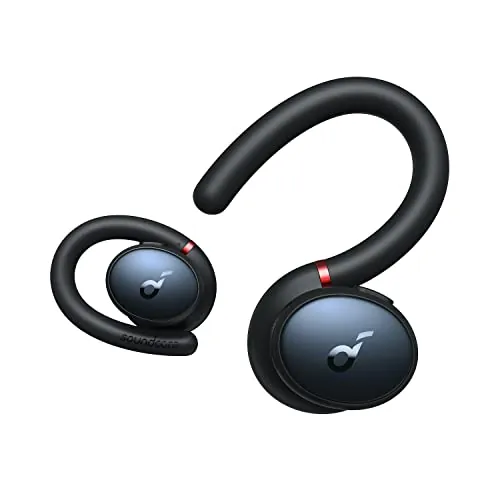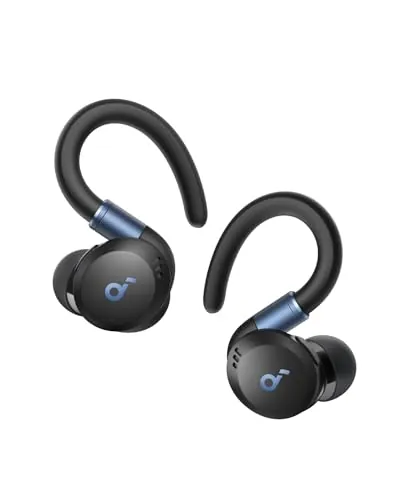
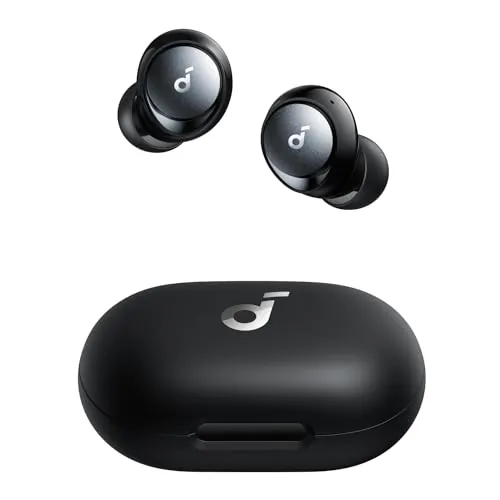
#1 Overall Winner
Soundcore by Anker Space A40 Adaptive Active Noise Cancelling Wireless Earbuds
- Strong audio performance with tuning options: double-layer diaphragm drivers plus app EQ and a hearing test for personalization.
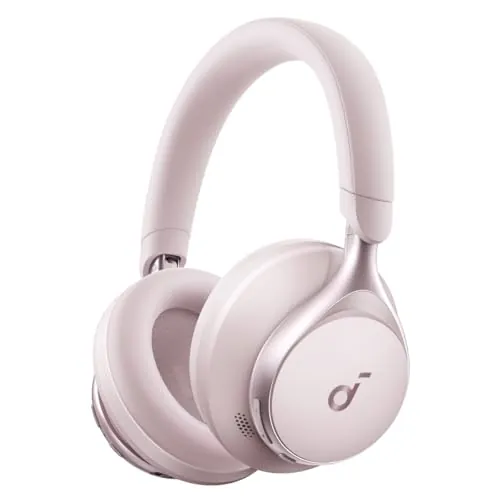
Comparison
Soundcore Space A40 and Soundcore Space One target similar buyers—strong ANC, LDAC audio, and solid value—but in two different form factors (true wireless earbuds vs over-ear headphones). Overall scoring slightly favors Space One for battery life and customer satisfaction, while Space A40 is the better pick if you want maximum portability, a charging case, and water resistance.
#1 Overall Winner
Contender
Choose Soundcore Space One if you want comfortable over-ears with very long ANC battery life, easy multi-device use, and higher customer satisfaction scoring.
Choose Soundcore Space A40 if you want compact ANC earbuds with a wireless charging case, fast-charge top-ups, water resistance, and high portability.
Overall winner
Depends on your needs
| Metric | Soundcore Space A40 | Soundcore Space One | Winner | Explanation |
|---|---|---|---|---|
| Overall score | 84 | 86 | Space One | Space One edges ahead overall in the provided scoring. |
| Form factor | True wireless in-ear | Over-ear headphones | Depends | Choose earbuds for pocketability; choose over-ears for cushioned long wear. |
| Audio quality score | 89 | 90 | Space One | Both score very high; Space One has a slight scoring edge and 40mm drivers listed. |
| ANC positioning | Adaptive ANC; “reduce noise up to 98%” | Adaptive ANC; “2X stronger voice reduction” vs Q30 | Depends | A40 emphasizes broad reduction; Space One emphasizes voice-range reduction in busy spaces. |
| Battery (key claim) | 10h single / 50h with case; fast-charge boost | 40h ANC on / 55h ANC off | Space One | Space One leads on continuous play; A40 remains strong thanks to the charging case total. |
| Portability score | 91 | 70 | Space A40 | True wireless earbuds and a small case are easier to carry than over-ears. |
| Water resistance | Waterproof (listed) | Not water resistant | Space A40 | A40 is better suited to rain/sweat scenarios based on the provided specs. |
| Bluetooth version | 5.2 | 5.3 | Space One | Space One lists the newer Bluetooth version. |
| Customer satisfaction score | 84 | 90 | Space One | Space One has higher satisfaction scoring and a higher Amazon star rating. |
| Reliability score | 62 | 74 | Space One | Both have some “stopped working” reports, but Space One scores better on reliability. |
| Value score | 90 | 92 | Space One | Both are positioned as strong value; Space One scores slightly higher for value in the data. |
In real-world performance for ANC listening, both products score strongly and are frequently praised for sound quality and noise cancelling. Space A40 scores slightly higher for performance (88 vs 87) and is positioned around adaptive ANC that adjusts to surroundings, which can be helpful when moving between indoor/outdoor/commute environments.
Space One counters with an over-ear seal and a specific focus on mid-to-high frequency noise (voices), which matters in offices and cafés. If your “performance” priority includes long continuous sessions without thinking about a case, Space One’s battery advantage can be a practical performance win even if raw performance scores are close.
Both products have the same speed score (78), and the provided data doesn’t include detailed latency or processing measurements. Reviewers for Space A40 mention good everyday responsiveness in the app and note low/no noticeable lip-sync issues while watching video on a flight. Space One is generally described as easy to connect and use. In practice, speed is unlikely to be the deciding factor between these two compared with comfort, battery pattern, and form factor.
Reliability is one of the clearer separating points in the provided scoring: Space One rates higher (74 vs 62). For Space A40, aggregated feedback explicitly mentions mixed reliability, including reports of earbuds stopping working completely, and longer-term review updates include intermittent faults on some units.
Space One also has some “stopped working” complaints in aggregated feedback, but overall customer satisfaction is higher and the reliability score is stronger. If minimizing the risk of issues is a top priority, Space One looks like the safer pick from the data provided.
Space A40 scores well for setup (88) and app experience (83), and reviews highlight straightforward pairing plus deep customization (EQ profiles, control mapping, hearing test, and fit test). The main usability downside is that earbuds can be more sensitive to fit—if seal or retention is inconsistent, ANC and bass can vary.
Space One scores slightly higher for usability overall (84 vs 81). Reviews often describe simple controls and easy multi-device use, with comfort as a major day-to-day usability advantage. However, as an over-ear model it’s physically bulkier to wear and carry, which can impact convenience for some routines.
Design is primarily about in-ear vs over-ear. Space A40 is designed to be small and light, with an ergonomic shape meant for long wear. This design can be ideal for commuting and pocket carry, but fit can vary by ear shape.
Space One focuses on comfort and style with rotating ear cups and a padded headband that spreads pressure. The trade-off is size: some customers describe the headphones as bulky or visually awkward, and the portability scoring reflects that.
Neither product is positioned as premium-metal hardware; both lean value-forward in the provided scoring. Space A40 has a slightly higher build-quality score (74 vs 72) and uses a plastic enclosure. Space One is also described as somewhat “plasticky” by some customers, and a few reviews mention concerns like housing texture noise and pad maintenance.
If build quality to you includes long-term consistency, keep in mind that Space A40’s reliability score is lower, and both products have some “stopped working” reports in the aggregated feedback.
Durability scores are close, but Space One is slightly higher (72 vs 68). Reviews for Space One include some long-term use mentions (including travel and even sleeping with them) without breakage, though maintenance like pad cleaning is a concern for some. Space A40’s durability is generally decent for the price tier, but longer-term reliability concerns can affect the “durable in practice” perception.
Space A40 is the clear portability winner (91 vs 70). As true wireless earbuds, they are easier to pocket, faster to pack, and more convenient for quick errands and commuting. Reviews also call out the small case and wireless charging convenience.
Space One is portable enough for travel (and comes with a case/bag), but the over-ear form factor and 259 g weight make it a more noticeable item in a backpack and less ideal for ultra-light carry.
Feature sets overlap in the areas most shoppers care about: ANC, LDAC, and app-based EQ and control. Space A40 stands out for true-wireless convenience features like a wireless charging case, fast-charge listening boosts, and app tools like a fit test.
Space One adds over-ear travel practicality with an included AUX cable (useful for airplane entertainment systems) and a protective case/bag. It also emphasizes “2X stronger voice reduction” versus the Life Q30, which is a feature pitch aimed at people working around conversations.
Space A40 has the stronger app experience score (83 vs 81) and reviews describe a deep, practical toolset: hearing test-based profiles, EQ presets and custom profiles, fit testing, and customizable touch controls. That level of tuning can help you shape bass and clarity to taste.
Space One also supports app control and EQ, and customers mention it as a value-adding bonus even if they don’t use every feature. If app-driven customization is central to your buying decision, Space A40 has a slight edge based on scoring and review detail.
Smart feature scoring is the same for both (72). In the provided data, both lean on Soundcore’s app-based personalization rather than voice assistant ecosystems. Space A40 reviewers highlight hearing tests, fit tests, and highly configurable controls. Space One reviewers also mention app EQ and customization, and one review mentions a real-time translation feature experience with some lag (not enough detail is provided to compare it further).
Space A40 rates higher for setup (88 vs 83). Reviews mention quick pairing (including a small first-use step like removing stickers on charging contacts) and a straightforward app onboarding flow. The fit test can also reduce trial-and-error by steering you toward the right tips.
Space One is still described as easy to connect and use, especially for multi-device users. The practical difference is that earbuds can require more initial fit adjustment, while over-ears typically involve less “seal tuning” at setup.
Space One has the compatibility advantage in the provided specs, listing support across smartphones, laptops, desktops, tablets, and gaming consoles. Space A40 lists compatibility with devices with Bluetooth 5.2 and a USB-C port (practically, to support charging and modern pairing expectations).
If you expect to plug into wired sources sometimes, Space One’s included AUX cable is also a compatibility plus for airplanes and certain desktop setups.
Both models score extremely well for audio quality (A40: 89; Space One: 90) and support LDAC for Hi-Res Wireless audio. Space A40 highlights double-layer diaphragm drivers and is repeatedly described by reviewers as having strong bass, clear mids, and bright treble—especially after app tuning.
Space One uses 40mm dynamic drivers and is commonly praised for sound quality and bass for everyday use, with at least one reviewer noting it may not match the bass emphasis of some higher-end brands, while still being strong overall. If you want a bigger “over-ear” presentation and long comfort, Space One has an edge; if you want pocketable audio with strong tuning tools, Space A40 holds up very well.
Space One has the connectivity edge on paper with Bluetooth 5.3 versus Space A40’s Bluetooth 5.2, and reviews frequently mention easy connection to multiple devices. Space A40 lists a 15-meter range and includes multipoint connection as an additional feature.
Both are clearly aimed at modern Bluetooth use, but Space One’s broader “compatible devices” list (including gaming consoles) may matter if you want one headset to cover more device types.
Battery life is a strength for both, but they win in different ways. Space A40 is built around a case-based pattern: up to 10 hours on a single charge and up to 50 hours total with the charging case, plus a fast-charge top-up (4 hours from ~10 minutes).
Space One is the better pick if you want long continuous runtime without returning anything to a case: up to 40 hours with ANC on and up to 55 hours with ANC off, and it has a stronger battery-life score (93 vs 87).
Space One rates higher for power efficiency (82 vs 77), which aligns with its standout battery-life score and long runtime claims. Space A40 remains efficient for true wireless and benefits from fast-charge top-ups and case recharging, but the scoring data favors Space One on efficiency overall.
Both products score extremely well for value (A40: 90; Space One: 92) and have strong “worth the money” sentiment in reviews. Space A40 offers strong value for buyers who want ANC earbuds with LDAC, app tuning, wireless charging, and a long total battery claim in a compact package.
Space One looks like the better overall value if you prioritize long continuous battery life, comfort, and higher customer satisfaction scoring—especially for work and travel where over-ears can be easier to wear for hours. The better “value” choice depends on whether you actually prefer earbuds or over-ears in daily use.
Both products are from Soundcore (Anker) and score well for brand trust (A40: 82; Space One: 84). Reviews for both include repeat-buyer sentiment and positive experiences with the Soundcore app and product lineup. Space A40’s reliability concerns can put more weight on brand responsiveness for some buyers, while Space One’s slightly higher trust score and satisfaction scoring suggest marginally higher buyer confidence overall.
Space One leads clearly on customer satisfaction in the provided data: higher satisfaction score (90 vs 84) and higher Amazon star rating (4.4 vs 4.2), though Space A40 has more review volume. Space One customers commonly praise comfort, ANC, battery, and value.
Space A40 feedback is also broadly positive (sound, ANC, battery, and value are recurring themes), but it has more mixed sentiment around fit/retention and reliability over time, which can reduce satisfaction for some users.
The provided scoring indicates Space A40 has a higher warranty/support score (71 vs 55). Beyond that, the data does not include specific warranty terms. If after-sales support is a deciding factor for you, it’s worth checking the listing’s warranty details and return window before purchase—especially since both products have some “stopped working” reports in customer feedback.
If you want one clear overall pick from the provided data, Soundcore Space One wins narrowly. It scores higher overall, has stronger battery-life scoring, and shows higher customer satisfaction, with many owners praising comfort and noise cancelling for work and travel.
Soundcore Space A40 is still an excellent alternative—and may be the better purchase if you specifically want true wireless portability, a charging case with long total playtime, and water resistance. The main caveats are mixed fit feedback and lower reliability scoring, so it’s best for buyers willing to dial in fit and keep an eye on return/warranty coverage. In short: choose Space One for all-day over-ear comfort and battery; choose Space A40 for pocketable ANC with strong app-driven customization.
Overall winner
Depends on your needs
Based on the provided scoring, Soundcore Space One ranks higher overall (86 vs 84). It leads in battery life, customer satisfaction, and reliability scoring, while Space A40 remains a strong option if you specifically want a smaller true-wireless design with a charging case and very high portability.
Space One has the stronger single-device battery claim: up to 40 hours with ANC on (and 55 hours with ANC off). Space A40 is designed around a charging case: up to 10 hours per charge and up to 50 hours total with the case, plus a fast-charge boost (4 hours from about 10 minutes).
Space A40 is the more portable option. It’s a compact in-ear design with a pocketable charging case and a much higher portability score. Space One is an over-ear headset (259 g listed) and is more bulk to carry, although it can be more comfortable for long seated sessions.
Space One is more likely to win for long sessions if you prefer over-ears: reviews repeatedly praise its soft padding, rotating ear cups, and headband pressure distribution. Space A40 is also positioned as comfortable and lightweight, but in-ear comfort and retention are more personal, and reviews show mixed feedback on fit stability.
Yes. Both Soundcore Space A40 and Soundcore Space One list LDAC support for Hi-Res Wireless audio. In practice, LDAC use depends on your source device and settings. Reviewers for Space A40 specifically mention using LDAC on Android and using the Soundcore app for EQ and hearing-test tuning.
Space One is specifically marketed for “2X stronger voice reduction” versus the Life Q30, targeting mid-to-high frequency noise like speech. Space A40 also emphasizes adaptive ANC and “reduce noise up to 98%” (manufacturer claim). If voice chatter is your main issue, Space One’s positioning and over-ear seal may be the better fit.
Space A40 is generally the more workout-friendly choice on paper because it’s in-ear and is listed as waterproof. Space One is listed as not water resistant, which makes it a riskier pick for sweaty training or rainy outdoor use. Keep in mind A40 fit is mixed, so tip selection matters.
Space One scores higher for reliability (74 vs 62). For Space A40, aggregated feedback notes some reports of earbuds stopping working, and longer-term updates in reviews include occasional faults. Space One also has some reports of stopping working, but overall customer satisfaction and reliability scoring are stronger in the provided data.
Space A40 scores higher for setup (88 vs 83) and has helpful app tools like a fit test and control customization (as described in reviews). Space One is also described as easy to connect and use, with simple controls and multi-device pairing praised by customers. Your preference for earbuds vs buttons-on-headphones may decide this.
Check our rankings and expert guides to find the best electronics products for your goals.