ElectronicsRanker
Menu

Review

Intel 660p 1TB NVMe SSD Review and Ranking

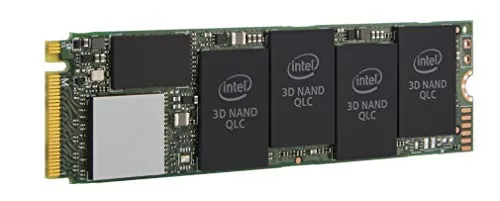
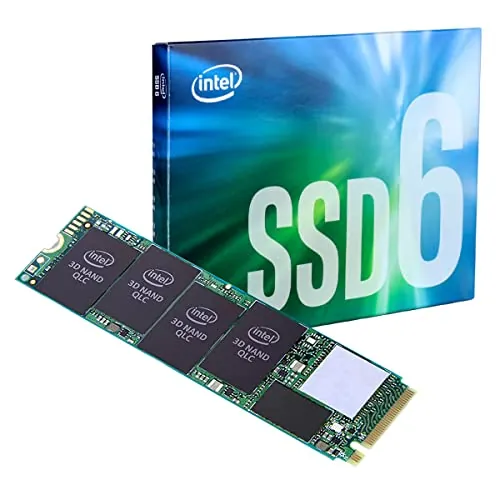
The Intel 660p is a 1TB M.2 2280 PCIe NVMe SSD built around QLC 3D NAND. It is strongest as a value-led game library, general storage, or everyday upgrade drive, with an 87/100 value score. Its main trade-off is weaker sustained write behavior once its cache is exhausted, alongside lower endurance confidence for heavy-write use.
Expert reviewed
78
Overall score
Data-driven scoring Expert reviewed Updated analysis

Why we ranked it highly

The Intel 660p Series SSDPEKNW010T8X1 is an internal 1TB solid-state drive using the M.2 2280 form factor and a PCIe NVMe 3.0 x4 interface. Intel quotes sequential read and write speeds up to 1,800 MB/s, positioning it above SATA storage for compatible systems. The drive uses QLC 3D NAND, a capacity-oriented flash design that helped make NVMe storage more accessible but involves trade-offs in sustained writing and endurance. Its score profile favors installation, connectivity, compatibility, customer satisfaction, and value. Customer feedback frequently supports use as game, media, application, and general-purpose storage. Buyers should treat it as a practical everyday NVMe drive rather than a specialist option for repeated large transfers, intensive editing, or other write-heavy workloads.
90-day review Expert reviewed User feedback Data scoring

Key specs

Features & Specs

Digital Storage Capacity
1 TB
Hard Disk Interface
NVMe
Connectivity Technology
PCIe
Hard Disk Form Factor
3.15 Inches
Compatible Devices
This drive is compatible with servers and arrays that accept M.2 2280 PCIe drives
Specific Uses For Product
personal, gaming, business
Read Speed
1800 Megabytes Per Second
Media Speed
1800 megabytes_per_second
Cache Memory Installed Size
1
Data Transfer Rate
1000 Gigabits Per Second
Form Factor
M.2 22 x 80 millimeter
Hardware Connectivity
PCI
Hardware Platform
PC, laptop

Measurements

Hard-Drive Size
1 TB
Item Weight
0.1 Pounds
Item Dimensions L x W x Thickness
6.5"L x 4.75"W x 0.75"Th
Number of Items
1
Customer Package Type
Standard Packaging

Item details

Brand
Intel
Model Number
SSDPEKNW010T8X1
Hard Disk Description
Solid State Drive
Built-In Media
SSD, Warranty
Model Name
660p Series
Manufacturer
D&H
Global Trade Identification Number
00735858381086, 00735858381512, 05032037131599
UPC
735858381086 735858381512
Mfr Part Number
SSDPEKNW010T8X1
Item Type Name
Intel SSD 660p Series (1.0TB, M.2 80mm PCIe 3.0 x4, 3D2, QLC)

User guide

Installation Type
Internal Hard Drive

Additional details

Enclosure Material
3D Nand Flash

Scores breakdown

78 /100

Performance

72 /100

Features

82 /100

Usability

80 /100

Design

86 /100

Connectivity

76 /100

Speed

69 /100

Reliability

83 /100

Compatibility

Strengths

  • Strong value score of 87/100 for a 1TB NVMe drive.
  • PCIe NVMe 3.0 x4 interface with quoted sequential read and write speeds up to 1,800 MB/s.
  • M.2 2280 format supports compact desktop and laptop installations where a compatible slot is available.
  • High customer satisfaction score of 89/100, supported by a 4.8/5 Amazon rating from 2,737 reviews.
  • Setup score of 86/100; reviews commonly describe installation and Windows initialization as straightforward.
  • Well suited to read-focused storage such as game libraries, media collections, and general files.

Limitations

  • QLC NAND is less suited to frequent, sustained heavy-write workloads than higher-endurance flash types.
  • Reviews indicate write performance can drop substantially after the SLC cache is exhausted.
  • Reliability and durability scores of 69/100 and 65/100 reflect mixed long-term confidence.
  • Some reviewers report heat under load, although others found temperatures manageable with a heatsink.
  • Not every M.2 slot supports NVMe PCIe drives; buyers must confirm M-key M.2 2280 PCIe compatibility.
  • Warranty and support information is limited in the supplied data, reflected in a 52/100 support score.

Ideal user profiles

  • PC gamers building a large, fast-loading game library on a compatible M.2 NVMe slot.
  • Laptop or desktop owners upgrading from a SATA SSD or hard drive for everyday storage.
  • Buyers prioritizing capacity and value over maximum sustained write performance.
  • Users needing a secondary drive for media, photos, applications, and archival files.
  • Experienced upgraders who can verify PCIe lane support, cooling, and physical M.2 2280 fit.

Use cases

  • Storing and loading PC game libraries.
  • Adding 1TB of internal NVMe storage to a compatible laptop or desktop.
  • Keeping media collections, photos, and general personal files.
  • Using as a read-focused applications or project drive.
  • Replacing a slower SATA SSD where NVMe PCIe support is available.
  • Expanding storage in compatible systems using an appropriate PCIe adapter.

Fit and positioning

Who this works for

Category positioning

The Intel 660p sits in the value-focused PCIe 3.0 NVMe SSD category. It offers a compact M.2 2280 format, 1TB capacity, and quoted 1,800 MB/s sequential speeds, but its QLC NAND means it is not designed around maximum sustained performance or endurance. With an 87/100 value score and 89/100 customer satisfaction score, it is best understood as a mainstream storage upgrade for users who prioritize capacity and everyday responsiveness over premium write-intensive performance.

Best for

This drive is best for users with a confirmed M.2 2280 PCIe NVMe slot who want affordable 1TB storage for games, applications, media, and everyday files. Its 86/100 connectivity and setup scores support that role, while reviews repeatedly praise its simple installation and read-focused performance. It is particularly suitable as a secondary storage drive, or as a practical upgrade from SATA storage.

Not best for

Skip the Intel 660p if your work regularly involves very large, sustained writes, intensive video workflows, databases, or other demanding write-heavy tasks. Reviews indicate that writes can slow considerably after the SLC cache is full, while durability scores 65/100. Buyers who need higher endurance, consistent sustained throughput, or clearer warranty and support information should compare alternatives designed for those priorities.

Performance analysis

How it performs in practice

Each scoring dimension is separated into a compact card so the strengths and tradeoffs are easier to compare without reading one long block.

Performance analysis

The 660p's main performance case is everyday NVMe responsiveness rather than class-leading sustained throughput. Intel quotes up to 1,800 MB/s sequential reads and writes through PCIe NVMe 3.0 x4, and users report noticeably faster operation than SATA SSD storage in compatible systems. The 78/100 performance score reflects this capable middle ground. Reviews also consistently identify the caveat: small and moderate transfers can be quick, while extended writes may slow substantially after the SLC cache is used.

Feature analysis

The key features are 1TB capacity, QLC 3D NAND, an M.2 2280 card format, and PCIe NVMe 3.0 x4 connectivity. This is a focused internal-storage product rather than a feature-heavy drive, reflected in its 72/100 feature score. The interface provides higher available bandwidth than SATA, but QLC is a deliberate value and capacity trade-off. There is no supplied evidence of advanced bundled software features or extra accessories.

Usability analysis

Usability is a strength, scoring 82/100. Reviewers commonly describe the physical installation as simple: fit the drive into a compatible slot, secure it, then initialize and format it in the operating system where needed. The small M.2 format also avoids the data and power cables associated with 2.5-inch SATA drives. The practical complication is compatibility checking, since a physical M.2 slot may not necessarily provide NVMe PCIe support.

Design

The design is practical and space-efficient, scoring 80/100. At the standard M.2 2280 size, the 660p is intended to mount directly on a compatible motherboard or laptop storage slot, eliminating storage cables. That makes it useful for compact computers and upgrades where a 2.5-inch drive bay is unavailable. Its physical design is functional rather than user-facing, so the important design checks are slot position, clearance, and whether cooling hardware can be fitted.

How it compares

Against the broader NVMe SSD category, the Intel 660p prioritizes capacity and accessible pricing over the strongest sustained write performance. Its quoted 1,800 MB/s sequential read and write ratings are a meaningful step up from SATA storage when used in a suitable PCIe 3.0 x4 system. However, QLC NAND and the reported drop after SLC cache exhaustion separate it from drives intended for demanding continuous transfers. It compares most favorably when the workload is game loading, applications, media, and general storage. Buyers focused on frequent high-volume writes should give greater weight to endurance and sustained-throughput specifications.

Ranking summary

The Intel 660p earns an overall score of 78/100 by doing the essentials well for a value-oriented NVMe SSD. Its strongest results are customer satisfaction at 89/100, value at 87/100, connectivity and setup at 86/100, and compatibility at 83/100. These scores align with feedback praising simple installation, useful capacity, and good game or general-storage performance. The ranking is held back by 69/100 reliability, 65/100 durability, and 76/100 speed scores. Those weaker areas reflect QLC endurance trade-offs, mixed thermal and longevity feedback, and pronounced write slowdowns after the SLC cache is exhausted.

Buying advice

Consider the Intel 660p 1TB if you need a compact NVMe upgrade for a game library, general files, applications, or a secondary storage role, and the price remains favorable. Before ordering, confirm M.2 2280 PCIe NVMe support, not simply the presence of an M.2 slot. Check whether the system provides full PCIe bandwidth and whether a heatsink is advisable for your chassis. Avoid it for repeated large writes, demanding content-production workflows, or workloads where endurance is the primary concern. Also verify the listing's current warranty and return terms because the supplied support information is limited.
78
Overall score

Final verdict

The Intel 660p 1TB is a strong value-focused PCIe 3.0 NVMe SSD for compatible desktops and laptops. Its main strengths are affordable 1TB capacity, straightforward M.2 installation, broadly useful NVMe speed, and strong buyer satisfaction. It is especially well suited to game libraries, media, applications, and normal everyday storage. Its main limitation is the QLC design: sustained writes can slow markedly after cache exhaustion, and durability confidence is lower than for drives aimed at heavy-write use. Choose it when capacity and everyday responsiveness matter more than maximum consistency under demanding transfers.
Back to review

Key topics

Intel 660p 1TB review, Intel 660p SSD review, Intel 660p 1TB NVMe SSD, Intel 660p ranking, 1TB M.2 NVMe SSD comparison, QLC NVMe SSD review, best SSD for game storage, PCIe 3.0 NVMe SSD

Frequently asked questions

Is the Intel 660p 1TB worth buying?
The Intel 660p 1TB is a sensible option for value-focused NVMe storage when its price is competitive. Its value score is 87/100, while customer satisfaction is 89/100. It is best matched to gaming, general files, and read-heavy use rather than frequent sustained large writes.
Is the Intel 660p 1TB good for gaming?
Yes, the supplied reviews consistently position the 660p as a good game-library drive. Its PCIe NVMe 3.0 x4 connection and quoted speeds up to 1,800 MB/s can improve loading versus slower storage. The QLC design is less concerning for predominantly read-focused game storage than for constant large-file writes.
What are the main limitations of the Intel 660p 1TB?
The key limitation is sustained write behavior. Reviews report that performance can fall sharply after the SLC cache fills, and QLC NAND brings lower endurance confidence for write-intensive workloads. Mixed reports on operating temperature and long-term reliability also make it less compelling for demanding professional write-heavy use.
Can the Intel 660p 1TB be used as a boot drive?
It can be used as a boot drive in a compatible system, and customer feedback includes positive everyday and boot-drive experiences. However, the review evidence suggests it is more naturally suited to storage and gaming. Buyers who regularly perform large writes may prefer a drive designed for stronger sustained throughput.
Is the Intel 660p 1TB easy to install?
Installation is a relative strength, with a setup score of 86/100. Reviewers commonly describe fitting the M.2 card, securing it, then initializing and formatting it in Windows as straightforward. Compatibility still needs checking first: the system must accept an M.2 2280 PCIe NVMe, typically M-key, drive.
Does the Intel 660p 1TB run hot?
Available feedback is mixed. Some customers say the drive remains cool under a heatsink, while others report heat during heavier operation and recommend additional cooling. A heatsink may be worth considering if the host system supports one, especially in constrained desktops, laptops, or sustained workloads.
Is the Intel 660p 1TB compatible with laptops and desktops?
The drive uses the M.2 2280 form factor and PCIe NVMe 3.0 x4 interface, so it can fit many compatible laptops and desktops. Physical fit alone is not enough: confirm that the M.2 slot supports PCIe NVMe rather than SATA-only operation, and check the system's available PCIe bandwidth.
How does the Intel 660p 1TB compare with other NVMe SSDs?
Within the NVMe category, the 660p emphasizes capacity and value rather than top sustained write speed or endurance. Its 87/100 value score is a major advantage, but its 65/100 durability score and cache-dependent write behavior make higher-endurance alternatives more appropriate for intensive creation, database, or repeated large-transfer workloads.

Related Guides & Rankings

Comparisons featuring this product