ElectronicsRanker
Menu

Review

Intel 660p 2TB NVMe SSD Review and Ranking

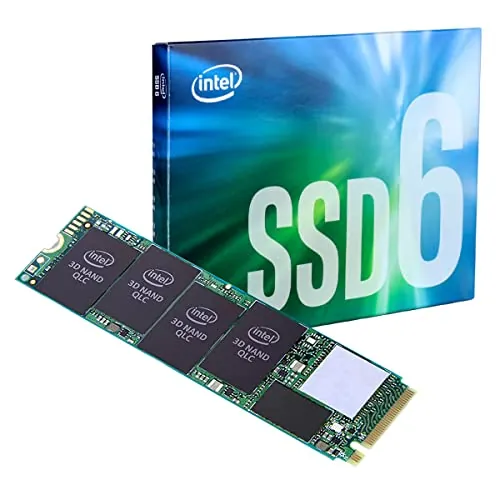
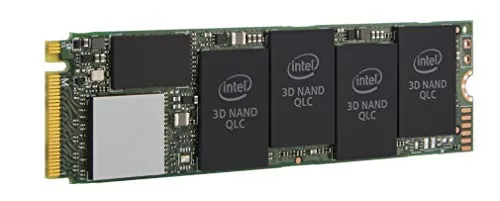
The Intel 660p 2TB is a PCIe 3.0 NVMe M.2 SSD aimed at affordable high-capacity storage. It is strongest as a gaming, media, and general-purpose data drive, where its 2TB capacity and quick everyday reads offer clear practical benefits. Its QLC NAND design is less suitable for frequent, sustained large writes, which can reduce performance after cache capacity is used.
Expert reviewed
79
Overall score
Data-driven scoring Expert reviewed Updated analysis

Why we ranked it highly

The Intel 660p Series 2TB is an internal M.2 2280 solid-state drive using a PCIe NVMe 3.0 x4 interface and Intel QLC 3D NAND. Intel lists sequential read and write speeds of up to 1,800 MB/s, placing it well above typical SATA SSD bandwidth on a compatible system. The drive's main appeal is fitting 2TB of storage into a compact NVMe format at a capacity-led price point. Its score profile supports that role: value scores 89, usability 82, connectivity 83, and customer satisfaction 91. Reviewers often recommend it for game libraries, photos, media, applications, and archive storage. It can serve as a boot drive, but recurring review feedback suggests that users with frequent large file transfers, database activity, or other sustained write workloads should prioritize a drive designed for stronger sustained-write behavior and endurance.
90-day review Expert reviewed User feedback Data scoring

Key specs

Features & Specs

Digital Storage Capacity
2 TB
Hard Disk Interface
NVMe
Connectivity Technology
PCIe
Additional Features
Portable
Hard Disk Form Factor
3.15 Inches
Compatible Devices
This drive is compatible with servers and arrays that accept M.2 2280 PCIe drives
Specific Uses For Product
personal, gaming, business
Read Speed
1800 Megabytes Per Second
Media Speed
1800 megabits_per_second
Cache Memory Installed Size
2
Data Transfer Rate
1000 Gigabits Per Second
Form Factor
M.2 22 x 80 mm
Hardware Connectivity
PCI
Hardware Platform
PC, laptop

Measurements

Hard-Drive Size
2 TB
Item Weight
0.02 Pounds
Item Dimensions L x W x Thickness
6.5"L x 4.75"W x 0.75"Th
Number of Items
1

Item details

Brand
Intel
Model Number
SSDPEKNW020T8X1
Hard Disk Description
Solid State Hard Drive
Model Name
660p Series Solid State Drive
Manufacturer
Intel
Global Trade Identification Number
00735858381093, 00735858381529
UPC
735858381529 735858381093
Mfr Part Number
978351
Item Type Name
Intel SSD 660p Series (2.0TB, M.2 80mm PCIe 3.0 x4, 3D2, QLC)

User guide

Installation Type
Internal Hard Drive

Scores breakdown

78 /100

Performance

72 /100

Features

82 /100

Usability

80 /100

Design

83 /100

Connectivity

76 /100

Speed

70 /100

Reliability

78 /100

Compatibility

Strengths

  • 2TB capacity in the compact M.2 2280 format.
  • PCIe NVMe 3.0 x4 interface with advertised sequential read and write speeds up to 1,800 MB/s.
  • Strong value score of 89, reflecting its capacity-focused NVMe positioning.
  • High customer satisfaction score of 91 from 2,737 Amazon reviews averaging 4.8 out of 5.
  • High setup score of 84; reviewers frequently describe installation and Windows initialization as straightforward.
  • Well suited to game libraries, general file storage, photos, and other read-heavy workloads according to recurring review feedback.

Limitations

  • QLC NAND is less suitable for frequent, sustained heavy-write workloads than higher-endurance NAND types.
  • Reviews repeatedly report substantial write-speed reductions after the SLC cache is exhausted.
  • Reliability and durability scores of 70 and 66 indicate more uncertainty around long-term use than the rating alone suggests.
  • Some users report heat under demanding workloads, while others report acceptable temperatures with a heatsink.
  • Actual throughput depends on the host system's PCIe lanes, M.2 slot implementation, and adapter configuration.
  • The drive is not supplied with mounting hardware according to one reviewer, so buyers should check their system includes an M.2 retention screw.

Ideal user profiles

  • PC gamers who need a large secondary drive for a game library.
  • Laptop or desktop owners with an available M.2 2280 PCIe NVMe slot.
  • Home users storing photos, media, applications, and general files.
  • Value-focused buyers prioritizing 2TB capacity over sustained-write performance.
  • Users upgrading from SATA SSDs or mechanical hard drives for faster everyday storage access.

Use cases

  • Storing and loading PC game libraries.
  • Expanding storage in compatible desktops and laptops.
  • Holding photo collections, media libraries, and archives.
  • Using as a general-purpose application or secondary data drive.
  • Providing NVMe storage in compatible servers or arrays that accept M.2 2280 PCIe drives.
  • Upgrading certain older systems through a compatible M.2 NVMe adapter, where support has been confirmed.

Fit and positioning

Who this works for

Category positioning

This is a value-focused, high-capacity PCIe 3.0 NVMe SSD rather than a performance-first or workstation-oriented model. Its M.2 2280 format and 2TB capacity suit users who need substantial internal storage without moving to a 2.5-inch drive. The 660p sits between SATA SSDs and faster premium NVMe options in the supplied review feedback: it offers meaningful everyday speed, but its QLC architecture makes sustained writing its key compromise. It is therefore best viewed as a practical read-heavy storage drive.

Best for

The Intel 660p is best for buyers who want 2TB of compact NVMe storage for PC games, media, photos, applications, and general files. Its value score of 89, setup score of 84, and 4.8 out of 5 average from 2,737 reviews point to a well-received option for mainstream use. It is particularly sensible as a secondary drive alongside a higher-performance primary SSD.

Not best for

Avoid this model if your normal workload involves frequent, very large writes, intensive database activity, or consistently high write throughput. Reviews describe sharp slowdowns once the SLC cache is exhausted, while the 66 durability and 70 reliability scores indicate a less reassuring profile for write-heavy long-term use. Buyers without a compatible M.2 2280 PCIe NVMe slot should also look elsewhere.

Performance analysis

How it performs in practice

Each scoring dimension is separated into a compact card so the strengths and tradeoffs are easier to compare without reading one long block.

Performance analysis

The 660p delivers its best performance in everyday, read-oriented storage tasks. Intel rates it for up to 1,800 MB/s sequential reads and writes, and reviewers report it feels substantially quicker than SATA storage when connected through a suitable PCIe configuration. The performance score of 78 is solid rather than class-leading because sustained writes are cache-dependent. Multiple reviews report that large or repeated transfers slow considerably after the SLC cache fills. That trade-off is usually less important for launching games, loading media, or general file access than it is for sustained content-production workflows.

Feature analysis

The essential feature set is straightforward: 2TB capacity, M.2 2280 dimensions, PCIe NVMe 3.0 x4 connectivity, and QLC 3D NAND. The feature score of 72 reflects a practical specification rather than an unusually advanced one. Its major feature advantage is capacity in a small internal form factor. QLC technology supports that value-led approach, but also creates the sustained-write and endurance trade-offs noted in customer feedback. No additional software, encryption, or management features are confirmed by the supplied product specifications.

Usability analysis

With an 82 usability score, the 660p is generally convenient for routine internal-storage upgrades. Reviews describe a simple process of installing the module, booting the computer, then partitioning and formatting it through Windows disk management. Once configured, the drive's high capacity can reduce the need to manage a crowded game or media library. Usability still depends on system compatibility: buyers need to identify whether their M.2 slot supports PCIe NVMe rather than only another M.2 connection type.

Design

The M.2 2280 layout is the central design benefit. It occupies very little space compared with 2.5-inch drives and associated SATA cabling, making it practical for modern laptops, desktops, and some compact systems. The 80 mm module must still be secured correctly and requires a compatible M.2 slot. Its design score of 80 reflects the format's physical convenience, while the need for a possible heatsink in demanding installations is a practical consideration.

How it compares

Within the 2TB NVMe SSD category, the Intel 660p emphasizes capacity and everyday practicality over maximum sustained throughput. Compared with SATA storage, its PCIe NVMe connection can provide substantially higher sequential bandwidth in a compatible system. Compared with more performance-oriented NVMe drives, its QLC NAND and cache-dependent write behavior are the major compromises. This makes it competitive for game libraries, media, applications, and archives, where reads and short transfers dominate. It is less competitive for frequent large exports, heavy project files, database activity, or workloads that continually write enough data to exhaust the cache. Compatibility and cooling can also influence results.

Ranking summary

The Intel 660p earns an overall score of 79 because it is highly effective in a specific role: affordable, high-capacity NVMe storage for mainstream read-heavy use. Its best scores are customer satisfaction at 91, value at 89, brand trust at 85, setup at 84, and connectivity at 83. These strengths align with review feedback praising easy installation, large capacity, and solid game and general-storage performance. It ranks below more demanding storage options because speed is 76, reliability is 70, and durability is 66. QLC endurance and cache-related slowdowns make it less compelling for sustained write-intensive work.

Buying advice

Consider the Intel 660p 2TB if you need a compact, high-capacity NVMe drive for games, general files, media, or a secondary storage role. Verify that your laptop, desktop, server, or array accepts an M.2 2280 PCIe NVMe drive and check whether the slot provides the intended PCIe bandwidth. Buyers using older systems or adapters should confirm compatibility before ordering. Consider available airflow or a compatible heatsink if your system has limited cooling. Skip it for regular huge file writes or write-intensive professional work, where its QLC endurance profile and post-cache slowdown are more likely to matter.
79
Overall score

Final verdict

The Intel 660p 2TB is a strong value-focused NVMe SSD for gamers and mainstream users who want substantial internal storage in an M.2 2280 form factor. Its key strength is the balance of 2TB capacity, simple setup, good everyday responsiveness, and high customer satisfaction. It is an average-to-limited choice for sustained write-heavy workloads, however, because QLC NAND and the finite SLC cache can lead to substantial speed reductions during long transfers, while durability is its weakest scored area. Buy it for read-heavy storage at a competitive current price, not as a performance-first workstation drive.
Back to review

Key topics

Intel 660p 2TB review, Intel 660p SSD review, Intel 660p 2TB NVMe SSD, 2TB M.2 2280 SSD, PCIe 3.0 NVMe SSD comparison, QLC NVMe SSD review, best SSD for game storage, Intel 660p ranking

Frequently asked questions

Is the Intel 660p 2TB worth buying?
The Intel 660p 2TB is most compelling as a capacity-focused NVMe drive for gaming and general storage. It earns a value score of 89 and has strong buyer feedback, but its QLC design can slow significantly during sustained large writes. It is a better fit for read-heavy use than frequent professional-grade data writes.
Is the Intel 660p 2TB good for gaming?
Yes, gaming is one of the strongest use cases indicated by the available reviews. Owners commonly use it for Steam libraries and report fast loading and good everyday responsiveness. Its 2TB capacity is also practical for large modern game installs. Heavy installation, copying, or recording workloads may expose the drive's slower sustained-write behavior.
Can the Intel 660p 2TB be used as a boot drive?
It can be used as a boot drive in a compatible M.2 NVMe system, and review feedback includes fast Windows boot experiences. However, several reviewers consider it a stronger secondary storage or game drive because QLC NAND and cache-dependent writes are less ideal for consistently demanding operating-system and production workloads.
What are the main limitations of the Intel 660p 2TB?
The principal limitations are QLC endurance characteristics and large performance drops once its cache is filled during sustained writes. Reviews also show mixed views on heat and long-term reliability. The 66 durability score and 70 reliability score reinforce the need to match the drive to moderate, read-heavy use rather than intensive write-focused work.
Is the Intel 660p 2TB easy to install?
Setup is a relative strength, with an 84 setup score. Reviewers commonly describe the physical installation as inserting the M.2 2280 drive, securing it, then initializing and formatting it in Windows. Before buying, confirm that the computer has a compatible M.2 PCIe NVMe slot and an available retention screw.
Will the Intel 660p 2TB reach its advertised speeds?
The drive is advertised for sequential reads and writes up to 1,800 MB/s, but real results depend on the computer's PCIe lane configuration and workload. Reviews show lower results on bandwidth-limited systems and higher figures with suitable PCIe connections. Long or frequent writes can slow substantially after the cache is exhausted.
Is the Intel 660p 2TB compatible with laptops and desktops?
The drive uses the M.2 2280 form factor and PCIe NVMe 3.0 x4 interface, with PC and laptop compatibility listed. Compatibility is not universal: the host needs a suitable M.2 PCIe NVMe connection. Some reviewers report successful adapter-based upgrades, but those configurations should be checked against the specific system before purchase.
Does the Intel 660p 2TB run hot?
Customer feedback is mixed. Some users say the drive stays cool when fitted under a heatsink, while others report higher temperatures under heavy operation. A heatsink may be worth considering where the system supports one, especially in compact or demanding builds. The available data does not establish a single temperature outcome for every system.

Related Guides & Rankings

Comparisons featuring this product