#1 Overall Winner
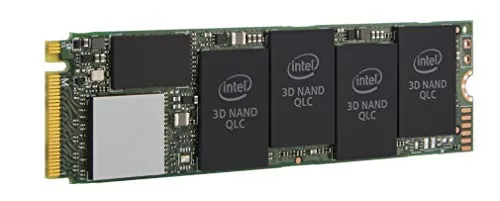
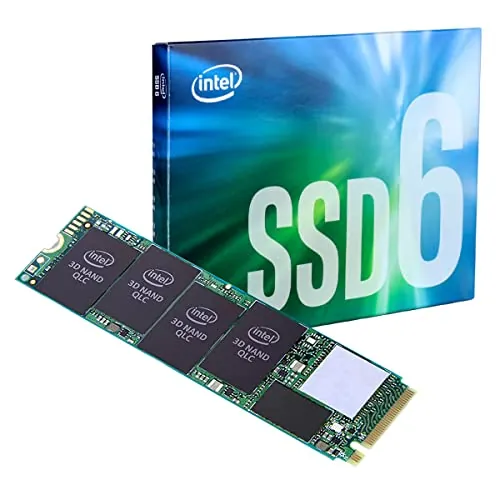
Intel 660p Series 1TB
- 1TB of NVMe storage in the M.2 2280 format.
Comparison
The Intel 660p 1TB and Intel 660p 2TB are closely matched PCIe NVMe 3.0 x4 SSDs with the same M.2 2280 format, QLC NAND, and listed sequential speeds. The 2TB model is the better choice for buyers who need a larger game or media library, while the 1TB model makes sense when 1TB is sufficient and a lower upfront cost matters more.
#1 Overall Winner
Contender
Choose the Intel 660p 1TB for a lower-cost NVMe upgrade, a moderate game library, or general everyday storage. Choose the Intel 660p 2TB for larger libraries and fewer storage compromises. Avoid treating either as the best fit for frequent sustained heavy writes.
Overall winner
Depends on your needs
| Feature | Intel 660p Series 1TB | Intel 660p Series 2TB | Winner |
|---|---|---|---|
Capacity |
1TB |
2TB |
Intel 660p Series 2TB |
Listed price |
111.25 |
209.05 |
Intel 660p Series 1TB |
Sequential read rating |
Up to 1800 MB/s |
Up to 1800 MB/s |
Tie |
Sequential write rating |
Up to 1800 MB/s |
Up to 1800 MB/s |
Tie |
Interface |
PCIe NVMe 3.0 x4 |
PCIe NVMe 3.0 x4 |
Tie |
Form factor |
M.2 2280 |
M.2 2280 |
Tie |
NAND type |
Intel QLC 3D NAND |
Intel QLC 3D NAND |
Tie |
Overall assessment |
78 |
79 |
Intel 660p Series 2TB |
Value assessment |
87 |
89 |
Intel 660p Series 2TB |
Customer satisfaction |
89 |
91 |
Intel 660p Series 2TB |
Compatibility assessment |
83 |
78 |
Intel 660p Series 1TB |
Heavy-write suitability |
Limited by QLC and cache behavior |
Tie |
Performance is effectively tied on the supplied specifications: both drives are rated for sequential reads and writes up to 1800 MB/s. Reviews indicate that the 660p platform is responsive for operating systems, applications, games, and ordinary file transfers. The important limitation is sustained writing. The SLC cache can support fast initial transfers, but very large or repeated writes can drop significantly after it fills. Neither capacity is the clear choice for write-intensive production workloads.
There is no stated speed advantage between capacities: both are rated up to 1800 MB/s for sequential reads and writes. Real-world speed depends on the host's PCIe configuration and workload. Reviews report strong gains over SATA storage and responsive everyday operation, but also note much lower write performance during prolonged transfers once the cache is exhausted.
The 2TB model has a marginally higher reliability score, but both drives carry the same general concern: QLC endurance and mixed customer reports about long-term reliability. Many buyers report satisfactory use, especially for games and general storage, yet the provided feedback also includes concerns about drives not lasting. Neither model should be selected primarily for high-write endurance.
Usability is closely matched. Both are internal M.2 SSDs that require physical installation, system recognition, and drive initialization or formatting where appropriate. Customer reviews describe installation as simple on compatible systems. The 1TB model has a slightly higher setup score, but the practical process is the same; confirm the correct M-key M.2 PCIe slot before buying either version.
The designs are essentially identical: each is an internal M.2 2280 PCIe NVMe drive intended for compatible PCs, laptops, servers, and arrays. The 2TB model improves storage density within the same class of compact internal upgrade. There is no meaningful ergonomic or visual distinction for most buyers once installed.
Both drives use the same compact M.2 2280 SSD format and QLC NAND approach. The 2TB model holds a small build-quality score lead, but the supplied information does not identify a material or construction difference that would materially separate them. In both cases, system cooling and correct installation can affect the practical experience.
Durability is a cautious comparison. The 2TB model has a slightly higher durability score, while both models use QLC NAND, which reviewers associate with lower write endurance than other NAND types. They are more appropriate for ordinary, read-heavy storage than for workloads involving constant large writes. Mixed heat reports also make appropriate system airflow or M.2 cooling worth considering.
Both are small internal M.2 2280 drives rather than standalone portable storage devices. The 2TB model has a portability score in the provided data, but its real advantage is fitting more storage into the same internal upgrade category. Either can be used in a compatible external NVMe enclosure according to one review, though enclosure compatibility should be checked separately.
Feature sets are fundamentally the same. Both drives provide NVMe connectivity through PCIe 3.0 x4, use the M.2 2280 form factor, and employ Intel QLC 3D NAND. The meaningful feature difference is capacity: 2TB gives the larger model more room for games, applications, backups, and media without relying on another internal drive.
Setup is similar and generally straightforward on a compatible system. Reviewers describe fitting the drive, booting the computer, then initializing and formatting it through Windows disk management. The 1TB model has a slightly higher setup score. Older or nonstandard systems may require an adapter and more careful fitting, so verify the installation path before purchase.
Both SSDs are M.2 2280 PCIe NVMe 3.0 x4 drives for compatible PCs, laptops, servers, and arrays. The 1TB model scores higher for compatibility, but buyers should treat this as a system-specific check. Verify physical length, M-key support, NVMe support, available PCIe lanes, and any firmware or adapter requirements for older devices.
Both models use PCIe NVMe 3.0 x4 connectivity and require a compatible M.2 2280 PCIe slot. The 1TB model has the higher connectivity and compatibility scores in the provided data, but their stated interface and form factor are the same. System implementation matters: reviews show that PCIe lane configuration or an adapter can limit realized speed.
The 1TB model has a slightly higher power-efficiency score. Neither product's supplied specifications provide detailed power-draw figures, so the difference should not be overstated. A review of a 2TB installation in an older MacBook mentioned slightly higher battery use, but that is system-specific feedback rather than a general measurement.
The 2TB model has the higher value score because it combines more capacity with the same stated speed and platform, not merely because of its listed price. It is the stronger value when you will use the extra terabyte for games, media, or files. The 1TB model remains sensible value for users who do not need 2TB and prefer the lower initial outlay. Both are best evaluated as affordable, read-heavy NVMe storage rather than heavy-write specialist drives.
Both products are Intel 660p Series drives, so the brand comparison is largely a tie. The 2TB model has the higher brand-trust score in the provided data. Customer feedback reflects confidence in the Intel name, but this does not remove the specific QLC endurance and mixed reliability concerns reported for the product line.
Both listings show 4.8 out of 5 stars from 2,737 reviews, with repeated praise for speed, value, capacity, and easy installation. The 2TB version has a slightly higher customer-satisfaction score. The review set also consistently warns about reduced sustained-write performance, heat in some configurations, and uncertainty around long-term reliability.
Warranty and support details are not sufficiently provided for a definitive comparison. The 1TB model has a warranty-support score, while the 2TB model does not have a provided score. Confirm current warranty coverage, return terms, and support eligibility with the seller before buying either drive.
The Intel 660p 2TB is the best overall choice in this comparison because it combines twice the capacity with the same listed 1800 MB/s sequential read and write ratings, plus a narrow lead in overall score, value, brand trust, and customer satisfaction. It is particularly sensible for large game libraries, media collections, and users who want more storage in the same M.2 slot.
The Intel 660p 1TB remains the better fit when 1TB is enough and lower upfront cost is the priority. It has slightly stronger provided connectivity, compatibility, setup, and power-efficiency results, while retaining the same core speed specification. Neither drive is the ideal choice for frequent sustained heavy writes: both use QLC NAND and reviews report significant write slowdowns after cache exhaustion, along with mixed feedback on heat and long-term reliability.

Overall winner
Depends on your needs
Capacity is the main difference. The Intel 660p 2TB provides twice the space of the 1TB model, while both use the same M.2 2280 PCIe NVMe 3.0 x4 format and have the same stated sequential read and write rating of up to 1800 MB/s. Choose based primarily on how much storage your files and games need.
The Intel 660p 2TB is the stronger fit for a large game library because it provides more room for modern game installations without changing the basic platform or rated sequential speed. Reviews describe the 660p line as a good read-heavy storage option for games, but its QLC design is less suited to frequent, very large writes.
On the listed specifications, both drives are rated for sequential read and write speeds of up to 1800 MB/s. In real use, reviewers note that smaller or ordinary transfers can be quick, while long and frequent writes may slow down substantially after the SLC cache is filled. Capacity does not remove that shared QLC limitation.
Both capacities can work as boot drives, and customer feedback mentions fast Windows booting and straightforward installation. However, reviews also indicate that the 660p is most compelling for general, gaming, and read-heavy storage rather than demanding sustained-write use. Users regularly handling very large writes may prefer a drive designed for that workload.
The 2TB Intel 660p has the higher provided value score and offers more storage, making it the better choice when that extra capacity will be used. The 1TB version remains the more economical upfront purchase. Neither choice should be based on price alone: consider capacity needs, motherboard compatibility, and whether your work involves sustained heavy writes.
No. Both drives use an M.2 2280 PCIe NVMe 3.0 x4 interface, so the host device needs an appropriate compatible M.2 PCIe slot. Reviews specifically advise checking for the correct M-key M.2 connection. A physical M.2 slot does not by itself confirm NVMe compatibility, so verify the system documentation before buying.
They can store editing assets, but the supplied reviews caution against frequent, very large write workloads. Once the SLC cache is exhausted, QLC write behavior can become much slower. For occasional transfers and general storage, either model may be suitable; for sustained media-production writes, the review evidence suggests considering a drive intended for stronger sustained throughput.
Feedback is mixed. Some customers report cool operation with a heatsink, while others mention heat during heavier use. The product data does not establish a universal thermal result because it can depend on the host system and cooling arrangement. Check available clearance and consider the system's M.2 cooling provisions before installation.
Check our rankings and expert guides to find the best electronics products for your goals.