#1 Overall Winner
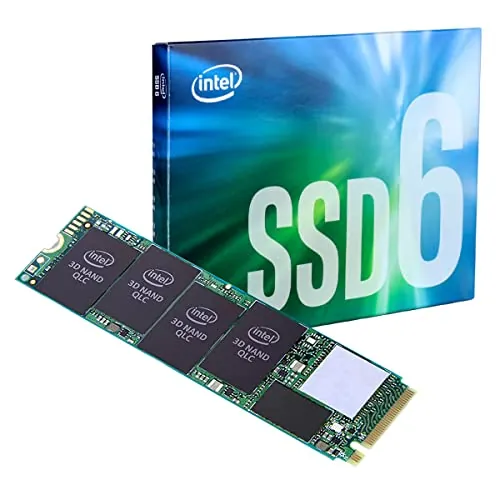
Intel 660p Series 2TB
- Large 2TB capacity for game libraries, media, and general file storage.
Comparison
The Intel 660p Series 2TB is a high-capacity M.2 NVMe SSD aimed at fast, read-heavy storage, while the Kingston A400 120GB is a compact SATA SSD designed for affordable operating-system upgrades. The Kingston has the higher overall score, but the Intel is the clear fit for buyers who need vastly more capacity and have a compatible NVMe slot.
#1 Overall Winner
Contender
Choose the Intel 660p Series 2TB for a compatible M.2 NVMe PC, a large game library, and high-capacity file storage. Choose the Kingston A400 120GB for an uncomplicated 2.5-inch SATA boot-drive upgrade where a small operating-system drive is sufficient. The Kingston wins the supplied overall scoring; the Intel wins decisively on capacity and rated sequential throughput.
Overall winner
Depends on your needs
| Feature | Intel 660p Series 2TB | Kingston A400 120GB | Winner |
|---|---|---|---|
Overall assessment |
Overall score: 79 |
Overall score: 85 |
Kingston A400 120GB |
Capacity |
2TB |
120GB |
Intel 660p Series 2TB |
Interface and form factor |
M.2 2280 PCIe NVMe 3.0 x4 |
2.5-inch SATA 6Gb/s |
Depends |
Rated sequential read |
Up to 1,800 MB/s |
Up to 500 MB/s |
Intel 660p Series 2TB |
Rated sequential write |
Up to 1,800 MB/s |
Up to 450 MB/s |
Intel 660p Series 2TB |
Everyday performance score |
78 |
86 |
Kingston A400 120GB |
Speed score |
76 |
90 |
Kingston A400 120GB |
Ease of setup |
84 |
93 |
Kingston A400 120GB |
Reliability score |
70 |
72 |
Kingston A400 120GB |
Durability score |
66 |
71 |
Kingston A400 120GB |
Value score |
89 |
90 |
Kingston A400 120GB |
Customer satisfaction |
4.8/5 from 2,737 reviews; score 91 |
4.7/5 from 28,572 reviews; score 94 |
Kingston A400 120GB |
The Intel has the higher rated sequential performance ceiling, with up to 1,800 MB/s reads and writes versus the Kingston's 500 MB/s read and 450 MB/s write ratings. In suitable NVMe systems, that gives the Intel a clear advantage for loading and moving data in short to moderate bursts. However, reviews repeatedly identify the Intel's QLC cache behavior as a constraint: prolonged large writes can become much slower after the SLC cache fills. The Kingston's SATA interface is inherently slower, but its performance is widely praised as a meaningful upgrade from a hard disk for booting, loading, and ordinary desktop use. The higher provided performance score belongs to Kingston, so its evaluated everyday result is stronger despite the lower specification ceiling.
Specification speed favors the Intel: it is rated for up to 1,800 MB/s sequential reads and writes, compared with Kingston's up to 500 MB/s reads and 450 MB/s writes. Yet the supplied speed score favors Kingston, 90 to 76. This reflects the Intel's reported sustained-write weakness after its SLC cache fills. For light boot, loading, and everyday tasks, both are major upgrades over a mechanical drive; for high-capacity NVMe reads and shorter transfers, Intel has the stronger interface advantage.
Neither drive has unqualified reliability evidence in the provided data. The Intel receives a reliability score of 70, with reviews praising its operation but also raising QLC endurance concerns and occasional reports that it may not last. The Kingston edges it at 72 and has many reports of drives working well, including longer use, but its review summary also includes failures in less than six months. For either model, maintain backups rather than treating an SSD as the only copy of important data.
The Kingston leads on usability. Its 2.5-inch SATA layout is familiar to many upgraders, and reviews commonly describe immediate recognition, straightforward OS migration, and fast Windows installation. The Intel is also often easy to install, but users must verify M.2 2280 PCIe NVMe compatibility, install it in the correct slot, and initialize or partition it if necessary. The Intel's workload sensitivity adds another consideration for users who regularly move very large files. For a basic hard-drive replacement, the Kingston is the more direct option; for storage expansion in a modern compatible system, Intel remains practical.
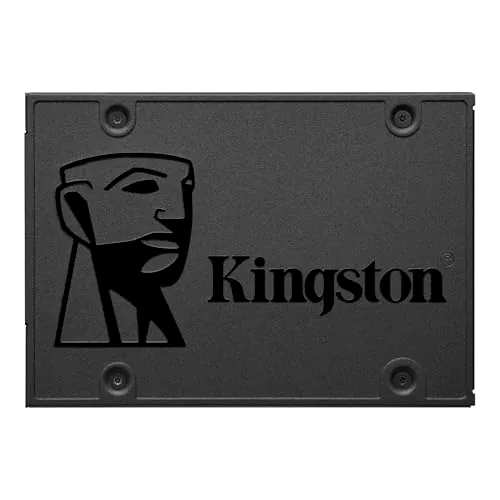
The Intel is designed for space-efficient M.2 2280 PCIe installations and is extremely light, making it well suited to systems with an available NVMe slot. The Kingston is a traditional slim 2.5-inch SATA SSD that is easier to visualize as a direct hard-drive replacement but requires a bay or mounting location plus SATA data and power connections. Intel has the slightly higher design score, but this is mainly a compatibility-driven decision: an M.2 NVMe module cannot replace a 2.5-inch SATA drive without the appropriate hardware, and the reverse is also true.
Both products are compact solid-state drives with no moving parts. The Intel has the higher build-quality score and uses an M.2 2280 board format, while the Kingston uses a protected 2.5-inch SATA enclosure suited to drive bays. The available review data does not establish a clear material-quality advantage. Intel owners should consider thermal conditions because some reviews report heat under load and recommend a heatsink for demanding configurations. Kingston's solid-state, shock- and vibration-resistant design is presented as an advantage over hard drives.
The Kingston has the higher durability score, 71 versus 66, and its lack of moving parts helps it resist the shock and vibration issues associated with mechanical hard drives. The Intel's lower durability assessment is tied to QLC NAND endurance concerns, particularly in high-write workloads. The Intel can still be sensible for games and general storage where reads dominate, but it is less suitable when frequent heavy writes are expected. Available information does not provide a direct warranty comparison that resolves the long-term difference.
Both drives are small and light enough for internal mobile-computing upgrades, but the Kingston receives the higher portability score. Its 2.5-inch format is easy to handle and use in systems designed for laptop-sized drives. The Intel's M.2 module is physically smaller and lighter, but portability in practice depends on whether the target system has the required M.2 PCIe NVMe slot. For external use, additional enclosures or adapters would be required and are not included in the supplied product details.
The Intel's key feature is its M.2 2280 PCIe NVMe 3.0 x4 platform combined with 2TB QLC storage, targeting a compact, high-capacity internal upgrade. Reviewers also mention Intel's SSD Toolbox for monitoring and cache management. The Kingston is a simpler 2.5-inch SATA SSD focused on replacing a conventional hard drive; it emphasizes fast start-up, loading, and file transfers relative to mechanical storage. Neither product has smart or app-driven features central to the buying decision. The Intel offers the more advanced interface and capacity, while Kingston offers a more conventional upgrade route.
The Kingston is the setup winner, with a score of 93 versus 84. Reviewers report that it works out of the box in compatible SATA systems and that Windows installation or drive migration can be straightforward. Intel installation is also commonly described as simple: install the M.2 module, boot the system, then initialize and format it if needed. However, buyers must be more careful about PCIe lane support, M-key slot compatibility, and thermal conditions. Neither drive includes a companion-app experience that is central to initial setup, although Intel's Toolbox is mentioned in reviews.
Compatibility is the deciding factor before performance. The Intel is for systems accepting M.2 2280 PCIe NVMe drives; reviews show it can also work in certain adapter-based upgrades, but such configurations require specific hardware and should not be assumed. The Kingston is for desktops and laptops with a 2.5-inch SATA connection, and its stated backward compatibility with SATA Rev. 2.0 broadens its appeal to older PCs. Kingston has the higher compatibility score, reflecting its broadly familiar SATA upgrade path.
The Intel has the higher connectivity score because it uses PCIe NVMe 3.0 x4, offering more bandwidth than SATA when installed in a compatible M.2 2280 PCIe slot. The Kingston uses SATA 6Gb/s and is backward compatible with SATA Rev. 2.0 according to the provided listing, which can be useful in older hardware. Neither interface is inherently better in every PC: confirm whether the computer has an M-key M.2 PCIe NVMe slot or a 2.5-inch SATA bay with available connections before choosing.
The Kingston has the higher power-efficiency score, 82 to 77. Its solid-state design is described as cooler and quieter than a mechanical hard drive. Intel review feedback is mixed: some users report acceptable temperatures under a heatsink, while others report heat and recommend adding cooling in demanding systems. The provided information does not include measured power-draw figures, so this comparison should be treated as score- and review-based rather than a direct wattage comparison.
Both drives score very strongly for value, with Kingston narrowly ahead at 90 versus 89. The Kingston's value comes from delivering a noticeable hard-drive replacement upgrade in a low-capacity SATA format, with very strong setup and satisfaction results. The Intel's value is different: it provides 2TB of NVMe storage and favorable read-focused performance, making it attractive for large game libraries and data storage. Do not select by value score alone. A 120GB drive may be insufficient regardless of its efficiency, while the Intel's QLC behavior may be unsuitable for sustained-write work.
Intel holds a narrow brand-trust lead in the supplied scores, 85 to 84. Intel reviewers mention confidence in the brand and the availability of its SSD Toolbox, while Kingston reviewers also cite the company's long-standing component presence and positive experiences. The difference is minimal. More important than brand preference is selecting the correct interface, capacity, and endurance profile for the intended workload.
Both drives have strong Amazon feedback. The Intel has a 4.8/5 rating from 2,737 reviews and a customer-satisfaction score of 91, with recurring praise for storage capacity, value, and uncomplicated installation. The Kingston has a 4.7/5 rating from 28,572 reviews and a higher satisfaction score of 94. Its feedback frequently highlights quick boots, easy setup, and reviving older computers. Both review sets include some reliability concerns, so satisfaction should be considered alongside backup practices and workload needs.
Warranty and after-sales policy details are not provided for the Intel listing. The Kingston has a warranty-support score of 55 in the supplied data, but no specific warranty term, return policy, or support procedure is provided. Verify the current seller, regional warranty coverage, and return conditions before purchasing either drive.
The Kingston A400 120GB is the better overall option according to the supplied scoring, winning on overall score, everyday performance, setup, usability, value, and customer satisfaction. It is especially sensible as a straightforward SATA replacement for a mechanical boot drive in an older computer. Its major limitation is capacity: 120GB will not suit buyers with large games, media collections, or extensive software libraries.
The Intel 660p Series 2TB is the more capable choice for compatible modern systems that need a large NVMe storage pool. It offers 2TB and much higher rated sequential speeds, making it a stronger fit for game libraries and general read-focused storage. Its QLC NAND, sustained-write slowdown reports, and mixed endurance feedback mean it is not the best match for heavy write-intensive work. Select based first on interface compatibility and storage needs, then on workload.

Overall winner
Depends on your needs
The Kingston A400 has the higher overall score, driven by stronger usability, setup, speed, value, and customer-satisfaction results. However, it is only a 120GB SATA drive. The Intel 660p is the more practical option when 2TB capacity and an NVMe M.2 interface are the priority, especially for read-heavy game and media storage.
On a compatible PCIe NVMe 3.0 x4 system, the Intel 660p has much higher rated sequential throughput: up to 1,800 MB/s for reads and writes, compared with the Kingston A400's 500 MB/s read and 450 MB/s write ratings. The Intel can slow significantly during sustained writes once its cache is exhausted.
The Kingston A400 is usually the more straightforward fit for an older laptop that has a 2.5-inch SATA bay. Its reviews repeatedly describe easy upgrades and noticeably faster booting. Choose the Intel only if the laptop specifically supports an M.2 2280 PCIe NVMe drive; an M.2 SATA slot alone is not the same requirement.
Yes, the provided reviews consistently position the Intel 660p as a strong fit for large game libraries. Its 2TB capacity and NVMe read performance are useful for storing games, and reviewers praise its value in this read-focused role. It is less appropriate for workloads involving frequent, very large sustained writes.
It can be enough for an operating system, essential applications, and cloud-focused use, which aligns with reviewer feedback. It is far less suitable for a large game library, extensive media files, or many installed applications. Check the space needed by Windows or your preferred operating system, updates, applications, and personal files before choosing 120GB.
The Kingston A400 scores higher for setup and usability, and customers frequently report that it works immediately in compatible SATA systems. The Intel 660p is also often described as easy to install, but buyers must verify an M-key M.2 2280 PCIe NVMe slot and may need to initialize and format the drive in the operating system.
Neither listed drive is an ideal choice for demanding sustained-write work based on the available information. The Intel can deliver fast initial transfers but has repeated reports of sharp slowdowns after its SLC cache fills. The Kingston has lower SATA-rated speeds but does not have the Intel's cited cache-exhaustion concern in the provided reviews.
No. The Intel 660p requires a compatible M.2 2280 PCIe NVMe connection. The Kingston A400 requires a 2.5-inch SATA bay with SATA data and power connections. Before buying either drive, confirm the physical bay or slot, interface type, and available mounting hardware in the computer.
Check our rankings and expert guides to find the best electronics products for your goals.