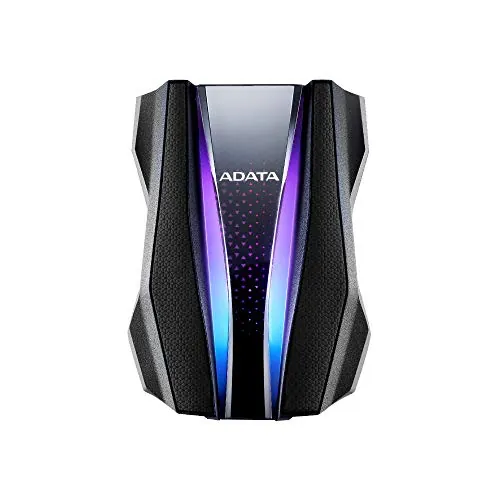
#1 Overall Winner
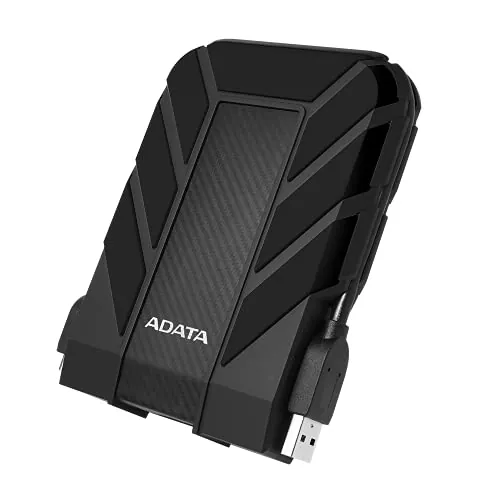
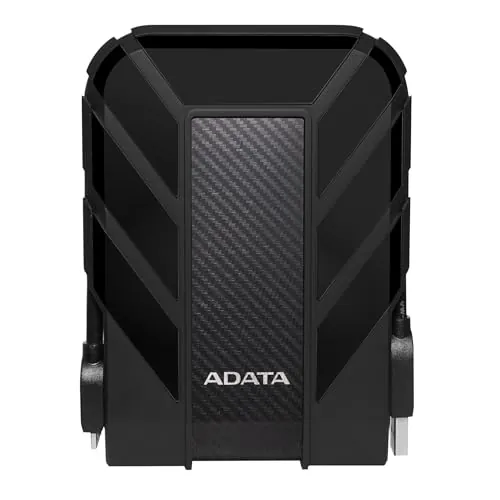
ADATA HD710 Pro 4TB
- 4TB capacity provides twice the storage of the compared HD720 model.
Comparison
The ADATA HD710 Pro 4TB and ADATA HD720 2TB are rugged portable mechanical hard drives designed for backup and file transport. The HD720 leads the supplied overall scoring data, but the HD710 Pro is the better fit for buyers who need double the capacity, IP68 protection, and a stated 3-year limited warranty.
#1 Overall Winner
Contender
Choose the ADATA HD720 2TB if 2TB is sufficient and you prioritize the stronger supplied overall score, lighter listed weight, and better supplied speed and reliability scores. Choose the ADATA HD710 Pro 4TB if you need 4TB, want IP68-rated protection, prefer its cable-management design, or value its stated 3-year limited warranty.
Overall winner
Depends on your needs
| Feature | ADATA HD710 Pro 4TB | ADATA HD720 2TB | Winner |
|---|---|---|---|
| Overall supplied score | 82 | 84 | ADATA HD720 2TB |
| Capacity | 4TB | 2TB | ADATA HD710 Pro 4TB |
| Interface | USB 3.1 | USB 3.0; USB 2.0 compatible | Depends |
| Water and dust protection | IP68 | IPX8 water; IP6X dust | Depends |
| Drop-test specification | 1.5m, MIL-STD-810G 516.6 | 1.8m, MIL-STD-810G 516.6 | ADATA HD720 2TB |
| Performance score | 72 | 76 | ADATA HD720 2TB |
| Speed score | 67 | 72 | ADATA HD720 2TB |
| Durability score | 94 | 89 | ADATA HD710 Pro 4TB |
| Reliability score | 71 | 82 | ADATA HD720 2TB |
| Listed weight | 0.86 pounds | 8 ounces | ADATA HD720 2TB |
| Warranty detail | 3-year limited warranty | Not provided | ADATA HD710 Pro 4TB |
| Customer ratings | 4.6/5 from 29,610 reviews | 4.7/5 from 2,912 reviews | Depends |
The HD720 has the higher supplied performance score, indicating the stronger overall performance result in this comparison. Reviews describe quick transfers and straightforward backup use, but it remains a mechanical HDD. The HD710 Pro is also suitable for backup and file movement, and some reviews praise USB 3 transfer results; however, the supplied evidence notes that transfer speed can vary and that the drive may feel slow for regular large-file shuttling.
The HD720 has the higher supplied speed score. Its USB 3.0 interface and reviews describing quick or seamless transfers support routine backup and transfer use, while its mechanical storage limits should still be recognized. The HD710 Pro’s USB 3.1 interface has a stated maximum rate of 5Gbps, but its listed read speed is 90MB/s and reviews say actual transfers can vary widely by file type, fragmentation, and workload.
The HD720 has the higher supplied reliability score, and several reviews describe it functioning well over time. However, one review reports clicking, bad sectors, slow retrieval, and suspected data loss. The HD710 Pro has lower supplied reliability scoring and mixed feedback, with some reported failures and connection issues alongside many accounts of dependable use. Neither product should be relied on as a sole backup for important files.
Both drives have the same supplied setup score and are designed for simple external-drive operation. The HD720 has a slightly higher usability score, with reviews mentioning seamless transfers and easy backup use. HD710 Pro feedback is also positive on plug-in use, formatting, partitioning, and cable storage, though one review notes that connecting the cable can be difficult. File-system formatting should be checked for the intended device workflow.
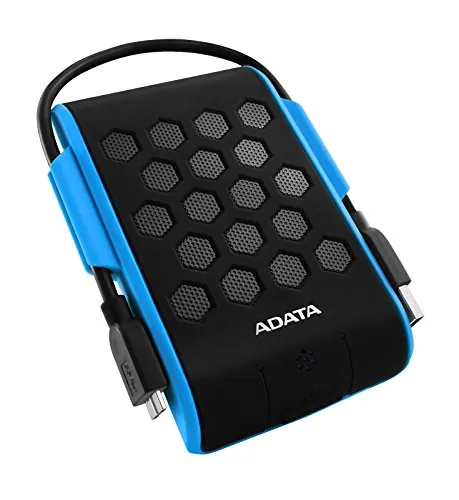
The HD720 has the higher supplied design score and is described as having a sporty design with a smooth silicone, carbon-fiber-like finish. The HD710 Pro has a more functional travel-oriented design, including an integrated cable-management arrangement and a black rugged enclosure. Buyers who prefer a lighter listed drive may lean toward the HD720; those who want cable organization and greater capacity may favor the HD710 Pro.
The HD720 has the higher supplied build-quality score and uses a silicone case with a carbon-fiber-like pattern. The HD710 Pro uses triple-layered construction and a metal enclosure material is listed. Both are built around rugged protection, but the HD720’s score lead suggests the stronger all-around hardware assessment, while the HD710 Pro’s supplied durability score is higher.
The HD710 Pro wins the supplied durability score, 94 versus 89. It is rated IP68 and lists triple-layer construction with a 1.5m MIL-STD-810G 516.6 drop-test specification. The HD720 is also highly rugged, with IPX8 water protection, IP6X dust protection, silicone protection, and a higher listed 1.8m drop-test distance. Both are designed for tougher handling than ordinary portable drives, but no rugged rating removes the need to protect data with backups.
The HD710 Pro has the slightly higher supplied portability score and uses integrated cable management that can reduce packing clutter. The HD720 is lighter by listed weight at 8 ounces versus 0.86 pounds for the HD710 Pro. The better portable option depends on whether you value lower weight or the HD710 Pro’s larger 4TB capacity and cable-storage design.
Both models focus on rugged portable storage rather than software-heavy features. The HD710 Pro combines 4TB capacity, USB 3.1, IP68 protection, triple-layer construction, and cable management. The HD720 combines USB 3.0 and USB 2.0 compatibility with IPX8 water protection, IP6X dust protection, a silicone case, and a higher stated drop-test distance. The HD710 Pro is stronger for capacity and stated warranty coverage; the HD720 has the higher supplied feature score.
The HD710 Pro has an optional downloadable backup application mentioned in the supplied review material, but no detailed app capabilities are provided. No companion-app experience is supplied for the HD720. These products should primarily be compared as direct-attached storage devices rather than as app-centered storage platforms.
Setup is effectively even in the supplied scoring, with both products receiving a 91 setup score. HD710 Pro reviews describe plug-in use and easy formatting or partitioning, while HD720 reviews mention straightforward backup and seamless transfers. As with any external drive, initial formatting and compatibility checks can be necessary depending on the operating system, console, or device being used.
Both drives support Mac and Linux according to the supplied information. The HD710 Pro explicitly lists PC, Mac, and Linux compatibility; the HD720 lists Windows, Mac OS X 10.6 or later, and Linux Kernel 2.6 or later. The HD720 also lists USB 2.0 compatibility. A supplied HD710 Pro review notes that formatting may be needed for use with certain iOS workflows, so buyers should verify file-system requirements before purchase.
The HD720 leads in the supplied connectivity score. It uses USB 3.0 and is explicitly compatible with USB 2.0, which is useful for older hardware. The HD710 Pro lists USB 3.1 and USB 3.0 hardware connectivity, but customer feedback on its cable and connection quality is mixed. Both are USB external drives, so confirm the available port and required adapter arrangement on the host device.
The HD720 has the higher supplied power-efficiency score. Neither product is battery-powered, and no detailed power-consumption figures are supplied. For this category, the available comparison is limited to the provided score data rather than a measured energy-use claim.
Value depends on the required capacity and protection priorities. The HD720 has a marginally lower supplied value score but stronger scores in several core operational categories, making it a sensible choice for users who can work within 2TB. The HD710 Pro has a slightly higher supplied value score, twice the storage capacity, a higher durability score, and a stated 3-year limited warranty. Its mixed connection and performance feedback should still be considered.
Both products are from ADATA, so this comparison does not present a meaningful brand-versus-brand difference. The supplied brand-trust scores are close, with the HD710 Pro slightly ahead. Buyer confidence should therefore rest more on the model-specific capacity, protection claims, supplied warranty information, and reported reliability patterns than on brand alone.
Both drives have the same strong supplied customer-satisfaction score. The HD720 has a slightly higher average rating of 4.7/5, while the HD710 Pro has a much larger review base at 29,610 reviews and a 4.6/5 average. Positive feedback for both centers on ruggedness, ease of use, and backup utility. Negative evidence includes connection and failure complaints for the HD710 Pro, plus an isolated serious bad-sector report for the HD720.
The HD710 Pro has a clear advantage in the supplied information because it is backed by a 3-year limited warranty. No warranty, return, or support-policy detail is provided for the HD720, so its after-sales coverage cannot be compared directly. Buyers who place high importance on stated coverage should verify current seller and manufacturer terms before ordering.
The ADATA HD720 2TB is the best overall option in this comparison because it receives the higher supplied overall score and leads in performance, features, usability, build quality, connectivity, speed, reliability, and power efficiency. It is a practical rugged-drive choice for routine portable backup when 2TB is enough.
The ADATA HD710 Pro 4TB remains the better option for many buyers. Its 4TB capacity is double that of the HD720, it has the higher supplied durability score, IP68 protection, integrated cable storage, and a stated 3-year limited warranty. Choose it when capacity and those protection details outweigh the HD720’s score advantage. In either case, use the drive as one layer of a backup plan rather than the only copy of critical data.

Overall winner
Depends on your needs
The supplied overall score favors the ADATA HD720 2TB, 84 to 82. It also leads in the provided performance, feature, usability, build-quality, connectivity, speed, reliability, and power-efficiency scores. However, the HD710 Pro is the more suitable choice when 4TB capacity, IP68 protection, integrated cable management, or its stated 3-year limited warranty matter most.
The ADATA HD710 Pro offers 4TB, which is twice the 2TB capacity of the compared HD720 configuration. That difference is important for users keeping larger media libraries, game backups, or several device backups. Storage needs should be considered alongside the fact that both products are mechanical portable hard drives.
Both drives are built for rugged use, but their stated protection details differ. The HD710 Pro is IP68-rated and lists a 1.5m MIL-STD-810G 516.6 drop-test specification. The HD720 lists IPX8 water protection, IP6X dust protection, and a 1.8m military-grade drop-test specification. The better fit depends on which stated rating or drop specification is most relevant to your use.
The ADATA HD720 2TB has the higher supplied speed score, 72 versus 67 for the HD710 Pro. Both use USB-based connections and mechanical hard-drive storage, so neither should be treated as an SSD substitute for demanding, frequent large-file transfers. Review feedback for the HD710 Pro also notes that transfer results can vary with file type and workload.
Both products receive the same strong supplied setup score of 91 and are designed as external drives. The HD720 has a slightly higher usability score, while HD710 Pro reviews praise plug-in use, formatting, partitioning, and its cable-storage design. Either can suit basic backups, but formatting may be relevant when using particular devices or operating systems.
No mechanical drive should be the sole copy of important data. The supplied feedback for both models includes positive long-term use reports, but there are also failure-related concerns: HD710 Pro feedback mentions occasional failures and connection problems, while an HD720 review reports clicking, bad sectors, and suspected corruption. Use either as part of a redundant backup strategy.
The ADATA HD720 2TB is listed at 8 ounces, while the HD710 Pro is listed at 0.86 pounds, so the HD720 has the lighter stated weight. The HD710 Pro nevertheless scores slightly higher for portability in the supplied data and includes cable management that can make packing tidier. Capacity requirements may outweigh this difference for some buyers.
Both drives list support for Mac and Linux alongside PC or Windows compatibility information. The HD710 Pro explicitly describes compatibility with Linux, Mac, and PC, while the HD720 lists Windows, Mac OS X 10.6 or later, and Linux Kernel 2.6 or later. Confirm the file format needed for your devices before moving data between platforms.
Check our rankings and expert guides to find the best electronics products for your goals.