#1 Overall Winner
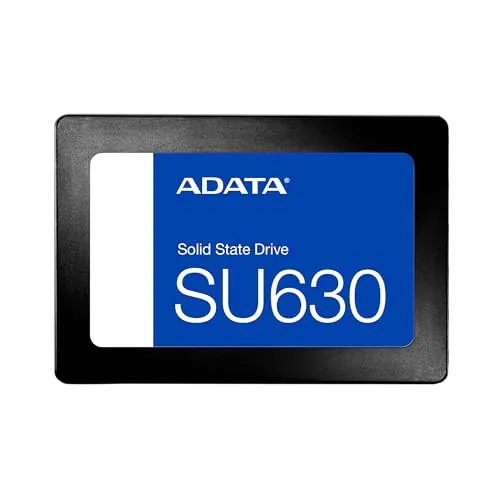
ADATA Ultimate SU630 480GB Solid State Drive
- Up to 520MB/s read and 450MB/s write speeds are specified.
Comparison
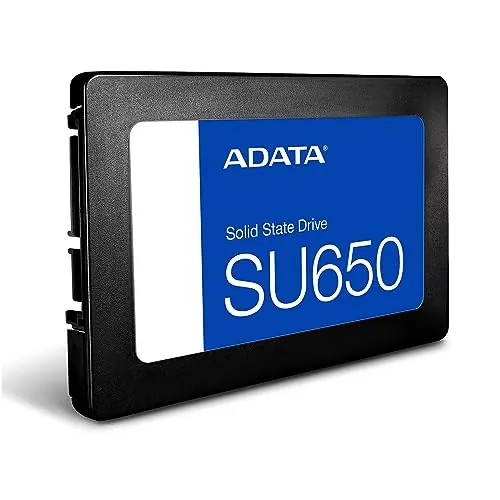
The ADATA SU630 480GB and ADATA SU650 1TB are 2.5-inch SATA SSDs designed to make compatible PCs feel faster than they do with mechanical hard drives. The SU650 is the better all-round choice for buyers who need 1TB and prioritize setup, value, and satisfaction, while the SU630 is compelling when 480GB is enough and its stronger performance assessment is preferred.
#1 Overall Winner
Contender
Choose the SU650 1TB for larger desktop storage, easier setup feedback, and the stronger overall assessment. Choose the SU630 480GB for a compatible PC or notebook when a smaller boot or everyday drive is enough and you favor its higher performance score. Both are SATA SSDs, so verify physical fit and SATA support before buying.
Overall winner
Depends on your needs
| Feature | ADATA Ultimate SU630 480GB Solid State Drive | ADATA Ultimate SU650 1TB Internal SSD | Winner |
|---|---|---|---|
Capacity |
480GB |
1TB |
ADATA Ultimate SU650 1TB Internal SSD |
Advertised read speed |
Up to 520MB/s |
Up to 520MB/s |
Tie |
Advertised write speed |
Up to 450MB/s |
Up to 450MB/s |
Tie |
Overall assessment |
Strong |
Slightly stronger |
ADATA Ultimate SU650 1TB Internal SSD |
Performance assessment |
Higher score |
Lower score |
ADATA Ultimate SU630 480GB Solid State Drive |
Setup and usability |
Strong |
Higher score |
ADATA Ultimate SU650 1TB Internal SSD |
Reliability assessment |
Mixed long-term evidence |
Higher score; overheating report |
ADATA Ultimate SU650 1TB Internal SSD |
Interface and form factor |
2.5-inch SATA |
2.5-inch SATA |
Tie |
Listed compatibility |
PC/notebook |
Desktop |
Depends |
Weight |
47g |
30g |
ADATA Ultimate SU650 1TB Internal SSD |
Customer satisfaction |
Very strong |
Slightly stronger |
ADATA Ultimate SU650 1TB Internal SSD |
Data-protection feature |
LDPC ECC |
LDPC ECC |
Tie |
Both drives list the same peak SATA performance: up to 520MB/s reads and 450MB/s writes. Each is therefore positioned to improve booting, downloads, and file transfers compared with a mechanical HDD. The SU630 receives the higher performance score and has reviews describing fast operation, including use with virtual machines. The SU650’s reviews also praise speed and faster booting, but one reviewer describes it as reasonable rather than the fastest. For the supplied performance assessment, the SU630 has the edge; for capacity-led everyday use, the SU650 remains competitive.
On advertised figures, this is a tie: both SSDs specify up to 520MB/s reads and 450MB/s writes. Both also receive review praise for faster booting than a spinning drive. The SU630 has the higher speed score and reports include fast operation in an older PC and comparisons to a Samsung SSD. The SU650 has positive boot-time reports too, but its scoring places it slightly behind. Neither should be chosen expecting speeds beyond a SATA SSD’s class.
The SU650 has the higher reliability score and its aggregated review overview says customers find it reliable, with installation and startup generally proceeding without issues. Still, one review reports overheating and eventual failure. The SU630 has many reports of trouble-free use and one reviewer says it was still working fine, but its reliability assessment is lower and a long-term review reports failure after several years. Neither isolated complaint proves a general outcome, but both support the need for current backups.
The SU650 leads in the supplied usability assessment. Its review feedback commonly says that it was easy to install, format, recognize, restore to, or use as a game drive. The SU630 also performs well for usability, with reviews describing easy installation, cloning support, and a clear improvement in a laptop or older PC. One SU630 reviewer experienced initial cloning difficulty, while a SU650 reviewer noted a mounting complication due to the absence of bottom screw threads. In typical compatible systems, both appear approachable HDD-replacement options.
Both products use the familiar compact 2.5-inch internal SSD layout intended for SATA installations. The SU650 weighs 30g, compared with 47g for the SU630, but this small difference is unlikely to matter once installed. The SU630 earns the higher design assessment. Practical fit is more important than appearance: one SU650 review says the bottom lacks screw threads, which may affect certain mounting arrangements. Confirm the drive bay, cable, connector, and mounting method in the target device.
The SU630 has the higher build-quality assessment, although the supplied material data is limited and its listing gives an uncertain enclosure description of aluminum or steel. The SU650 is described in one review as having a plastic case, and it receives a lower build-quality score. Both benefit from SSD construction without mechanical moving parts, which is relevant when replacing a hard disk. However, neither listing provides enough detailed construction information to make a definitive materials-based judgment.
Neither product has a strong durability lead in the supplied assessment; the SU630 is slightly ahead. As SSDs with no mechanical components, both are described as more resilient than a mechanical hard drive and the SU650 listing notes vibration resistance. Long-term evidence remains incomplete: the SU630 has one report of eventual failure, while the SU650 has one report involving overheating and failure. Buyers with write-intensive workloads should be especially careful to maintain backups.
Both compact 2.5-inch SSDs are easy to transport or fit into an internal system compared with larger mechanical drives. The SU630 has the higher portability score, despite weighing 47g versus 30g for the SU650. In practice, the difference is more likely to reflect the supplied scoring than a meaningful travel advantage. For internal use, the target device’s mounting space matters more than either listed weight.
The two SSDs share core features including 2.5-inch SATA form factors, LDPC error correction, and migration-related software. The SU630 specifically lists QLC 3D NAND, Dynamic SLC caching, SSD Toolbox, and lifespan or wear-level information. The SU650 highlights 3D NAND, a high-speed controller, low noise, low power consumption, vibration resistance, and downloadable file-management software. Neither listing provides advanced smart-storage functions. The choice is less about feature breadth than capacity, management preferences, and the intended system.
Both drives offer ADATA software support, but neither is a smart device with a companion-app experience. The SU630 lists SSD Toolbox and a migration utility, including drive-status, wear-level, and lifespan information. The SU650 offers downloadable SSD file-management and data-migration software. Their app-experience scores are equal, so the difference comes down to whether the SU630’s listed status and wear information is useful to the buyer.
The SU650 has the stronger setup assessment, backed by reviews that describe quick recognition, easy formatting, system-image restoration, and simple installation. The SU630 also scores strongly and has multiple reports of easy HDD replacement and migration. A review of the SU630 mentions needing several cloning attempts, while one SU650 review highlights mounting difficulty in a particular installation. Before starting, confirm the existing drive layout, make a recovery plan, and back up important files.
Both are 2.5-inch SATA internal SSDs, so compatibility depends on a suitable drive bay and SATA connection. The SU630 listing explicitly names PC/notebook compatibility, making it the clearer listing match for a laptop upgrade. The SU650 listing specifies desktop compatibility. Because physical mounting and system interfaces vary, neither is universally better; choose the model whose stated compatibility and capacity align with the target machine.
Both drives use SATA 6.0Gb/s hardware connectivity and a 2.5-inch internal form factor, placing them on equal footing for a standard SATA installation. The SU630 listing also mentions SATA and USB under connectivity technology, while the SU650 lists SATA. The SU650 has the higher connectivity score, but the supplied specifications do not establish a meaningful real-world interface advantage over the SU630. Check that the system has an available compatible SATA connection.
Both products are SSDs designed to avoid the mechanical components of a hard drive, and the SU650 specifically lists low power consumption. The SU630 has the slightly higher power-efficiency score. No measured consumption, standby behavior, or thermal testing is supplied, so there is not enough evidence to claim a substantial real-world efficiency advantage. Both are reasonable candidates for a quieter, lower-mechanical-complexity HDD replacement.
The SU650 narrowly leads on value because it pairs a 1TB capacity with the same advertised peak speed as the 480GB SU630, along with slightly stronger overall satisfaction and usability assessments. The SU630 also scores very well for value and is potentially the more proportionate choice when 480GB is all that is needed. Value should be judged against current price, required capacity, system compatibility, and the need to keep backups rather than capacity alone.
This is effectively a tie because both products are made by ADATA and their brand-trust scores are nearly identical. Reviewers for each model report positive prior experience with ADATA drives, while the supplied data does not provide detailed support history or update-policy evidence. Product-specific reliability feedback is mixed for both, so buyer confidence should also come from verified fit, a backup plan, and the seller’s current terms.
Both drives have strong Amazon feedback: the SU630 is rated 4.7/5 from 6,399 reviews, while the SU650 is rated 4.8/5 from 5,647 reviews. Reviews for both commonly praise faster booting, easy installation, and worthwhile HDD upgrades. The SU650 has the higher customer-satisfaction score and more clearly repeated praise for its 1TB capacity. Each also has isolated negative long-term or thermal feedback, which should be considered alongside the large positive review base.
The supplied warranty-support scores are equal and low for both drives, and detailed warranty, returns, replacement, or support terms are not provided. The SU630 listing notes two-year EU spare-part availability, but this is not enough to compare product warranty coverage. Buyers should check the current seller, regional warranty terms, return period, and support route before purchasing either SSD.
The ADATA Ultimate SU650 1TB is the best overall choice in this comparison. It combines substantially greater capacity with the same advertised up-to-520MB/s read and 450MB/s write ratings as the SU630, while earning slightly stronger overall, setup, usability, reliability, value, and customer-satisfaction assessments. It is the more flexible option for buyers whose storage needs may grow beyond a basic boot drive.
The ADATA Ultimate SU630 480GB remains a valid alternative rather than a poor second choice. It has higher performance and speed scores, supports the familiar 2.5-inch SATA upgrade path, and has positive review feedback from users replacing older hard drives. Pick it when 480GB is enough and the listing’s PC/notebook positioning fits the device. For either model, SATA compatibility, mounting requirements, current price, and a dependable backup routine should determine the final purchase.

Overall winner
Depends on your needs
The ADATA SU650 1TB is the narrow overall winner because it has a slightly higher overall score, stronger usability, reliability, value, and customer-satisfaction results, plus more than twice the capacity. The SU630 remains a sensible choice when 480GB is sufficient and its stronger performance and speed scores matter more.
Not in their supplied peak specifications. Both drives are rated for up to 520MB/s reads and 450MB/s writes over SATA. The SU630 receives higher performance and speed scores in the comparison data, but buyers should not expect either SATA model to offer performance beyond the limits of its interface.
Both drives are suited to replacing a mechanical hard drive and have reviews describing noticeably faster booting and easier everyday use. Choose the SU630 for a compatible PC or notebook when 480GB is enough. Choose the SU650 when a compatible desktop needs the extra room of a 1TB drive.
The SU650 is the more practical option for larger game libraries and general file storage because it offers 1TB rather than 480GB. Its reviews include use as a game drive and praise its capacity. It shares the SU630’s advertised SATA read and write limits, so capacity is the clearer advantage.
The SU650 has the higher setup and usability scores, and reviews repeatedly say it installed, formatted, and was recognized easily. The SU630 also has strong setup feedback, including reports of easy migration and installation. Installation still depends on having a compatible 2.5-inch SATA bay, connector, and mounting arrangement.
The SU650 has the higher reliability score and its aggregated review overview describes reliable installation and operation. However, one review reports overheating and failure. The SU630 also has many positive reports of continued operation, but one long-term review reports a failure after several years. Backups remain important with either drive.
Yes. The SU630 listing mentions SSD Toolbox and a migration utility for drive status, wear-level, lifespan, and migration tasks. The SU650 listing mentions downloadable ADATA SSD file-management and data-migration software. Reviewers for both product families also describe cloning or restoring systems during their upgrades.
The SU650 has a marginally higher value score and combines 1TB capacity with the same advertised peak read and write speeds as the SU630. The SU630 also scores strongly for value and can be the more appropriate purchase when a 480GB drive meets the intended storage requirement. Check current pricing before deciding.
Check our rankings and expert guides to find the best electronics products for your goals.