#1 Overall Winner
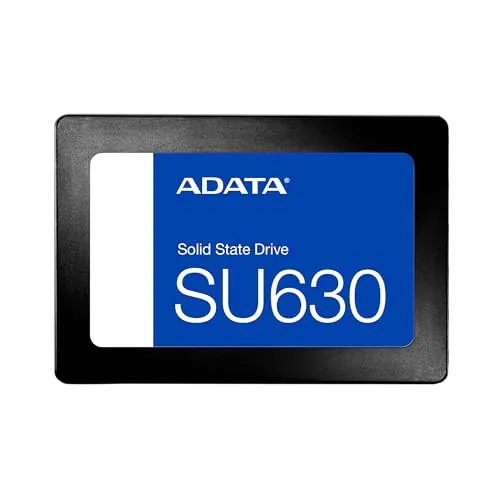
ADATA Ultimate SU630 480GB Solid State Drive
- Up to 520MB/s read and 450MB/s write speeds are specified.
Comparison
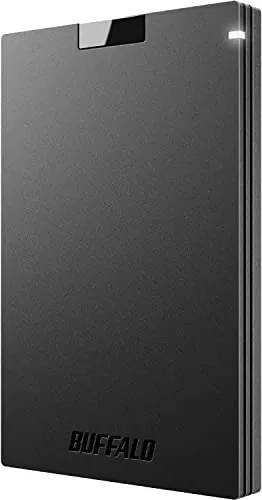
The ADATA Ultimate SU630 480GB is an internal SATA SSD aimed at upgrading a PC or notebook from a hard drive, while the BUFFALO External SSD 500GB is a portable USB storage option for computers and listed consoles. ADATA is the stronger choice for a compatible internal upgrade and higher stated transfer speeds; BUFFALO is more suitable for portable, cross-device storage.
#1 Overall Winner
Contender
Choose the ADATA SU630 if you want to replace a compatible 2.5-inch SATA HDD and prioritize higher stated speeds, migration tools, and overall value. Choose the BUFFALO External SSD if you need a pocketable drive for USB-connected PCs, Macs, or listed console storage and value USB-A/USB-C flexibility.
Overall winner
Depends on your needs
| Feature | ADATA Ultimate SU630 480GB Solid State Drive | BUFFALO External SSD 500GB | Winner |
|---|---|---|---|
| Drive type | Internal 2.5-inch SATA SSD | External USB SSD | Depends |
| Capacity | 480GB | 500GB | BUFFALO External SSD 500GB |
| Specified read speed | Up to 520MB/s | Up to 340MB/s | ADATA Ultimate SU630 480GB Solid State Drive |
| Specified write speed | Up to 450MB/s | Up to 320MB/s | ADATA Ultimate SU630 480GB Solid State Drive |
| Connectivity | SATA 6.0Gb/s | USB 3.2, USB-A and USB-C | BUFFALO External SSD 500GB |
| Compatibility | PC/notebook | PC, Mac, PS4 and PS5 listed | BUFFALO External SSD 500GB |
| Setup | Internal installation; migration utility included | External connection; PS5 setup may need formatting steps | ADATA Ultimate SU630 480GB Solid State Drive |
| Portability | 47g internal component | Compact external drive | BUFFALO External SSD 500GB |
| Data tools | SSD Toolbox and migration utility | Formatting tool referenced in review | ADATA Ultimate SU630 480GB Solid State Drive |
| Durability feedback | No mechanical parts; long-term uncertainty noted | Shock-resistant claim; mixed shell feedback | Depends |
| Warranty information | Two-year EU spare-part availability listed | Three years registered, two years unregistered | BUFFALO External SSD 500GB |
| Overall comparison score | Higher overall score | Lower overall score | ADATA Ultimate SU630 480GB Solid State Drive |
The ADATA has the stronger specified storage performance, with up to 520MB/s reads and 450MB/s writes compared with BUFFALO’s 340MB/s reads and 320MB/s writes. Its performance score is also higher, and user reviews commonly report much faster booting after replacing an HDD. BUFFALO remains faster than an HDD by design and receives positive speed feedback, but it is the lower-speed option on the supplied specifications.
ADATA is ahead for speed based on both the provided scores and specified throughput. Its up-to-520MB/s read and 450MB/s write ratings exceed BUFFALO’s stated 340MB/s read and 320MB/s write ratings. The difference favors ADATA for boot drives and internal file transfers, provided the computer supports a 2.5-inch SATA installation.
ADATA has a slightly stronger supplied reliability score and many positive reports of continued operation, although one review describes failure after several years. BUFFALO receives positive reliability comments too, but the supplied feedback includes reports of data corruption, severe slowdowns, and support dissatisfaction. These are individual reports rather than universal outcomes, but they make regular backups especially important for either drive.
Both drives have favorable everyday usability feedback within their intended roles. ADATA reviews describe easy installation and an easy transition from a hard drive, aided by its migration utility. BUFFALO is convenient for direct computer connection, but console use can add friction: one detailed PS5 review reports that formatting required Buffalo’s DiskFormatter2 utility and careful connection to the appropriate port.
ADATA uses a standard 2.5-inch internal form factor, making it practical for compatible desktop and laptop drive bays but not for routine carrying. BUFFALO is designed around external use, with compact dimensions and USB connectivity suited to transport. The choice is functional: ADATA disappears inside a computer, while BUFFALO is intended to travel with files and connect when needed.
ADATA’s SSD design has no mechanical components, which the product information presents as more resilient and quieter than an HDD. Its supplied build-quality score is higher. BUFFALO is described as shock-resistant and rugged, but customer feedback is mixed: some find it sturdy, while others say its plastic shell can bend or is prone to damage. Neither product has uniformly strong long-term durability evidence in the provided data.
ADATA benefits from solid-state construction without mechanical parts, though its durability score and long-term evidence remain moderate. BUFFALO is marketed as shock-resistant, but durability feedback is notably mixed, including comments about a thin plastic shell. Neither product should be chosen on an assumption of risk-free long-term storage; maintain separate copies of important data.
BUFFALO is the better portable drive. It is a compact external SSD intended for on-the-go backups, files, and game storage, with USB connectivity for direct use. ADATA weighs 47g, but its role is internal storage rather than removable transport. Buyers who need to move data physically between locations should favor BUFFALO.
ADATA focuses on internal-upgrade features: QLC 3D NAND, dynamic SLC caching, LDPC ECC, and SSD Toolbox with migration support. BUFFALO focuses on external convenience, supplying USB-A connectivity with a Type-C adapter and listing use across computers and consoles. ADATA offers more drive-management functionality; BUFFALO offers more connection and use-location flexibility.
ADATA provides SSD Toolbox for status, wear level, and lifespan information, plus a migration utility. BUFFALO’s supplied information does not describe a general companion application, although a review references the DiskFormatter2 utility for console preparation. ADATA therefore has the more clearly documented drive-management experience, while BUFFALO’s utility use appears more situational.
ADATA requires internal drive installation, but its migration utility and multiple reviews describing easy upgrades support a strong setup result for compatible systems. BUFFALO avoids opening a computer and can be directly connected by USB, which is simpler for everyday PC use. However, the provided PS5 feedback indicates that console formatting can be more involved, so the better setup experience depends on the intended device.
BUFFALO has the wider stated compatibility, covering Mac and PC platforms as well as PS4 and PS5. ADATA is specified for PC/notebook use and requires a compatible internal SATA connection. For game consoles and straightforward sharing between different computer types, BUFFALO is the relevant option. For an internal Windows PC or notebook upgrade, ADATA is purpose-built.
BUFFALO clearly wins connectivity. It supports USB 3.2 and provides USB-A and USB-C access, while its listed compatible devices include desktop computers, laptops, tablets, televisions, and PlayStation consoles. ADATA uses SATA 6.0Gb/s inside a PC or notebook. SATA is appropriate for an internal upgrade, but it does not provide the immediate cross-device convenience of USB.
Both products use solid-state storage rather than mechanical hard-drive components. The supplied power-efficiency score is higher for BUFFALO, while ADATA is also presented as an SSD upgrade with no mechanical components. The product data does not provide power-consumption figures, so a precise energy-use comparison is not possible.
ADATA leads the supplied value score because it combines higher stated SATA speeds, useful migration and monitoring tools, and strong customer satisfaction for HDD upgrades. BUFFALO adds external USB-A/USB-C convenience, broader listed compatibility, and warranty clarity, but has a lower supplied value score and lower specified throughput. Value therefore favors ADATA for internal PC upgrades and BUFFALO only when portability and external compatibility are requirements.
ADATA has the slightly higher supplied brand-trust score and receives several positive repeat-user comments in the provided reviews. BUFFALO also receives positive customer-service feedback from one reviewer, but another reports an unsatisfactory support and warranty experience. The supplied evidence gives ADATA a narrow edge, while neither brand can be evaluated beyond the provided product and review context.
ADATA has the stronger customer-satisfaction score, a 4.7/5 rating, and 6,399 reviews. Feedback frequently praises easy installation, HDD replacement value, and improved computer speed. BUFFALO has a 4.4/5 rating from 4,056 reviews, with praise for compactness, speed, capacity, and ease of use, but more mixed reports around durability, reliability, and PS5 setup.
BUFFALO has the clearer advantage for stated support coverage: it offers a three-year warranty for registered devices and two years when unregistered. ADATA lists two-year EU spare-part availability, but the supplied information does not provide comparable warranty terms. BUFFALO also has a higher warranty-support score, although individual review feedback about support is mixed.
The ADATA Ultimate SU630 480GB is the best overall option in this comparison for a compatible internal PC or notebook upgrade. It earns the higher overall score, has stronger specified 520MB/s read and 450MB/s write performance, and receives consistent praise for making older systems feel faster. Its migration and drive-monitoring tools further suit a hard-drive replacement project.
The BUFFALO External SSD 500GB remains the better purchase for a different job: portable, USB-connected storage. It offers slightly more capacity, USB-A and USB-C flexibility, broader listed device support, and clearer registered warranty coverage. Accept its lower specified speeds and the mixed reliability, shell-quality, and PS5-setup feedback only if external convenience is more important than internal SATA performance. In either case, keep backups of important files.

Overall winner
Depends on your needs
The ADATA is the stronger overall choice in the supplied scoring, particularly for performance, speed, value, setup, and customer satisfaction. That conclusion applies most directly to a compatible internal PC or notebook upgrade. The BUFFALO is the better fit when external USB use, broad device compatibility, and portability are more important than the higher stated SATA transfer speeds.
The ADATA Ultimate SU630 has the higher stated speeds, at up to 520MB/s read and 450MB/s write. The BUFFALO External SSD is specified at up to 340MB/s read and 320MB/s write. Actual results can vary by host device and connection, but the provided specifications and speed score favor the ADATA for compatible SATA installations.
The ADATA SU630 is listed as an internal 2.5-inch SATA SSD for PC and notebook use. Its supplied product information does not describe it as a ready-to-use external drive. Buyers seeking direct USB-A or USB-C connection between devices should choose the BUFFALO, which is explicitly sold as an external USB SSD.
The BUFFALO lists PS4 and PS5 compatibility, but the provided PS5 review adds an important limitation: it describes external storage as suitable for storing and playing PS4 games, rather than playing PS5 games. That review also reports that PS5 setup can require Buffalo’s formatting tool. Check console requirements and intended game use before buying.
For its intended use, the ADATA scores higher for setup and reviews often describe HDD replacement and migration as straightforward. It still requires opening a compatible PC or notebook and installing a SATA drive. The BUFFALO is generally plug-and-play on computers, but supplied feedback indicates that PS5 formatting can involve additional steps.
The BUFFALO is the practical portable choice because it is an external USB drive designed for on-the-go files, backups, and game storage. It supports USB-A and USB-C connections and has a compact form. The ADATA is also light, but it is intended to remain inside a compatible PC or notebook after installation.
The BUFFALO has clearer supplied warranty terms: three years for registered devices and two years if unregistered. The ADATA information lists EU spare-part availability for two years, but does not provide equivalent warranty detail in the supplied data. The warranty-support score therefore favors BUFFALO, although buyers should verify local terms before purchase.
Both products have positive user feedback, but neither is free from caveats in the supplied data. One ADATA review reports failure after several years, contributing to long-term durability uncertainty. BUFFALO feedback is more mixed, with reports of plastic-shell concerns and occasional data corruption or slowdown complaints. Keeping backups remains sensible with either drive.
Check our rankings and expert guides to find the best electronics products for your goals.