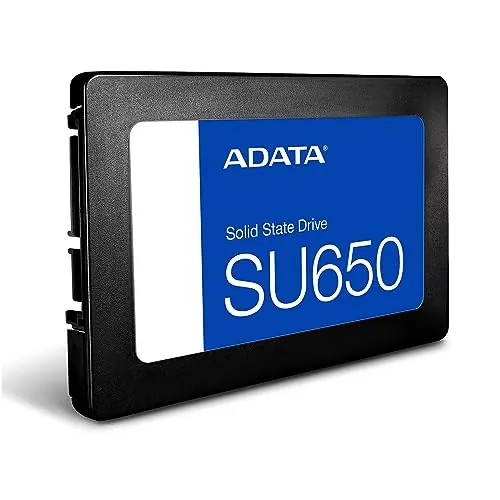
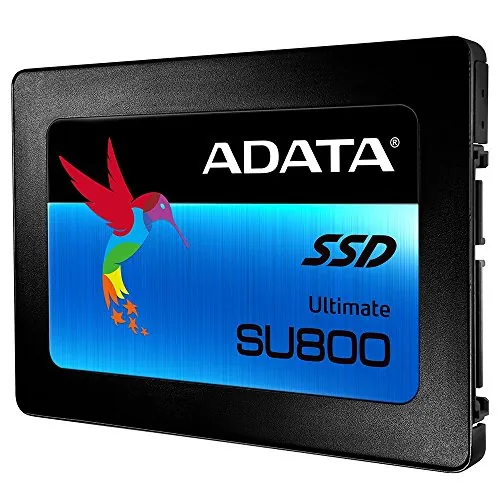
#1 Overall Winner
ADATA SU800 256GB 3D-NAND SATA SSD
- Rated sequential read and write speeds of up to 560MB/s and 520MB/s.
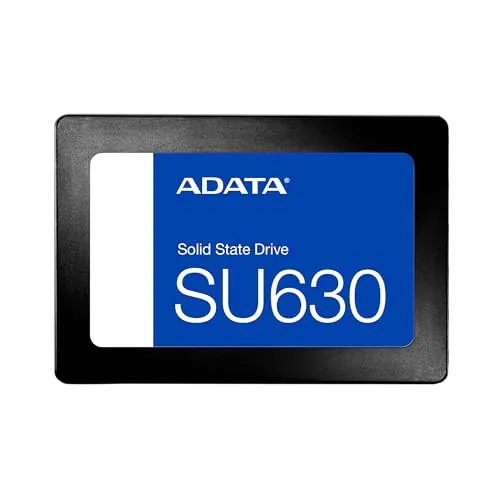
Comparison
The ADATA SU800 256GB and ADATA SU630 480GB are 2.5-inch SATA SSDs aimed at upgrading older computers from mechanical hard drives. The SU630 wins overall through its larger capacity, lower listed price, and stronger value results, while the SU800 is the more compelling option for buyers who want higher stated transfer ratings, a DRAM cache buffer, and a stated three-year warranty.
#1 Overall Winner
Contender
Choose the SU630 480GB for a budget-conscious HDD replacement where storage space and overall value are the priorities. Choose the SU800 256GB when a DRAM-equipped SATA drive, higher stated write speed, PC/Mac/Linux listing, and a stated three-year warranty outweigh the smaller capacity and higher listed price.
Overall winner
Depends on your needs
| Feature | ADATA SU800 256GB 3D-NAND SATA SSD | ADATA Ultimate SU630 480GB SATA SSD | Winner |
|---|---|---|---|
Overall score |
76 |
83 |
ADATA Ultimate SU630 480GB SATA SSD |
Capacity |
256GB |
480GB |
ADATA Ultimate SU630 480GB SATA SSD |
Rated read speed |
Up to 560MB/s |
Up to 520MB/s |
ADATA SU800 256GB 3D-NAND SATA SSD |
Rated write speed |
Up to 520MB/s |
Up to 450MB/s |
ADATA SU800 256GB 3D-NAND SATA SSD |
Cache details |
Dynamic SLC and DRAM cache buffer |
Dynamic SLC caching listed |
ADATA SU800 256GB 3D-NAND SATA SSD |
Setup |
Score 88 |
Score 88 |
Tie |
Compatibility |
PC, Mac, Linux listed |
PC/notebook listed |
ADATA SU800 256GB 3D-NAND SATA SSD |
Value |
Score 69 |
Score 88 |
ADATA Ultimate SU630 480GB SATA SSD |
Customer satisfaction |
4.7/5; 2,856 reviews |
4.7/5; 6,399 reviews |
ADATA Ultimate SU630 480GB SATA SSD |
Reliability score |
68 |
72 |
ADATA Ultimate SU630 480GB SATA SSD |
Warranty information |
Three-year warranty stated |
Not provided |
ADATA SU800 256GB 3D-NAND SATA SSD |
Listed price |
128.72 |
83.24 |
ADATA Ultimate SU630 480GB SATA SSD |
Both drives should deliver a major improvement over a mechanical HDD, and reviews for both describe faster booting and more responsive systems. The SU800 has a narrow specification advantage, with stated speeds up to 560MB/s read and 520MB/s write, compared with 520MB/s and 450MB/s for the SU630. The performance scores are almost identical, so this is not a decisive practical gap for basic SATA upgrades. The SU800's listed DRAM cache buffer may appeal to users who prioritise its specified caching hardware, while the SU630's larger capacity is more useful for many everyday installations.
The supplied speed score is tied, but the SU800 leads on its stated sequential figures: up to 560MB/s reads and 520MB/s writes versus the SU630's up to 520MB/s reads and 450MB/s writes. Both are SATA SSDs, and reviewers of each report much faster boot and everyday performance than with HDDs. System limitations can affect observed results, as one SU800 review notes that an older motherboard capped throughput below the drive's maximum rating.
The SU630 has a small reliability-score lead. Positive reports exist for both drives, including comments that they worked without issues and accelerated older systems. Still, reliability is the key caution in this comparison. The SU800 review overview identifies multiple reports of failures after one to six months, while a supplied SU630 review reports failure after several years. Maintain backups of important files with either drive.
Usability is evenly matched in the scoring data. Reviews for both products commonly describe a straightforward installation and a noticeable improvement after replacing an HDD. The main usability caveat concerns the SU800: one reviewer found the process for accessing migration software unnecessarily difficult. For either model, cloning an existing drive may require preparation or an alternative tool if the supplied migration workflow does not suit the buyer.
Both drives use the same practical 2.5-inch internal SATA form factor and are intended for unobtrusive installation in compatible laptops or desktops. The SU800 weighs 0.1 pounds, while the SU630 is listed at 47g. The difference is unlikely to matter in a fixed desktop installation; both are compact storage upgrades rather than portable external drives.
The SU630 has a small build-quality scoring advantage. It is listed with an aluminum or steel enclosure, while the SU800 is described with a 3D NAND flash-memory enclosure material. Neither supplied dataset offers enough detail to make a strong materials or connector-quality conclusion. Review evidence is more useful here: the SU800 overview includes early-failure reports, and one SU630 review describes a failure after several years.
The SU630 scores higher for durability, although the evidence does not support treating either drive as free from long-term risk. The SU800 promotes high TBW and protection technologies, and one long-term review reports continued operation after three years. Against that, its review overview cites several early failures. The SU630 is described as more resilient than HDDs because it has no mechanical components, but one supplied review reports that it eventually failed after several years.
Both are lightweight internal 2.5-inch SSDs, but the SU630 has the higher portability score and is listed at 47g. The SU800 is listed at 0.1 pounds. In practice, both are easy to transport before installation and add minimal weight to a laptop, but they are internal drives rather than self-contained external storage devices.
The SU800 lists 3D NAND, dynamic SLC caching, a DRAM cache buffer, LDPC ECC, RAID Engine, Data Shaping, DEVSLP, SSD Toolbox, and Migration Utility support. The SU630 lists QLC 3D NAND, dynamic SLC caching, LDPC ECC, drive-status and wear information through SSD Toolbox, and migration utility support. The SU800 has the more extensive supplied feature list, especially because it explicitly includes DRAM caching and additional protection and power-related technologies.
Both drives are associated with ADATA SSD Toolbox and migration software, offering drive-management and migration options. The SU630 description specifically references status, wear-level, and lifespan information. The SU800 also offers Toolbox and Migration Utility access, but one reviewer reported a frustrating proof-of-purchase process for migration-software access. Based on the supplied app-experience scores, the SU630 has a modest advantage.
Setup is a tie. Both drives receive the same high setup score, and reviews describe easy installation, quick system recognition, and successful HDD replacements. Neither listing indicates that desktop mounting hardware or SATA cables are included, and one SU800 reviewer specifically noted needing separate mounting hardware and cables. Check the contents of the current package and your system's physical requirements before starting the upgrade.
The SU800 is the stronger option for explicitly stated compatibility: its hardware-platform listing includes PC, Mac, and Linux, and reviews mention successful Windows and Linux use. The SU630 is described as compatible with PC/notebook systems. Both require a compatible internal 2.5-inch SATA connection. Before ordering, confirm drive-bay space, connector availability, and any laptop-specific mounting requirements.
Both products use SATA connectivity and list SATA 6.0Gb/s hardware connectivity, making them suitable for compatible 2.5-inch SATA bays. The SU800 receives the stronger connectivity score and lists PC, Mac, and Linux hardware platforms. The SU630 is listed for PC/notebook use; although its specifications also mention USB connectivity, it is described as an internal hard drive, so buyers should confirm their intended connection method and hardware before purchase.
The SU800 has the higher power-efficiency score and specifically lists DEVSLP, a Device Sleep technology. Its description also positions 3D NAND as more efficient than traditional 2D NAND. The SU630 is also an SSD without mechanical components and has a solid power-efficiency score, but the supplied details provide fewer specific power-management features. The SU800 has the clearer evidence-based edge.
The SU630 is the better value in the supplied data. It costs less at the listed price, offers 480GB rather than 256GB, and earns the higher value score, while retaining strong review sentiment and competent SATA performance. The SU800 costs more and has less storage, but its DRAM cache buffer, faster stated read/write ratings, clearer warranty information, and wider listed compatibility can make it a reasonable value for a buyer who needs those particular attributes.
This is largely a tie because both products are made by ADATA and receive similar brand-trust scores. The SU800 has a stated three-year warranty, which offers more clarity in the provided data. The SU630 has stronger customer satisfaction but weaker warranty-support scoring. Product-level review reports of failures mean buyers should focus on retailer return terms and keep regular backups rather than relying on brand identity alone.
Both drives have a 4.7/5 Amazon rating, and both receive praise for faster systems and simple upgrades. The SU630 has 6,399 reviews compared with 2,856 for the SU800, plus a higher customer-satisfaction score. The SU800 also has strong satisfaction results, especially for boot speed and older-system upgrades, but its review overview includes more prominent reports of early durability problems.
The SU800 is the clearer choice for warranty information because it explicitly states a three-year warranty and has the higher warranty-support score. Comparable warranty terms for the SU630 are not supplied; its listing only notes two years of EU spare-part availability, which is not the same as a stated drive warranty. Buyers considering the SU630 should verify current warranty and support terms with the seller before purchase.
The ADATA Ultimate SU630 480GB is the best overall option in this comparison. It has the higher overall score, nearly double the storage capacity, a lower listed price, and better value and customer-satisfaction results. For most people upgrading an older laptop or desktop from a hard drive, those benefits outweigh its lower stated write speed.
The ADATA SU800 256GB remains the better specialist choice when 256GB is enough. Its up-to-560/520MB/s ratings, explicit DRAM cache buffer, broader listed platform compatibility, and stated three-year warranty give it a stronger feature and specification profile. Neither drive is ideal for buyers who require the speed of NVMe storage, and both should be used with a reliable backup routine because the review data includes durability concerns. Check your SATA compatibility and required installation accessories before deciding.
Overall winner
Depends on your needs
The ADATA SU630 480GB is the stronger overall pick in the supplied scoring data, helped by its higher overall score, larger capacity, lower listed price, and stronger value and customer-satisfaction results. The SU800 remains a sensible alternative for buyers who prioritise its higher stated write speed, DRAM cache buffer, broader listed platform compatibility, and stated three-year warranty.
The ADATA SU630 has 480GB of storage, compared with 256GB on the ADATA SU800. That additional capacity gives the SU630 more room for an operating system, programs, documents, and general files. Buyers should still check their actual storage needs, as neither drive is intended to compete with high-capacity modern storage options.
On the stated sequential specifications, the SU800 is faster: up to 560MB/s read and 520MB/s write versus up to 520MB/s read and 450MB/s write for the SU630. Both are SATA drives, so their real-world speed also depends on the host system and SATA connection. Both received the same speed score in the provided data.
Either drive can make a meaningful upgrade from a mechanical hard drive. Reviews for both models describe faster booting and easier everyday use after installation. Choose the SU630 if additional capacity and listed value matter most. Choose the SU800 if its DRAM cache, higher specified write speed, and explicit PC, Mac, and Linux compatibility are more important.
This is effectively a tie. Both drives have the same high setup score, and reviews for each mention straightforward installation or an easy transition from an HDD. They are both 2.5-inch internal SATA SSDs, so buyers should verify that their laptop or desktop has the necessary bay, SATA connection, and any required mounting hardware or cables.
Both product descriptions reference ADATA SSD Toolbox and migration software. However, one SU800 reviewer found the process for obtaining migration software inconvenient because the proof-of-purchase submission requirements were restrictive. If cloning an existing drive is essential, confirm the current software-access process and prepare an alternative migration method if necessary.
The SU630 is the better value choice in the provided data. It has a substantially higher value score, 480GB of capacity, and a lower listed price than the 256GB SU800. The SU800 can still justify consideration for buyers who specifically value its DRAM cache buffer, faster stated write rating, and stated three-year warranty.
There is positive feedback for both drives, including reports of stable operation and faster systems. However, the SU800's review overview notes multiple reports of failures after one to six months. The SU630 also has long-term uncertainty, with one supplied review reporting failure after several years. Important data should be backed up regardless of the drive selected.
Check our rankings and expert guides to find the best electronics products for your goals.