#1 Overall Winner
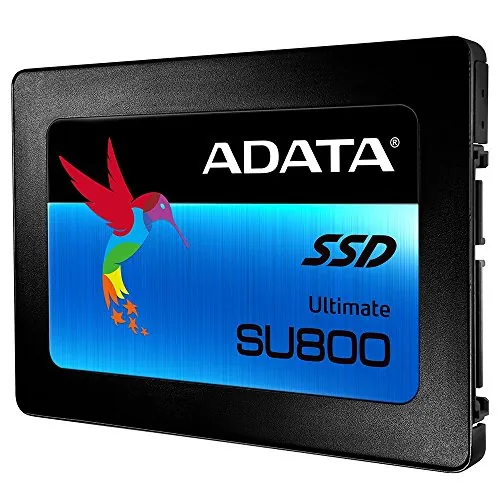
ADATA SU800 256GB
- Rated sequential read and write speeds of up to 560MB/s and 520MB/s.
Comparison
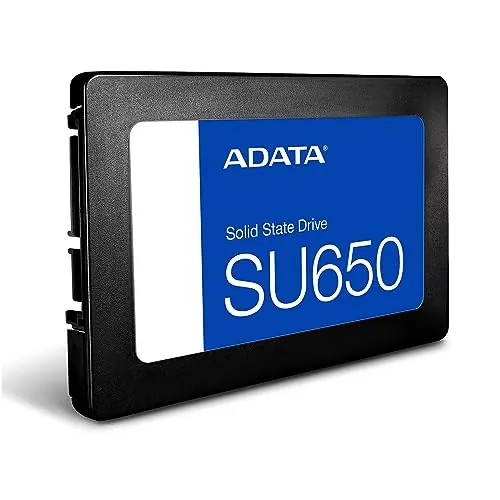
The ADATA SU800 256GB and ADATA Ultimate SU650 1TB are 2.5-inch SATA SSDs designed to speed up compatible computer upgrades. The SU800 offers higher stated peak speeds and a listed DRAM cache, while the SU650 is the more compelling all-round choice for buyers who need 1TB capacity, easier setup, stronger customer satisfaction, and better supplied value scoring.
#1 Overall Winner
Contender
Choose the ADATA SU650 1TB for a spacious, easy-to-install SATA upgrade with stronger overall value signals. Choose the ADATA SU800 256GB if you need a smaller system drive and place more weight on its listed DRAM cache, faster rated writes, and stated warranty.
Overall winner
Depends on your needs
| Feature | ADATA SU800 256GB | ADATA Ultimate SU650 1TB | Winner |
|---|---|---|---|
Capacity |
256GB |
1TB |
ADATA Ultimate SU650 1TB |
Rated read speed |
Up to 560MB/s |
Up to 520MB/s |
ADATA SU800 256GB |
Rated write speed |
Up to 520MB/s |
Up to 450MB/s |
ADATA SU800 256GB |
Cache features |
Dynamic SLC caching and DRAM cache buffer |
Not specified in supplied details |
ADATA SU800 256GB |
Overall score |
76 |
84 |
ADATA Ultimate SU650 1TB |
Usability and setup |
Strong scores; migration download concerns reported |
Higher usability and setup scores |
ADATA Ultimate SU650 1TB |
Reliability |
Early-failure reports noted |
Higher reliability score; one overheating report |
ADATA Ultimate SU650 1TB |
Compatibility |
PC, Mac, Linux stated |
Desktop compatibility stated |
ADATA SU800 256GB |
Warranty |
Three years stated |
Term not stated |
ADATA SU800 256GB |
Customer feedback |
4.7/5 from 2,856 reviews |
4.8/5 from 5,647 reviews |
ADATA Ultimate SU650 1TB |
Value score |
69 |
89 |
ADATA Ultimate SU650 1TB |
Form factor and connection |
2.5-inch SATA 6Gb/s |
Tie |
The SU800 has the edge in stated SATA performance, rated at up to 560MB/s read and 520MB/s write compared with up to 520MB/s and 450MB/s for the SU650. It also lists a DRAM cache buffer and dynamic SLC caching, while the SU650 description emphasises a high-speed controller and 3D NAND. In real use, both receive positive feedback for much faster booting and data movement than traditional hard drives. The SU650's lower supplied performance score does not prevent it from being a practical everyday drive, but the SU800 is the better fit when the higher listed speed ceiling matters.
The SU800 is the faster drive by stated sequential specifications, with up to 560MB/s reads and 520MB/s writes against the SU650's up to 520MB/s and 450MB/s. Its speed score is also higher in the supplied data. Still, reviews for both models report clearly improved booting and general responsiveness after a hard-drive replacement. For a conventional SATA upgrade, the SU800 is preferable for the higher listed ceiling; for capacity-led everyday storage, the SU650 remains a credible option.
The SU650 receives the higher reliability score and its aggregated review overview reports dependable installation and operation. However, one review mentions overheating and a subsequent failure. The SU800's review overview identifies repeated reports of failure after one to six months, despite other buyers reporting stable Linux and desktop use. The available evidence favors the SU650 on reliability, but important files should be backed up with either SSD because storage failures can occur.
Both drives are designed as simple internal SATA upgrades and receive favorable installation comments. The SU650 has the stronger supplied usability score, with reviewers describing quick recognition, formatting, restoration, and general installation. The SU800 also scores well, and reviews report that Windows and Linux systems recognized it readily. Its usability is weakened by one reviewer's report that obtaining the advertised migration software required an inconvenient proof-of-purchase process. Buyers planning a clone should verify their preferred migration method before starting.
Both products use the same practical 2.5-inch internal SATA design, making them suited to compatible drive bays and SATA connections rather than external portable use. The SU800 is listed at 0.1 pounds, while the SU650 is listed at 30 grams; both are lightweight storage components. The meaningful design difference is capacity rather than physical format: the SU800 is a compact 256GB option, while the SU650 is a 1TB option in the same general class of drive.
Neither listing provides extensive material or enclosure-construction detail beyond 3D NAND flash-related enclosure descriptions. The SU650 is described in one review as having a plastic case, while the SU800 has a review cautioning that its connector should be handled carefully. The supplied build-quality scores are close, with the SU800 slightly ahead. These details are insufficient to make a strong hardware-construction claim, so correct mounting and careful SATA connector handling are sensible for either drive.
The SU650 has a modestly higher supplied durability score, though the evidence is mixed. Its reviews are generally positive but include one overheating concern. The SU800 promotes high TBW and related protection technologies, and one long-term review reported continued operation after three years; however, its aggregated feedback also includes multiple early-failure reports. The SU650 is the safer choice based on the provided durability score, while neither model should be used as the sole location for irreplaceable data.
Both are lightweight 2.5-inch internal drives, so portability is mainly about carrying the component before installation rather than using it externally. Their supplied portability scores are equal. The listings do not establish that either includes an external enclosure, cable, or carrying accessory. For normal internal desktop or laptop upgrades, their compact form factor is equally practical.
The SU800 has the more feature-rich supplied specification set. It lists dynamic SLC caching, a DRAM cache buffer, RAID Engine and Data Shaping, DEVSLP, high TBW language, SSD Toolbox, and a migration utility. The SU650 lists 3D NAND, a high-speed controller, LDPC error correction, low power consumption, vibration resistance, and downloadable file-management and migration software. The SU800 therefore leads on listed storage-management and caching features, while the SU650's standout practical feature is its substantially larger 1TB capacity.
Both products offer downloadable ADATA software for migration and drive management. The SU800 lists SSD Toolbox and Migration Utility software, but one customer describes the migration-software download process as burdensome because of proof-of-purchase requirements. The SU650 lists downloadable file-management and migration software and receives the higher supplied app-experience score. Details on ongoing software updates, account requirements, and platform support are not provided.
The SU650 wins on supplied setup scoring, and reviews commonly say it was easy to install, format, recognize, or restore to in a PC. The SU800 also has a strong setup score, with reports of fast recognition by Windows and successful cloning for Linux use. For both, setup can vary based on whether the computer needs a mounting bracket, caddy, SATA cable, initialization, drive cloning, or a clean operating-system installation.
The SU800 has the advantage in explicit compatibility information: it lists PC, Mac, and Linux hardware platforms, and supplied reviews include successful Linux Mint use. The SU650 is listed as desktop compatible, with reviews describing use in Windows systems. Both need a compatible internal 2.5-inch SATA connection. Before purchase, confirm the computer has the correct bay, SATA data and power connections, and any required bracket, caddy, or cable.
Both drives use SATA connectivity and list SATA 6.0Gb/s hardware connectivity in a 2.5-inch form factor. The SU800 receives the higher supplied connectivity score and explicitly lists compatibility with PC, Mac, and Linux. The SU650 is stated as desktop compatible. Actual throughput will depend on the host system: one SU800 review notes that an older motherboard's lower SATA capability limited observed speeds below the drive's maximum rating.
The SU800 has the higher supplied power-efficiency score and specifically lists DEVSLP, while its description emphasizes efficiency benefits from 3D NAND. The SU650 also claims low power consumption in its product details. Neither listing provides measured power draw or standby figures, so the available information supports only a modest advantage for the SU800 based on its listed feature set and supplied score.
The SU650 is the stronger value option in the supplied scoring. Its 1TB capacity, positive setup feedback, high customer-satisfaction score, and solid everyday SATA performance make it more versatile than a 256GB drive. The SU800 should not be dismissed as poor value: it brings higher rated speeds, DRAM caching, and a stated three-year warranty. Its value depends on whether those advantages matter more than the SU650's fourfold capacity advantage and stronger overall buyer feedback.
Both products come from ADATA, so there is no brand-level distinction in this comparison. Their supplied brand-trust scores are identical. The decision should instead focus on the individual listing details: the SU800's stated warranty and explicit platform coverage versus the SU650's stronger aggregate satisfaction, reliability, setup, and value results. Support and warranty terms should be checked with the seller before purchase, especially for the SU650, whose warranty duration is not supplied.
The SU650 leads in customer satisfaction based on the supplied data, with a 4.8/5 rating from 5,647 reviews and a higher customer-satisfaction score. Buyers frequently praise its capacity, easy installation, boot-speed improvements, and value. The SU800 is also well received, with 4.7/5 from 2,856 reviews and many reports of major improvements to older PCs. Its satisfaction picture is tempered by repeated early-failure complaints in the aggregated review overview.
The SU800 has the clearer warranty position because its listing explicitly states a three-year warranty and it has the higher supplied warranty-support score. The SU650's supplied warranty-support score is lower, and the product information provided does not state a warranty term. The SU800's migration-software access has drawn a complaint about the process, so buyers who intend to clone an existing drive should verify the current software process and support route.
The ADATA Ultimate SU650 1TB is the best overall choice in this comparison. It has the higher overall score, better supplied scores for usability, setup, reliability, value, and customer satisfaction, plus four times the capacity of the SU800. That makes it the more practical SATA SSD for most buyers building or refreshing a general-purpose desktop.
The ADATA SU800 256GB remains a sensible alternative for a focused boot-drive upgrade. Its higher rated 560MB/s read and 520MB/s write speeds, DRAM cache buffer, dynamic SLC caching, three-year warranty, and explicit PC/Mac/Linux support give it meaningful advantages. Choose it when capacity is not the priority; choose the SU650 when you need room for a fuller system installation and want the stronger all-round buyer outcome in the supplied data.

Overall winner
Depends on your needs
The SU650 1TB is the stronger overall choice in the supplied scoring because it leads on overall score, usability, reliability, value, setup, and customer satisfaction. The SU800 remains the more performance-focused option on paper, with higher stated read and write figures plus a listed DRAM cache buffer. Capacity is the deciding practical advantage for the SU650.
The ADATA Ultimate SU650 provides 1TB, while the ADATA SU800 provides 256GB. That gives the SU650 four times the capacity, making it more suitable when an operating system, games, applications, and personal files need to share the same drive. The SU800 is more appropriate when 256GB is sufficient for the intended installation.
The SU800 has higher stated sequential figures: up to 560MB/s read and 520MB/s write, versus up to 520MB/s read and 450MB/s write for the SU650. Both are SATA drives, so actual results also depend on the computer's SATA support, installation, and workload. Neither is positioned as an NVMe alternative.
It can be a good fit for an older compatible SATA-based PC when 256GB is enough. Reviews describe major improvements to boot time and general responsiveness after replacing hard drives in older systems. Its listed DRAM cache and higher stated SATA speeds are useful advantages, but buyers should consider the reported early-failure concerns and keep backups.
The SU650 leads on setup and usability in the supplied scores, and reviewers repeatedly describe it as easy to install, format, and use after recognition by the PC. The SU800 also scores strongly for setup and has positive installation feedback. Both require a compatible 2.5-inch SATA connection and any necessary mounting hardware or cables are not confirmed as included.
The SU650 is the better value choice according to the supplied scoring. It combines 1TB capacity with positive feedback for installation, speed, reliability, and everyday use. The SU800 may still suit a buyer who values its listed DRAM cache, three-year warranty, and higher stated write speed, but its much smaller capacity narrows its appeal.
The SU800 explicitly lists PC, Mac, and Linux hardware-platform compatibility. Its reviews also include successful Linux Mint installations. The SU650 is listed as desktop compatible, but the provided details do not explicitly list Mac or Linux support. In either case, confirm that the target device accepts a 2.5-inch SATA internal drive before buying.
The SU650 has the higher reliability score and its review overview is broadly positive about dependable operation. One review does report overheating and failure concerns. The SU800 has several reports of early failures in its aggregated review summary, despite many positive reports of stable operation. Back up important data regardless of the drive selected.
Check our rankings and expert guides to find the best electronics products for your goals.