#1 Overall Winner
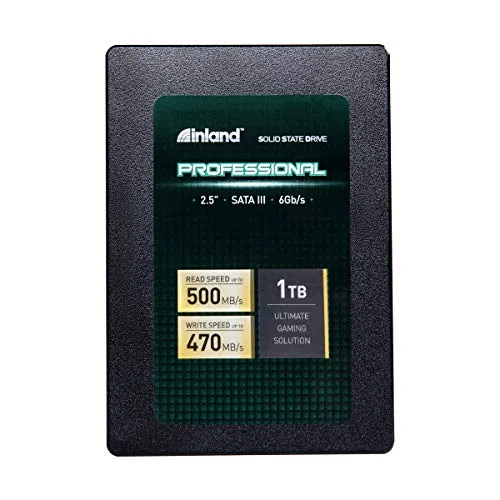
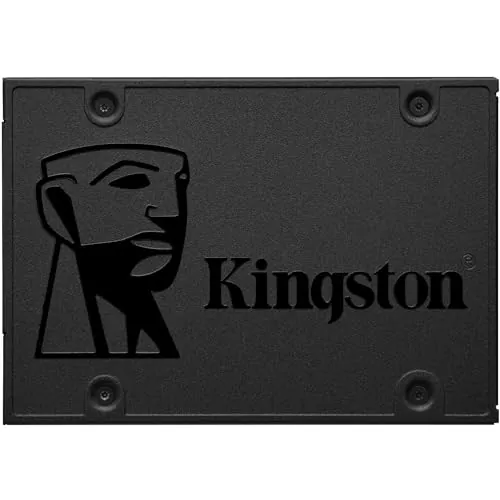
INLAND Professional 1TB SATA SSD
- 1TB capacity in a standard 2.5-inch, 7mm SATA format.
Comparison
The INLAND Professional 1TB is a conventional 2.5-inch SATA SSD aimed at straightforward upgrades, while the Intel 660p is a 2TB M.2 NVMe drive for compatible systems. The Intel wins overall on supplied scoring, capacity, and peak speed, but the INLAND remains the more appropriate option for systems limited to a SATA drive bay.
#1 Overall Winner
Contender
Choose the Intel 660p for a compatible M.2 NVMe system, 2TB capacity, faster peak transfers, and read-focused game or media storage. Choose the INLAND Professional for a 2.5-inch SATA-only laptop or desktop upgrade, especially when clear stated endurance and warranty details matter. Avoid treating either as an ideal sustained heavy-write work drive based on the supplied review feedback.
Overall winner
Depends on your needs
| Feature | INLAND Professional 1TB SATA SSD | Intel 660p Series 2TB NVMe SSD | Winner |
|---|---|---|---|
| Capacity | 1TB |
2TB |
Intel 660p Series 2TB NVMe SSD |
| Form factor | 2.5-inch, 7mm |
M.2 2280 |
Depends |
| Interface | SATA III 6Gb/s |
PCIe NVMe 3.0 x4 |
Intel 660p Series 2TB NVMe SSD |
| Rated sequential read | Up to 500 MB/s |
Up to 1,800 MB/s |
Intel 660p Series 2TB NVMe SSD |
| Rated sequential write | Up to 470 MB/s |
Up to 1,800 MB/s |
Intel 660p Series 2TB NVMe SSD |
| NAND type | 3D TLC NAND |
3D QLC NAND |
Depends |
| Stated endurance | Up to 660TBW |
Not provided in listing details |
INLAND Professional 1TB SATA SSD |
| Everyday installation | Strong setup score; SATA cabling or bay required |
Strong setup score; compatible M.2 slot required |
Depends |
| Compatibility | Desktop, laptop, PC, Mac |
Compatible M.2 PCIe systems |
Depends |
| Value | Good value score and low-cost upgrade feedback |
Higher value score and 2TB capacity |
Intel 660p Series 2TB NVMe SSD |
| Customer satisfaction | 4.6/5 from 4,669 reviews |
4.8/5 from 2,737 reviews |
Intel 660p Series 2TB NVMe SSD |
| Warranty details | Three-year limited parts and labor warranty |
Not provided |
INLAND Professional 1TB SATA SSD |
The Intel 660p has the higher peak-performance ceiling on a compatible PCIe NVMe 3.0 x4 system: its listed sequential read and write speeds reach up to 1,800 MB/s, versus up to 500 MB/s read and 470 MB/s write for the INLAND SATA drive. This makes the Intel more compelling for fast loading and transfers that remain within its effective cache behavior.
The INLAND has a higher supplied performance score, but that does not overcome the interface gap in listed sequential specifications. In practice, its SATA-level performance is still a major improvement over a mechanical drive. For long, frequent writes, both models carry caveats: the Intel can slow sharply after cache exhaustion, while INLAND reviews advise against write-intensive workloads.
For peak sequential speed, the Intel 660p is the clear winner: it is rated at up to 1,800 MB/s for both reading and writing, compared with the INLAND's up to 500 MB/s read and 470 MB/s write. Reviews also report Intel results around 1.4 GB/s or higher in suitable systems.
That advantage is not constant. Intel reviews repeatedly describe a drop in write speed during large, sustained transfers after the SLC cache is consumed. The INLAND is slower by interface design but offers predictable SATA-class rated throughput for mainstream tasks. System configuration remains an important limit for either model.
The supplied reliability scores are close, with Intel slightly ahead, but both products have mixed long-term feedback. Some INLAND customers report reliable use over months or years, while others mention early failures, freezing, or drive-recognition problems. Some Intel owners report stable use and positive experiences, but reviews also raise concerns over QLC longevity and reports that the drive may not last.
Neither set of comments eliminates the need for backups. The INLAND's stated warranty and endurance information provide clearer listing-level safeguards, while the Intel has stronger customer satisfaction in the supplied data.
Both drives have strong usability and setup scores, and both receive positive comments about installation. The INLAND is familiar for users replacing a 2.5-inch hard drive or SATA SSD, although it needs a SATA connection and physical mounting. The Intel can be physically simpler inside a compatible machine because it inserts into an M.2 slot and is secured with a screw.
The Intel has more compatibility checks before purchase. Buyers need to confirm that the slot supports PCIe NVMe rather than merely accepting an M.2 device. The INLAND is simpler for legacy upgrades, although some customers reported Windows 10 detection issues.
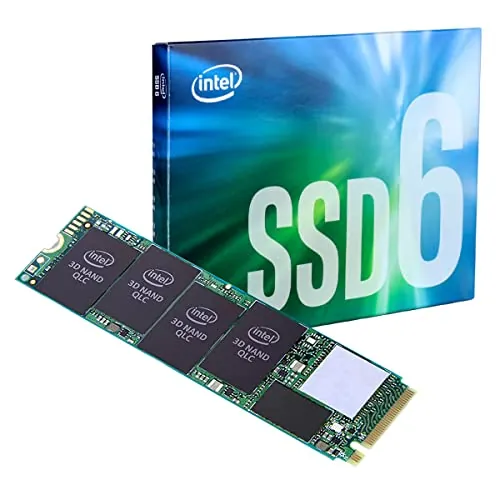
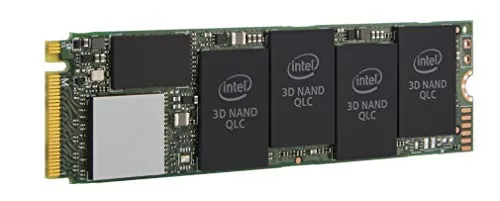
The drives have fundamentally different physical designs. The INLAND uses a 2.5-inch, 7mm form factor intended for traditional internal drive bays. The Intel uses the smaller M.2 2280 card format, which mounts directly on a compatible motherboard or laptop board and avoids SATA data and power cables.
The Intel is more space-efficient inside a modern compatible system. The INLAND is more practical where a 2.5-inch bay already exists. Neither format is inherently better without considering the computer's internal layout and supported interfaces.
The INLAND's listed 3D TLC NAND, shock resistance, vibration resistance, and stated endurance up to 660TBW support its stronger supplied durability score. It is built as a 2.5-inch enclosed SATA drive, which may be physically reassuring for conventional drive-bay installations.
The Intel's compact M.2 board design is efficient for modern systems, but the provided reviews identify thermal behavior as a consideration: some users report cool operation with a heatsink, while others report heat under load. Its QLC NAND trade-off also contributes to a lower supplied durability score. Neither listing provides detailed materials or construction analysis beyond these points.
The INLAND has the edge in the supplied durability score and lists 3D TLC NAND, shock and vibration resistance, and endurance up to 660TBW. Those details make its durability proposition clearer on paper.
The Intel's QLC NAND is designed around capacity and value, but supplied reviews consistently note lower suitability for frequent high-write workloads and concern about endurance. Its compact M.2 design may also benefit from attention to cooling in demanding systems. Actual service life will depend heavily on write volume, thermals, and system conditions.
Neither product is portable storage by itself; both are internal drives. The Intel's M.2 2280 module is physically smaller and lighter than a 2.5-inch SATA drive, so it is more space-efficient inside compact laptops and desktops. The INLAND's 2.5-inch design is larger but remains thin at 7mm and fits the drive bays found in many portable computers.
The INLAND focuses on conventional upgrade features: a 2.5-inch, 7mm SATA format, 3D TLC NAND, shock resistance, stated 660TBW endurance, and a listed three-year limited warranty. The Intel's defining features are its M.2 2280 footprint, PCIe NVMe 3.0 x4 connection, 2TB capacity, and QLC NAND architecture designed to provide higher capacity per cell.
Neither is presented as a feature-rich software platform. The more important distinction is storage architecture: INLAND is a direct SATA replacement, while Intel is a higher-bandwidth NVMe option with workload-dependent cache performance.
Setup feedback is positive for both products. INLAND reviewers describe simple connections and effective use as an operating-system boot drive. Intel reviewers commonly describe inserting the M.2 module, securing it, then initializing, partitioning, or formatting it in Windows.
The INLAND has a slight setup advantage for a known SATA drive-bay replacement because its role is straightforward. The Intel's installation is also simple in the right machine, but confirming NVMe support, locating the M.2 slot, and managing possible thermal considerations add checks. Neither product includes enough supplied information to compare bundled installation hardware.
Compatibility is the deciding factor. The INLAND is a 2.5-inch SATA III drive for desktop and laptop systems with the relevant bay and SATA connection. It is the practical upgrade path for many older machines, although customer feedback includes some Windows 10 recognition issues.
The Intel requires an M.2 2280 slot that supports PCIe NVMe and uses the appropriate keying. It may fit a broad range of newer notebooks, desktops, and compatible systems, but it is not a direct substitute for a 2.5-inch SATA device. Check the computer manual before selecting either model.
The Intel wins on interface bandwidth, using PCIe NVMe 3.0 x4 rather than SATA III 6Gb/s. Its listed sequential speeds reflect that advantage, but only when installed in a compatible M.2 PCIe NVMe slot with sufficient lane bandwidth. Reviews show that host hardware can limit achieved speeds.
The INLAND uses broadly established SATA connectivity and is compatible with desktop, laptop, PC, and Mac hardware that provides the appropriate SATA connection. This is the more accessible interface for older systems, though it cannot reach NVMe-class throughput.
The INLAND has the higher supplied power-efficiency score and is described as producing no noise and no overheating in its listing. As a SATA SSD, it is a straightforward low-power replacement for a hard drive.
The Intel has a lower power-efficiency score, and review feedback on thermals is mixed. Some users report that it stays cool under a heatsink, while others mention heat during operation. The provided data does not include measured power-consumption figures, so a precise energy-use comparison is not possible.
The Intel 660p leads on the supplied value score because it combines 2TB capacity with NVMe connectivity, higher peak rated speeds, strong review ratings, and strong customer satisfaction. This does not mean it is automatically the right purchase: its value depends on having an NVMe-capable system and a read-focused or general-use workload that does not constantly exceed its cache.
The INLAND remains a credible value choice for SATA-only upgrades. It provides 1TB, TLC NAND, listed endurance, and a three-year limited warranty. For an older laptop that cannot use M.2 NVMe, its compatibility makes it the more valuable option regardless of the Intel's stronger headline specifications.
The Intel 660p has a substantially higher supplied brand-trust score. This aligns with its stronger customer satisfaction and the confidence some reviews place in the Intel name, although brand perception does not remove the QLC workload trade-offs identified in reviews.
INLAND has a lower brand-trust score but a sizeable review base and many positive reports of value and successful upgrades. Its listing also provides clearer warranty information. Buyers should weigh the specific drive design, compatibility, and backup plan rather than relying on brand alone.
The Intel has the stronger customer-satisfaction profile in the supplied data: 4.8/5 from 2,737 reviews and a higher customer-satisfaction score. Reviewers often praise its capacity, price-to-storage balance, installation ease, and speed for games or general storage. Repeated concerns include sustained writes, heat, and QLC longevity.
The INLAND has 4.6/5 from 4,669 reviews and also earns a solid customer-satisfaction score. Positive feedback centers on value, easy installation, boot responsiveness, and older-laptop upgrades. The recurring negatives are early failures and occasional compatibility or recognition issues.
The INLAND listing provides a clear three-year limited parts and labor warranty, giving buyers an explicit support reference. The supplied Intel listing does not state warranty, return, or replacement terms, so a direct after-sales comparison cannot be made from the available data.
Before buying either drive, confirm the current seller's warranty terms and return process, particularly because both products have some mixed reliability feedback in customer reviews.
The Intel 660p Series 2TB is the best overall option in this comparison for a compatible modern PC or laptop. It has the higher overall score, double the capacity, much faster listed sequential performance, stronger value results, and better customer satisfaction. It is especially convincing as a large game, application, media, or general-purpose storage drive where reads dominate and burst-write performance is sufficient.
The INLAND Professional 1TB SATA SSD remains the better practical purchase for SATA-only systems. It fits the common 2.5-inch, 7mm format, carries stated TLC NAND and up to 660TBW endurance, and includes a three-year limited warranty. Neither model is the strongest match for sustained high-write workloads based on the review evidence. Confirm interface compatibility first, then choose Intel for modern capacity and speed or INLAND for a conventional SATA upgrade.

Overall winner
Depends on your needs
The Intel 660p is the stronger overall option in the supplied scores, helped by its 2TB capacity, NVMe interface, higher value score, and stronger customer satisfaction. It is only the better choice if the computer supports an M.2 2280 PCIe NVMe drive. The INLAND is more suitable for a conventional 2.5-inch SATA upgrade.
Yes, by the listed sequential specifications. The Intel 660p is rated for up to 1,800 MB/s reads and writes, while the INLAND is rated for up to 500 MB/s reads and 470 MB/s writes. Actual results depend on the system, PCIe lanes, workload, and whether the Intel drive's cache is exhausted.
The INLAND Professional is usually the more practical choice for an older laptop with a 2.5-inch SATA drive bay, because it uses the standard SATA III interface and 7mm 2.5-inch form factor. The Intel 660p needs a compatible M.2 2280 PCIe NVMe slot, which many older laptops do not provide.
The Intel 660p is the better fit for compatible systems that need a large game library. It provides 2TB of space and higher peak NVMe throughput, while reviews specifically describe it as effective for read-focused game storage. Its QLC design is less appealing for frequent sustained large writes than for loading installed games.
Neither drive is a clear recommendation for demanding sustained-write workloads from the provided data. INLAND review feedback cautions against write-intensive use, while Intel 660p reviews note that large or frequent writes can slow substantially after its SLC cache fills. The INLAND does list TLC NAND and up to 660TBW endurance, but workload suitability still matters.
No. The Intel 660p is an M.2 2280 PCIe NVMe drive, so the computer needs a compatible M-key NVMe-capable slot. An M.2 slot can support different protocols, and physical fit alone does not confirm NVMe support. Check the motherboard or laptop documentation before purchasing.
Both received positive installation feedback, but the best choice depends on the computer. The INLAND is a conventional 2.5-inch SATA drive that connects through SATA hardware. The Intel installs directly into an M.2 slot and is compact, but buyers must confirm NVMe compatibility and may need to initialize and format it in the operating system.
The evidence is mixed for both products. The Intel has slightly higher supplied reliability and substantially higher customer-satisfaction scores, but reviews raise concerns about QLC endurance and long-term reliability. The INLAND has a higher supplied durability score and stated 660TBW endurance, yet some buyers report early failures or detection problems. Maintain backups with either drive.
Check our rankings and expert guides to find the best electronics products for your goals.