ElectronicsRanker
Menu
INLAND Professional 256GB vs Intel 660p 2TB Comparison

Comparison

INLAND Professional 256GB vs Intel 660p 2TB Comparison

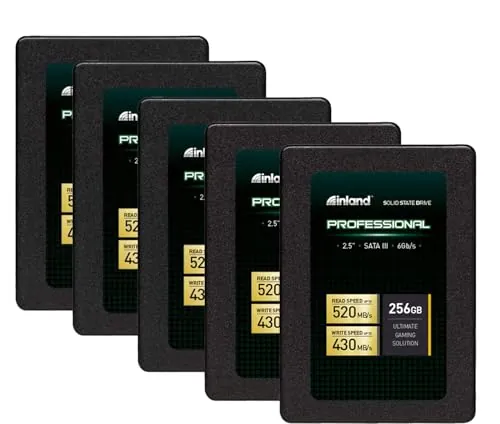
The INLAND Professional package supplies five 256GB 2.5-inch SATA SSDs for upgrading multiple compatible systems, while the Intel 660p is a single 2TB M.2 NVMe drive for a compatible PCIe slot. Intel is the narrow overall winner for capacity, connectivity, and peak sequential speed; INLAND remains the better fit for several older SATA-based laptops or desktops.

Expert tested Data driven Unbiased reviews Updated 2 August 2026
INLAND Professional 256GB SATA SSD 5-Pack

#1 Overall Winner

INLAND Professional 256GB SATA SSD 5-Pack

77/100
  • Five 256GB 2.5-inch SATA SSDs provide separate upgrade drives for multiple compatible laptops or desktops.
View review
Intel 660p 2TB NVMe SSD

Contender

Intel 660p 2TB NVMe SSD

79/100
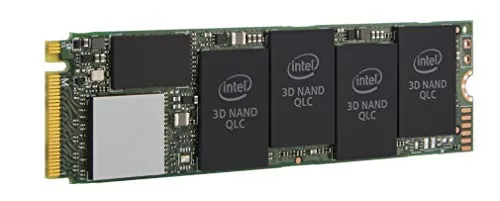
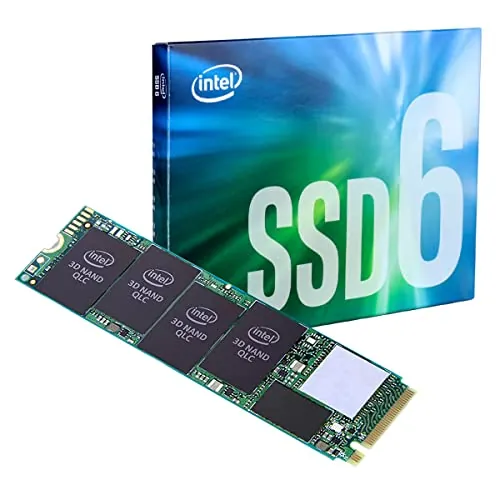
  • 2TB of storage in one M.2 2280 drive offers substantially more capacity per installed drive.
View review

Quick verdict

Choose Intel 660p for one compatible M.2 NVMe system needing 2TB of fast, read-heavy storage. Choose the INLAND Professional 5-Pack to revive several SATA-equipped PCs with affordable 256GB boot or everyday-use drives. Avoid treating either as a specialist drive for frequent, sustained large writes.

Overall winner

Depends on your needs

At-a-glance comparison

Feature INLAND Professional 256GB SATA SSD 5-Pack Intel 660p 2TB NVMe SSD Winner

Form factor

Five 2.5-inch SATA drives

One M.2 2280 drive

Depends

Included capacity

256GB per drive; five drives

2TB in one drive

Intel 660p 2TB NVMe SSD

Interface

SATA III 6Gb/s

PCIe NVMe 3.0 x4

Intel 660p 2TB NVMe SSD

Quoted sequential read

Up to 520MB/s

Up to 1,800MB/s

Intel 660p 2TB NVMe SSD

Quoted sequential write

Up to 430MB/s

Up to 1,800MB/s

Intel 660p 2TB NVMe SSD

NAND type

TLC 3D NAND

QLC 3D NAND

Depends

Light-use SATA upgrades

Designed for multiple SATA systems

Requires NVMe M.2 support

INLAND Professional 256GB SATA SSD 5-Pack

Read-heavy game storage

Limited to 256GB per drive

2TB NVMe storage

Intel 660p 2TB NVMe SSD

Setup

Strong setup score; SATA installation

Strong setup score; M.2 installation

Tie

Reliability score

72

70

INLAND Professional 256GB SATA SSD 5-Pack

Value score

86

89

Intel 660p 2TB NVMe SSD

Overall score

77

79

Intel 660p 2TB NVMe SSD

Detailed comparison

Performance

The drives target different performance tiers. INLAND is rated up to 520MB/s sequential read and 430MB/s sequential write, which is typical of a SATA III upgrade and a major step up from a mechanical drive for booting and basic application loading. Intel is rated up to 1,800MB/s sequential read and write through PCIe NVMe 3.0 x4, giving it a much higher peak transfer ceiling.

Peak ratings do not tell the entire story. Intel 660p reviews repeatedly note that its QLC design performs best with read-heavy work and shorter writes while cache is available; long, frequent writes can slow sharply. INLAND is also not recommended in supplied reviews for heavy write workloads. For ordinary use, both can improve system responsiveness, but Intel has the stronger headroom on compatible hardware.

Speed

Intel has the clear specification advantage in peak sequential speed: up to 1,800MB/s reads and writes versus INLAND’s up to 520MB/s reads and 430MB/s writes. Its advantage is most relevant for compatible hardware and transfers that remain within its effective cache behavior.

INLAND’s speed score is slightly higher in the provided scoring, reflecting solid everyday SATA performance rather than a higher peak specification. For booting an older SATA laptop or routine tasks, the difference may be less important than compatibility. For large reads, game loading, and faster NVMe transfers, Intel is the stronger choice.

Reliability

Neither product has uniformly positive reliability feedback. INLAND scores slightly higher for reliability, and several reviewers report long-running drives, but others report failures within months, freezes, or Windows recognition problems. Intel’s reliability feedback is likewise mixed; reviews praise normal operation but raise concerns about QLC endurance and suitability for write-heavy use.

For either option, use backups and avoid selecting solely on a single anecdotal report. The INLAND pack’s slightly higher reliability score does not remove its reported quality-control concerns, while Intel’s higher brand-trust score does not eliminate the workload limitations of QLC NAND.

INLAND Professional 256GB SATA SSD 5-Pack

Pros

  • Five 256GB 2.5-inch SATA SSDs provide separate upgrade drives for multiple compatible laptops or desktops.
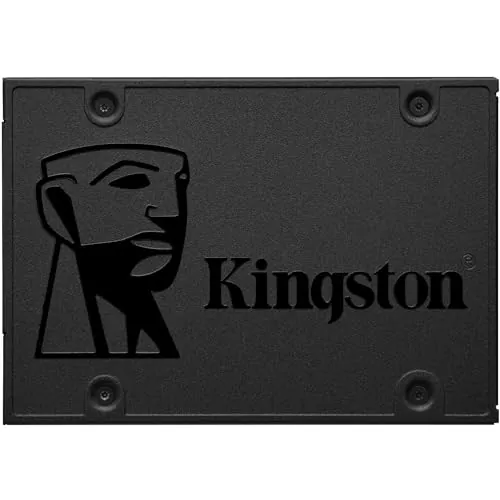
  • TLC 3D NAND and quoted sequential speeds of up to 520MB/s read and 430MB/s write suit everyday boot-drive upgrades.
  • Customers frequently report easier installation, faster startup times, and improved responsiveness versus mechanical hard drives.
  • The SATA form factor is practical for older systems that lack an M.2 NVMe slot.
  • Shock and vibration resistance, silent operation, and a three-year limited parts-and-labor warranty are listed benefits.
  • Its value, setup, and customer-satisfaction scores are strong for light-to-moderate use.

Cons

  • Each drive has only 256GB, so the five-pack is intended for multiple systems rather than one large-volume installation.
  • Its SATA III interface and quoted 520MB/s read speed are far below the Intel drive’s quoted NVMe sequential speed.
  • Review feedback includes early failures, occasional freezes, and reports that Windows 10 did not recognize some drives.
  • Reviewers characterize it as a consumer-oriented drive rather than a fit for heavy, sustained write workloads such as scratch-disk use.
  • Build-quality feedback is less favorable than for the Intel model, reflected in the lower build-quality score.
INLAND Professional 256GB SATA SSD 5-Pack

Intel 660p 2TB NVMe SSD

Pros

  • 2TB of storage in one M.2 2280 drive offers substantially more capacity per installed drive.
  • PCIe NVMe 3.0 x4 connectivity and quoted sequential read/write speeds of up to 1,800MB/s exceed the SATA drive’s quoted throughput.
  • Reviewers commonly praise game-library, general storage, and boot-drive performance, as well as simple installation in compatible systems.
  • Its higher overall, value, brand-trust, connectivity, and customer-satisfaction scores support its broad appeal.
  • QLC NAND enables high capacity at a value-oriented position for read-heavy storage workloads.
  • Reviews indicate it can deliver fast short-to-moderate writes while its SLC cache has available space.

Cons

  • It requires a compatible M.2 2280 PCIe NVMe slot; it cannot directly replace a 2.5-inch SATA drive.
  • QLC NAND and review feedback make it less suitable for sustained, write-intensive workloads.
  • Reviews report substantial write-speed drops after the SLC cache is exhausted during large or frequent transfers.
  • Some users report heat concerns, while others say the drive remains cool under a heatsink.
  • Reliability feedback is mixed, and its durability score is lower than the INLAND pack’s.
  • Some platforms may need an adapter or may limit available PCIe bandwidth.
Intel 660p 2TB NVMe SSD

Final verdict

The Intel 660p 2TB is the best overall option in this comparison, narrowly leading on overall score while delivering more capacity in one drive, PCIe NVMe connectivity, higher quoted peak throughput, stronger brand-trust scoring, and higher customer satisfaction. It makes the most sense for a compatible modern laptop or desktop used for a game library, general storage, or other largely read-heavy workloads.

The INLAND Professional 256GB 5-Pack should not be treated as a direct substitute for that use case. Its advantage is practical deployment: five separate TLC SATA SSDs can upgrade several older systems that cannot use NVMe storage. It also scores slightly better in reliability and durability, despite reports of early failures and recognition issues. Select INLAND for multiple SATA upgrades; select Intel for large single-drive NVMe storage, while avoiding sustained write-heavy work on either model.

Overall winner

Depends on your needs

Frequently asked questions

<p>Which is better overall: the INLAND Professional 256GB 5-Pack or Intel 660p 2TB?</p>

The Intel 660p has the higher overall score and offers one 2TB NVMe drive with much higher quoted sequential throughput. It is the stronger option when a compatible M.2 NVMe slot is available and large, mostly read-heavy storage is the goal. The INLAND pack is preferable when several SATA-equipped computers need modest-capacity upgrades.

<p>Is the Intel 660p faster than the INLAND SATA SSD?</p>

On compatible PCIe NVMe hardware, the Intel 660p is rated for up to 1,800MB/s sequential reads and writes, compared with up to 520MB/s reads and 430MB/s writes for each INLAND SATA SSD. However, reviews note that Intel’s sustained write performance can drop significantly once its cache is filled.

<p>Can the Intel 660p replace the INLAND 2.5-inch SATA SSD?</p>

Not directly. The INLAND drive uses a 2.5-inch SATA form factor and SATA III connection, while the Intel 660p is an M.2 2280 PCIe NVMe drive. Check that the computer has an M.2 slot that supports PCIe NVMe storage before choosing the Intel model.

<p>Which SSD is better for a game library?</p>

The Intel 660p is the more suitable choice for a large game library because it provides 2TB in one drive and reviewers specifically report good results storing games and read-heavy applications. It is not the best fit for frequent, very large sustained writes, but its capacity and NVMe interface are useful for compatible gaming PCs.

<p>Which option is better for upgrading old laptops?</p>

The INLAND five-pack is usually the more practical option for older laptops that have a 2.5-inch SATA bay and no NVMe-capable M.2 slot. Customers report noticeably quicker booting and application loading after replacing older hard drives. Confirm the laptop’s drive bay, SATA connection, and capacity needs before ordering.

<p>Are either of these SSDs suitable for heavy video editing or frequent large transfers?</p>

Neither is an ideal choice based on the supplied feedback. INLAND reviews advise against write-intensive scratch-disk work, while Intel 660p reviews warn that large or frequent writes can exceed the SLC cache and slow considerably. Buyers with sustained production workloads should prioritize a drive designed for that write pattern.

<p>Which product has better customer feedback?</p>

Both have strong star ratings, but the Intel 660p has the higher customer-satisfaction score and a 4.8/5 rating from 2,737 reviews. The INLAND pack has a 4.6/5 rating from 4,669 reviews and strong praise for value and easy upgrades, alongside more reports of recognition issues and early failures.

<p>Do these SSDs have the same reliability profile?</p>

No. The INLAND pack scores slightly higher for reliability and durability, though its reviews still include early failures, freezes, and recognition problems. The Intel 660p has mixed reliability feedback as well, with QLC endurance and sustained-write behavior being recurring concerns. Maintain backups regardless of which drive is selected.

Related comparisons

Still not sure which one to choose?

Check our rankings and expert guides to find the best electronics products for your goals.

View all rankings