#1 Overall Winner
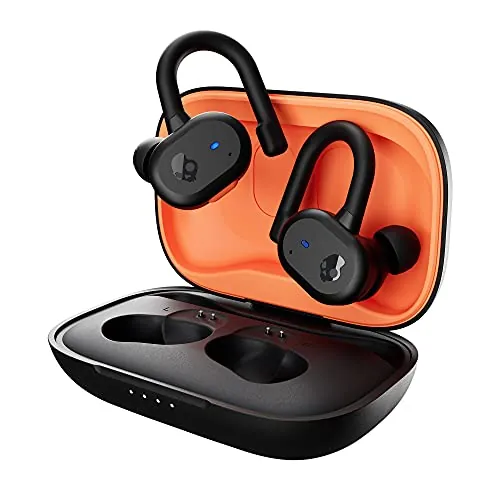
Skullcandy Push Active Wireless Earbuds (True Black/Orange)
- Very strong total battery claim: up to 44 hours total (10 hours buds + 34 hours case).
Comparison
Skullcandy Push Active and Skullcandy Push Ultra are true wireless workout earbuds with over-ear hooks, long claimed battery life, and sound isolation. Push Active comes out ahead overall on the provided scoring and adds richer app/voice features, while Push Ultra is the pick if you prioritize an IP67 waterproof/dustproof rating and a stay-aware listening style.
#1 Overall Winner
Contender
Choose Skullcandy Push Active if you want the more feature-rich option (Skull-iQ voice control, Personal Sound by Mimi, Spotify Tap) with higher overall usability/setup scores and a longer stated total battery figure.
Choose Skullcandy Push Ultra if your priority is a tougher protection rating (IP67) and a stay-aware listening style for outdoor situations, and you prefer full on-ear controls over app/voice-driven control.
Overall winner
Depends on your needs
| Metric | Skullcandy Push Active | Skullcandy Push Ultra | Winner | Explanation |
|---|---|---|---|---|
| Overall score | 59 | 51 | Push Active | Higher overall scoring, driven by better usability/setup and stronger smart-feature coverage. |
| Amazon rating & review volume | 4.0/5 (7,177 reviews) | 3.7/5 (5,399 reviews) | Push Active | Higher average rating with more reviews suggests stronger satisfaction on average. |
| Water/dust rating | IP55 (sweat & water resistant) | IP67 (waterproof, sweatproof, dustproof) | Push Ultra | IP67 is the more protective rating for harsh conditions. |
| Total battery (claimed) | Up to 44 hours total (10 + 34) | Up to 40–42 hours total (listed) | Push Active | Both are long-life designs, but Push Active lists the higher total figure and has a higher battery score. |
| Charging friction (reviews) | Some charging issues mentioned | Frequent “fit in case to charge” complaints | Push Active | Push Ultra reviews more often mention needing perfect placement to charge reliably. |
| Smart/app features | Skull-iQ voice control, Spotify Tap, Personal Sound by Mimi | Not emphasized in provided score data; smart-features score is much lower | Push Active | Push Active is positioned as the more software/feature-rich option. |
| Controls approach | Voice control focus (plus app EQ/personalization) | Touch/media control focus with “full controls on both earbuds” | Depends | Choose based on whether you want hands-free voice commands or on-ear controls. |
| Comfort feedback | Fit praised; some mixed reports | More mentions of discomfort/pain over time | Push Active | Both vary by ear shape, but Push Ultra comfort issues appear more commonly in the provided reviews. |
| Reliability & durability risk | Mixed; reports of failures and breakage | Mixed; reports of hook failure and breakage | Push Active | Scores favor Push Active (reliability 46 vs 38; durability 44 vs 35), though neither is problem-free. |
| Best-use emphasis | Sport/fitness with app tools and voice features | Sport use with stay-aware listening and IP67 rating | Depends | Push Active is more feature-led; Push Ultra is more “rugged + awareness” focused. |
For day-to-day earbud performance (stable listening during movement and general playback), the scores slightly favor Push Ultra on performance (62 vs 60) and audio (60 vs 58), but the difference is small and review feedback for both is mixed. Push Active reviews include both praise for a “great listening experience” and complaints about low volume or weak bass; Push Ultra reviews similarly range from “pretty darn good” sound to reports of audio only coming from one side.
In practice, the larger performance separator in the provided data is consistency: Push Active scores better in usability and setup, while Push Ultra users more often mention charging-seat precision and connection quirks that can affect real-world performance over time.
Reliability is a weak spot for both, but Push Active scores higher (46 vs 38). For Push Active, the aggregated review summary mentions charging issues and reports of one earbud failing. For Push Ultra, reviews and the summary describe one-ear audio problems, charging problems, and connection instability.
If you’re trying to minimize the odds of issues, the available data points to Push Active—but neither model is a “buy it and never worry” option based on the provided reliability and durability feedback.
Push Active is the easier day-to-day pick in the scoring (usability 70 vs 56; setup 78 vs 60). Reviews frequently praise its secure fit during workouts and straightforward pairing.
Push Ultra can work well once dialed in, but usability complaints show up more often in the provided reviews—especially around charging (buds needing perfect placement), occasional connection behavior, and comfort for long sessions. If you want a more “set it and forget it” experience, the available data favors Push Active.
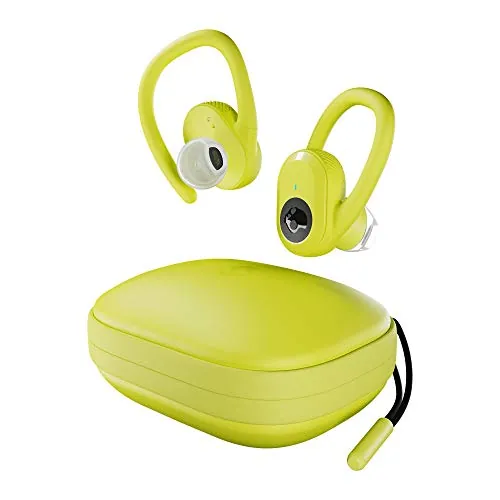
Push Active uses flexible over-ear hooks and is designed to stay locked in during movement. Its design scoring is higher (74 vs 61), aligning with many reviews praising secure, comfortable fit for workouts.
Push Ultra uses moldable hooks and a stay-aware earbud design that intentionally lets in more surroundings. For some, that’s a big advantage for outdoor safety; for others, it can be a downside if they want a tighter seal. Its design may also require more handling (re-molding) to fit into the charging case, which some reviewers found inconvenient.
Neither earbud scores strongly for long-term robustness, but Push Active rates higher for build quality (52 vs 47) and durability (44 vs 35). Review summaries for both mention breakage and early failures.
Push Ultra has the stronger protection rating (IP67), yet multiple reviewers still report physical failures (including the moldable hook wire breaking after weeks). Push Active also has durability complaints (including breaking within a month), so whichever you choose, consider careful handling and prioritizing an easy-return seller.
Durability scores favor Push Active (44 vs 35), but both products have notable complaint patterns. Push Active has multiple mentions of early breakage or parts failing, while Push Ultra has repeated reports of earpieces or hooks failing—especially due to the moldable hook being re-shaped to fit the case.
Push Ultra’s IP67 rating helps with environmental exposure, but it doesn’t eliminate reports of mechanical weak points. For either model, careful handling and avoiding unnecessary bending/strain is advisable based on the provided reviews.
On scoring, Push Active slightly leads portability (67 vs 55). Weight specs differ (Push Active listed at 95g; Push Ultra earbuds listed at 50g with case weight listed separately), but portability in practice is also about case size and pocketability.
In the provided reviews for Push Ultra, the charging case is repeatedly described as very big and less pocket-friendly. Push Active reviews also mention a larger case, but less critically. If pocket carry matters, be mindful of case size for both—especially Push Ultra.
Push Active is the more feature-forward model in the provided data: Skull-iQ app support enables hands-free voice control, and it includes Spotify Tap, Tile tracking, and Personal Sound by Mimi with EQ customization plus preset EQ modes (Music/Podcast/Movie). Its smart-features and compatibility scoring are also higher.
Push Ultra focuses on practical, sport-oriented features: a wireless charging case, Tile tracking, moldable hooks, and a stay-aware design. It also highlights full controls on both earbuds, which can be a meaningful feature if you want to control playback and calls without relying on voice commands or an app.
Push Active includes Skull-iQ app functionality for voice control and sound personalization, but the provided score indicates a mixed app experience, and at least one review calls the app “less than desirable.”
Push Ultra does not have app experience scoring provided here (shown as 0 in the dataset), and app functionality is not emphasized in the supplied product details. If an app with customization is important, Push Active is the only clear option from the provided data.
Push Active is clearly stronger for smart features, with Skull-iQ hands-free voice control plus Spotify Tap and app-based Personal Sound by Mimi. Its smart-features score is much higher (68 vs 28).
Push Ultra includes Tile tracking and focuses more on physical controls and stay-aware listening than software-driven smart features.
Push Active is the more straightforward setup choice based on scoring (78 vs 60) and review feedback noting easy pairing. It’s the better fit for buyers who don’t want to troubleshoot much.
Push Ultra setup can be fine, but ownership friction appears more tied to day-to-day charging behavior (buds needing to sit precisely) and occasional connection quirks, which can make the overall experience feel more demanding.
Both are designed for Bluetooth-enabled devices and are positioned for iPhone/Android use. Scoring favors Push Active for compatibility (70 vs 58), and reviews include iPhone usage notes for Push Active.
If you want a broader “should work smoothly with most phones” choice based on the provided data, Push Active has the edge.
Both are listed as sound-isolating earbuds (not ANC), and both receive mixed sound feedback. On scores, Push Ultra edges audio quality (60 vs 58), but Push Active scores higher overall and offers more sound shaping options via the app (Personal Sound by Mimi and EQ tuning).
From the reviews provided: Push Active is often described as clear with good listening experience, but some report low volume and weak bass; Push Ultra is described as “pretty darn good” for music/podcasts with limited bass impact, and some users value that it doesn’t fully block the environment. If you want more customization, Push Active has the clearer advantage in the supplied data.
Push Active has the better connectivity score (61 vs 52) and is listed with Bluetooth 5.x in the provided specs (with the description noting 5.2). Multiple reviews call the connection stable, though some mention issues.
Push Ultra has more mixed connectivity feedback in the included reviews, including intermittent connection issues and unwanted connections. Both list a 10-meter Bluetooth range, but based on scoring and user feedback provided, Push Active is the safer pick if connection stability is your top concern.
Both models emphasize long total playback with a case and include Rapid Charge. Push Active lists up to 44 hours total (10 hours buds + 34 hours case) and has the higher battery-life score (78 vs 72). Push Ultra lists up to 40–42 hours total depending on the provided detail line.
Real-world feedback for both includes praise for battery life, but also charging complaints. Push Ultra’s charging reliability is more frequently tied to the earbuds needing to sit just right in the case.
Based on the provided value scores and overall package, Push Active presents the stronger value case (62 vs 53). It pairs higher usability/setup and stronger smart features with a higher Amazon rating, which can translate to a better experience for many buyers.
Push Ultra can be good value specifically for shoppers who prioritize IP67 waterproof/dustproof protection and stay-aware listening. However, the lower customer rating and more frequent comfort/charging-fit complaints make its value feel more dependent on your fit and tolerance for maintenance.
This is a brand-to-brand comparison with both products from Skullcandy, so baseline brand trust is similar. On the provided scoring, Push Active is slightly higher for brand trust (60 vs 55) and warranty/support (58 vs 45), and it explicitly lists a 1-year USA limited warranty in the details provided.
Regardless of model, review feedback suggests checking the seller/fulfillment and return process, since both products have mixed reliability and durability experiences.
Push Active leads customer satisfaction in the provided scoring (66 vs 52) and also has a higher Amazon star rating (4.0/5 vs 3.7/5). Review themes highlight strong fit during workouts, with mixed opinions on sound, charging, and durability.
Push Ultra has more polarized feedback in the provided summary and reviews: some love the stay-aware design and battery, while others report discomfort, charging issues, and early breakage. If you’re trying to reduce buyer risk, the available satisfaction signals favor Push Active.
Push Active is the clearer choice on warranty/support information in the provided data because it explicitly includes a Skullcandy 1-year USA limited warranty. Its warranty/support score is also higher.
Push Ultra does not provide a clear warranty statement in the supplied details beyond marketing language (“Fearless Use Promise”), and it scores lower for warranty/support. If warranty clarity matters, Push Active is easier to evaluate from the information given.
Skullcandy Push Active is the better overall choice in this matchup based on the provided scoring (59 vs 51), higher Amazon rating, and a more modern, feature-rich approach—especially if you’ll use voice control and app-based personalization. It also scores better in usability, setup, connectivity, and customer satisfaction, which tends to matter more than small differences in raw audio scoring for everyday workout use.
Skullcandy Push Ultra remains a valid alternative if your priority is the stronger IP67 protection rating and a stay-aware style for outdoor running/walking. However, the included review data shows more consistent complaints about comfort and charging-case fit, and both models have durability concerns—so whichever you pick, prioritize good return coverage and handle the ear hooks and case carefully.

Overall winner
Depends on your needs
Based on the provided scoring, Skullcandy Push Active ranks higher overall (59 vs 51). It scores better in areas that affect day-to-day use—especially usability, setup, and smart features—and it also has a higher Amazon star rating (4.0/5 vs 3.7/5). Push Ultra can still make sense if you specifically want IP67 waterproofing and a stay-aware style.
Both emphasize long total playtime, but Push Active lists up to 44 hours total (10 hours in the earbuds plus 34 in the case) and has a higher battery-life score (78 vs 72). Push Ultra lists up to 40–42 hours total depending on the listing details provided. Real-world feedback for both mentions strong battery, but also some charging issues.
Both are built for active use with over-ear hooks, but Push Active rates higher for usability and setup, and many reviewers specifically praise how securely it stays in place during workouts. Push Ultra is also workout-oriented and adds an IP67 rating and stay-aware design, but reviews more frequently mention comfort and charging-fit frustrations.
No. Both products are listed with noise isolation rather than active noise cancelling. Several reviews also highlight the practical differences: Push Active can block out more ambient sound when music is playing, while Push Ultra is described as a stay-aware design intended to let in more surroundings, which some buyers prefer for outdoor safety.
Push Ultra has the stronger protection rating on paper: IP67 (waterproof/sweatproof/dustproof as stated). Push Active is rated IP55, positioned as sweat and water resistant for workouts and outdoor training. If you expect heavy exposure to water or dust, Push Ultra’s rating is the more robust of the two.
Push Active looks easier for most people based on the provided setup score (78 vs 60) and multiple reviews that mention pairing being straightforward. Push Ultra reviews include more notes about connection quirks (like unwanted connections) and charging-case alignment issues that can add friction after the initial setup.
Neither model stands out as a reliability leader in the provided data, but Push Active scores higher for reliability (46 vs 38) and also has better customer satisfaction. For both products, the review summaries and individual reviews mention failures such as one earbud not working, charging problems, and parts breaking—so buying from a seller with easy returns is a practical step.
If you want hands-free operation, Push Active is built around Skull-iQ voice control through the app and is also described as supporting Spotify Tap. If you prefer traditional on-ear controls, Push Ultra highlights full controls on both earbuds and touch/media controls. The better choice depends on whether you trust voice commands in your routine or want physical controls.
Using the provided value scores and review context, Push Active is the stronger overall value pick (value score 62 vs 53) because it pairs a higher overall score with a stronger smart-feature set and higher customer satisfaction. Push Ultra may still be a good buy for shoppers prioritizing IP67 waterproofing and stay-aware listening, but its comfort and charging-fit complaints make value less consistent.
Check our rankings and expert guides to find the best electronics products for your goals.