#1 Overall Winner
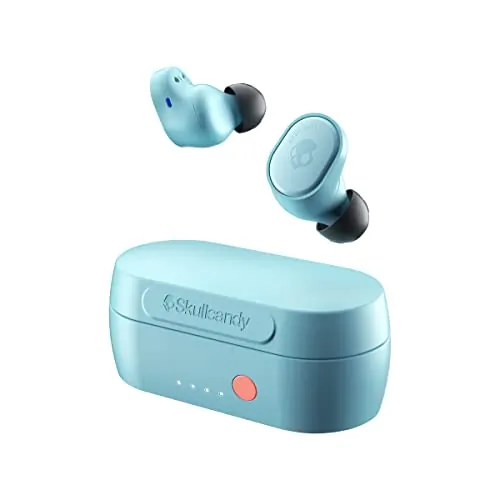
Skullcandy Sesh Evo in-Ear Wireless Earbuds, 24 Hr Battery, Microphone, Works with iPhone Android and Bluetooth Devices - Bleached Blue
- True wireless convenience with Bluetooth 5.0 and an included charging case.
Comparison
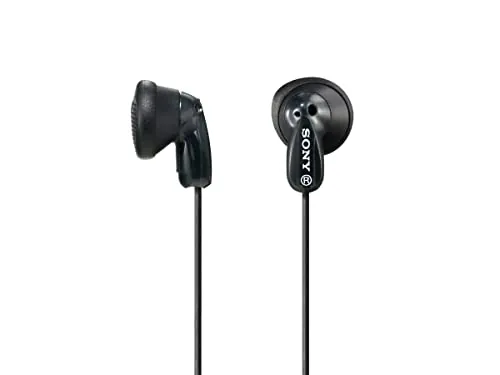
Skullcandy Sesh Evo and Sony MDR-E9LP target budget listening, but they solve different problems: true wireless convenience versus wired simplicity. Sony scores higher overall thanks to value, setup ease, and customer satisfaction, while Skullcandy is the better choice if you want features like IP55 resistance, on-bud controls, solo mode, and Tile tracking. If reliability and avoiding charging issues matter most, the wired Sony is often the safer bet.
#1 Overall Winner
Contender
Choose Sony MDR-E9LP if you want the simplest, most predictable experience: plug in, listen, and avoid Bluetooth dropouts and charging problems.
Choose Skullcandy Sesh Evo if you specifically want true wireless earbuds with on-bud controls, a charging case, IP55 resistance for workouts, and Tile tracking—while accepting more mixed reports on charging and reliability.
Overall winner
Depends on your needs
| Metric | Skullcandy Sesh Evo | Sony MDR-E9LP | Winner | Explanation |
|---|---|---|---|---|
| Overall score | 67 | 72 | Sony MDR-E9LP | Higher overall score driven by value, satisfaction, and simplicity. |
| Type | True wireless (Bluetooth) | Wired (3.5 mm jack) | Depends | Choose wireless convenience vs plug-and-play reliability. |
| Battery / power | Up to 24 hours total (5 + 19); Rapid Charge | No battery (wired) | Depends | Sesh Evo offers portable runtime; Sony removes charging from the equation. |
| Workout readiness | IP55 water/sweat/dust resistance | Not listed | Skullcandy Sesh Evo | Better suited for sweat/light rain based on rating. |
| Controls & features | On-bud controls, EQ modes, voice assistant, solo mode, Tile tracking | Basic wired earbuds | Skullcandy Sesh Evo | More features and smart conveniences. |
| Connectivity stability | Bluetooth 5.0; mixed reports of disconnects | Wired; generally stable connection | Sony MDR-E9LP | Wired connection avoids Bluetooth dropouts; higher connectivity score. |
| Audio quality (score) | 69 | 64 | Skullcandy Sesh Evo | Audio score is slightly higher for the Skullcandy, though both have mixed review feedback. |
| Reliability (score) | 49 | 58 | Sony MDR-E9LP | Sesh Evo has recurring charging/one-earbud failure complaints; Sony scores better. |
| Setup | Wireless pairing; auto-reconnect | Plug-in | Sony MDR-E9LP | Higher setup score and fewer steps. |
| Portability | Score 88 | Score 90 | Sony MDR-E9LP | Both are very portable; Sony scores slightly higher and is ultra-lightweight. |
In day-to-day listening, both products land in a similar performance range in the provided scoring (performance score is the same). The difference is how they deliver that performance. Skullcandy Sesh Evo focuses on wireless convenience and includes sound isolation, but real-world performance can be affected by the reported Bluetooth disconnects and charging issues. Sony MDR-E9LP delivers straightforward wired playback without pairing or dropouts, which can feel more consistent for basic music and podcasts—assuming your device supports a 3.5 mm connection (or you have an adapter).
In this category, “speed” mostly shows up as connection and readiness. Sony MDR-E9LP is immediately ready once plugged in. Skullcandy Sesh Evo is designed for quick pairing and auto-reconnect, but real-world “ready time” can be impacted by connection hiccups or the need to reset when pairing gets out of sync (as mentioned in reviews).
Sony MDR-E9LP rates higher for reliability and has many reviews describing long-term repeat purchases. Skullcandy Sesh Evo has a noticeably lower reliability score and recurring feedback about one earbud failing, intermittent disconnects, and charging failures. If your priority is reducing the chance of troubleshooting, the wired Sony is the safer bet based on the provided review summary and scores.
For pure ease of use, Sony MDR-E9LP is hard to beat: it’s plug-and-play and avoids Bluetooth pairing, app setup, and charging routines (reflected in its higher setup score). Skullcandy Sesh Evo is designed to be simple for wireless, including first-time pairing mode and auto-reconnect, plus one-finger controls. However, reviews mention occasional confusion about indicator lights and troubleshooting steps when only one earbud works, which can add friction.
Design preference largely comes down to fit style and daily practicality. Skullcandy Sesh Evo is a true wireless, in-ear bud design that some users like for its easy-to-press control surface, but others find it bulky or too large for smaller ear canals. Sony MDR-E9LP is a lightweight wired earbud with a rounded tip; many reviewers find it comfortable and non-fatiguing, though some say it can be painful at first or doesn’t stay put depending on ear shape.
Neither product scores especially high for build quality, and both have mixed durability feedback. Skullcandy Sesh Evo is plastic-bodied and has review complaints about earbuds failing, breaking, or charging problems over time. Sony MDR-E9LP also has mixed durability comments (some report early breakage, others report long use), but it avoids battery and charging components that can be a common failure point in true wireless earbuds.
Durability is mixed for both, but the scores slightly favor Sony MDR-E9LP. Some Sony owners report the earbuds holding up well over months (including accidental wash/dry cycles), while others report early failures. For Skullcandy Sesh Evo, durability concerns are often tied to charging and one-earbud failures, which can end the product’s usable life even if the physical shells look fine.
Both options are very portable in the scoring data, with Sony MDR-E9LP slightly higher. The Sony is extremely light and easy to toss in a pocket, but the cable can snag for some users. The Skullcandy Sesh Evo is also pocket-friendly and avoids cable management, but you’ll need to carry the charging case and keep it topped up.
Skullcandy Sesh Evo clearly leads on features: a charging case, Bluetooth 5.0 wireless use, on-bud controls (volume/skip/calls/assistant), selectable EQ modes, solo mode (either bud), Tile tracking, and IP55 resistance.
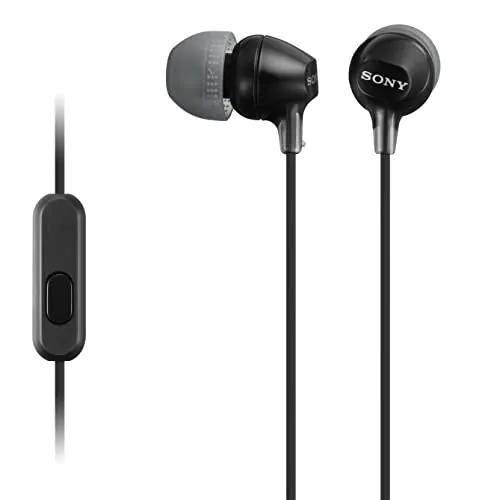
Sony MDR-E9LP is intentionally minimal: a wired earbud with silicone tips and a lightweight cable. If you want features beyond basic listening, Skullcandy is the more capable option; if you want fewer things to manage, Sony’s simplicity is the feature.
Skullcandy Sesh Evo can leverage the Tile app for locating misplaced earbuds. No other companion app experience is provided in the data. Sony MDR-E9LP does not list any app integration.
Skullcandy Sesh Evo includes smarter convenience features such as Tile tracking and the ability to activate an assistant from the earbuds, plus EQ modes and solo mode. Sony MDR-E9LP has no smart features listed and is intended for basic wired listening.
Sony MDR-E9LP is straightforward: connect the 3.5 mm plug and start listening, which aligns with its top-tier setup score. Skullcandy Sesh Evo is designed for easy wireless pairing (auto pairing mode on first power-on, then pairing to the last used device), but review feedback indicates some users still need resets or guidance for issues like one earbud not working.
Skullcandy Sesh Evo is positioned to work with iPhone, Android, and Bluetooth devices, and one reviewer specifically mentions using it with an Android phone, laptop, and desktop. Sony MDR-E9LP is compatible with devices that accept a 3.5 mm plug; several reviews mention using it with computers and with a phone via an Apple adapter. If you’ve moved to devices without a headphone jack, Skullcandy may be simpler to use without extra accessories.
Audio feedback is mixed for both products, but the provided audio score is slightly higher for Skullcandy Sesh Evo. Many customers describe Sesh Evo as clear and enjoyable for music, and its listed noise control is sound isolation. For Sony MDR-E9LP, a lot of buyers are satisfied for the price, but there are repeated notes about tinny sound or limited bass from some reviewers. If you’re sensitive to tonal balance, either may be a “try and see” fit, but Skullcandy has more sound-oriented features like EQ modes.
Sony MDR-E9LP wins connectivity in the practical sense: a wired 3.5 mm connection is stable and avoids the Bluetooth dropouts that appear in Sesh Evo’s review summary (and is reflected in the higher connectivity score). Skullcandy Sesh Evo uses Bluetooth 5.0 and can auto-pair/reconnect, but multiple customers report frequent disconnections or connection issues. Your device compatibility also matters: Sony requires a headphone jack (or adapter), while Skullcandy requires Bluetooth.
Skullcandy Sesh Evo is the only battery-powered option here, with up to 24 hours total (5 hours in the earbuds and 19 in the case) and a 10-minute rapid charge that adds 2 hours. However, battery and charging are also among the biggest concerns in customer feedback, including reports of the earbuds no longer taking a charge.
Sony MDR-E9LP is wired and therefore has no battery life to maintain—one of the main reasons some buyers still prefer this style.
Sony MDR-E9LP scores higher for power efficiency largely because it is wired and does not require charging or manage standby drain. Skullcandy Sesh Evo can deliver long total runtime with its case, but real-world efficiency may be impacted if users encounter the reported charging problems or shortened battery performance over time.
Both products score strongly for value, but Sony MDR-E9LP leads in the provided scoring thanks to a very low-cost, no-frills approach combined with strong customer satisfaction and brand trust. Skullcandy Sesh Evo can be strong value if you specifically want true wireless features like IP55 resistance, Tile tracking, solo mode, and on-bud controls. However, its value proposition is weakened for buyers who run into the commonly reported charging failures or connectivity issues.
Sony MDR-E9LP scores higher for brand trust in the provided data, and many reviews reference buying the model repeatedly over long periods. Skullcandy still has a solid brand presence, and at least one review reports multi-year use, but the broader summary includes more frequent reliability/charging complaints, which can reduce confidence for some shoppers.
Sony MDR-E9LP has a higher customer satisfaction score and a very large review base with many comments centered on comfort and “does what it says” reliability. Skullcandy Sesh Evo also has a huge number of reviews and plenty of praise for sound and value, but overall sentiment is pulled down by repeated complaints about disconnects, fit, and especially charging failures.
Skullcandy Sesh Evo includes a listed 1-year US warranty, and at least one review mentions quick customer service replacement. For Sony MDR-E9LP, no warranty details are provided in the product data here, and its warranty/support score is lower in the scoring dataset. If warranty clarity is important, Skullcandy provides more explicit information in the listing details.
If you want the best overall pick based on the provided scoring, Sony MDR-E9LP comes out ahead. It’s a simple wired earbud with strong value, high customer satisfaction, and an easy plug-and-play experience that avoids common wireless problems like disconnects and charging failures.
Skullcandy Sesh Evo remains the better choice when you specifically want true wireless convenience and modern extras—especially IP55 resistance for workouts, on-bud controls, solo mode, and Tile tracking. The trade-off is more mixed reliability and battery/charging feedback. If you can accept that risk for the added features, Sesh Evo can still be a practical budget wireless option.
Overall winner
Depends on your needs
Based on the provided scores, Sony MDR-E9LP ranks higher overall (72 vs 67). It scores strongly for value, setup simplicity, and customer satisfaction. Skullcandy Sesh Evo is still the better pick if you specifically want true wireless features like Bluetooth, a charging case, Tile tracking, solo mode, and IP55 water resistance—at the cost of more mixed reliability and charging feedback.
Skullcandy Sesh Evo is the more workout-oriented option on paper thanks to its IP55 water/sweat/dust resistance and true wireless design. Reviews do note that fit can be hit-or-miss (some find them large or prone to falling out during movement). The Sony MDR-E9LP is lightweight, but it’s wired and has no water resistance listed, which may be less convenient for gym use.
Sony MDR-E9LP has the edge for day-to-day dependability in the data provided, with a higher reliability score and many reviews describing them as reliable and long-used. Skullcandy Sesh Evo gets mixed reliability feedback, including recurring reports of one earbud failing, frequent disconnects, and charging problems. If you want fewer failure points and no battery management, the wired Sony is typically simpler.
Sound is subjective, and both products get mixed feedback. The scoring data rates Skullcandy Sesh Evo slightly higher for audio quality (69 vs 64), and many reviewers describe its sound as very good for the price. The Sony MDR-E9LP has plenty of positive sound comments too, but some reviews describe it as tinny or bass-light, especially compared with other earbuds.
Sony MDR-E9LP is the simplest: plug the 3.5 mm jack into a compatible device and play. That aligns with its very high setup score. Skullcandy Sesh Evo is designed to be straightforward for wireless (first-time pairing mode and auto-reconnect), but it can still involve troubleshooting—some reviewers mention confusion with LED indicators and occasional reset steps when only one earbud works.
Skullcandy Sesh Evo includes a built-in microphone and supports taking calls from the earbuds, but mic performance is not universally praised—at least one review notes poor voice capture. The Sony MDR-E9LP product details provided focus on basic wired listening and do not highlight an in-line mic feature, so if you need earbud-based calling controls, the Sesh Evo is more directly positioned for that use.
Sony MDR-E9LP is the safer choice if your main goal is to avoid dropouts, since it’s wired and scores higher for connectivity. Skullcandy Sesh Evo uses Bluetooth 5.0, but the review summary includes frequent disconnection and Bluetooth connection complaints. If you’re using devices where a stable connection is critical (work calls, uninterrupted listening), a wired option can be more predictable.
Only Skullcandy Sesh Evo has battery life in the product details: up to 24 hours total (5 hours in the earbuds + 19 in the case) plus a rapid charge feature. The Sony MDR-E9LP is wired, so it doesn’t have battery life to compare. Note that Sesh Evo battery/charging performance is a known concern in reviews, with multiple reports of charging failures.
Both score well for value, but the provided scoring gives Sony MDR-E9LP the higher value score and stronger overall satisfaction for a very basic, inexpensive wired earbud. Skullcandy Sesh Evo can still be good value if you specifically want features that wired earbuds can’t offer—true wireless convenience, IP55 resistance, Tile tracking, and on-bud controls—while accepting more mixed reliability and charging feedback.
Check our rankings and expert guides to find the best electronics products for your goals.