#1 Overall Winner
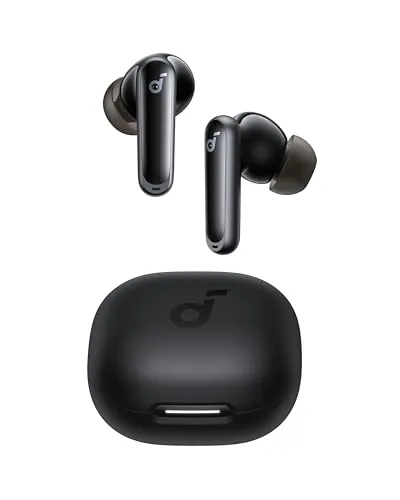
Soundcore P31i by Anker
- Strong overall performance for the price with high scores for performance and value.
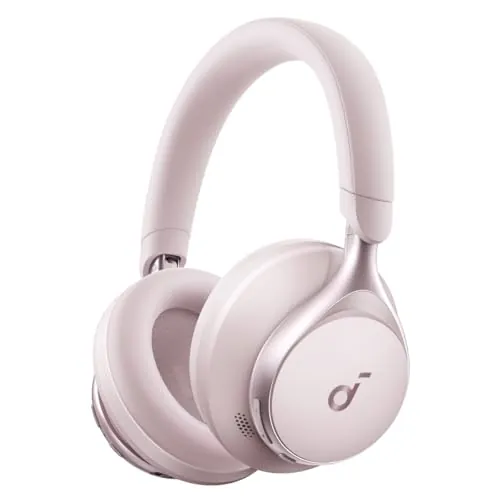
Comparison
Soundcore P31i and Soundcore Space One both land at the same overall score, but they target different buyers: pocketable in-ear earbuds vs comfortable over-ear headphones. P31i stand out for IP55 water resistance, very strong battery life with the charging case, and an explicit AI translation feature. Space One are the better pick if you prioritize over-ear comfort, easier everyday usability, and stronger connectivity scores.
#1 Overall Winner
Contender
Pick Soundcore P31i if you want compact earbuds with IP55 water resistance, very long total battery life with a case, and features like AI translation.
Pick Soundcore Space One if you want comfortable over-ear headphones for long sessions, easier day-to-day usability, and stronger connectivity scores with helpful travel accessories.
Overall winner
Depends on your needs
| Metric | Soundcore P31i | Soundcore Space One | Winner | Explanation |
|---|---|---|---|---|
| Type / fit | In-ear earbuds | Over-ear headphones | Depends | Earbuds favor portability; over-ears favor long-wear comfort for many users. |
| Overall score | 86 | 86 | Tie | Both are rated equally overall in the provided scoring. |
| Audio (LDAC / Hi-Res) | LDAC, Hi-Res certified | LDAC, Hi-Res wireless | Tie | Both support LDAC and score strongly for audio quality. |
| Noise cancelling approach | Real-time adaptive ANC (up to 52 dB stated) | Adaptive ANC with “voice reduction” emphasis | Depends | P31i highlight max reduction; Space One emphasize reducing voices/mid-high noise. |
| Battery life (rated) | Up to 10h per charge; 50h with case (ANC on: 8h/40h) | 40h with ANC on; 55h with ANC off | Soundcore P31i | P31i’s charging case pushes higher total runtime, and battery score is higher. |
| Charging | Fast charging (10 min = 3.5h stated) | 2-hour charge time stated | Soundcore P31i | P31i provide a specific short top-up listening claim for quick boosts. |
| Water resistance | IP55 | Not water resistant | Soundcore P31i | Clear advantage for rain/sweat scenarios. |
| Connectivity (scoring + BT version) | Bluetooth 6.1; connectivity score lower | Bluetooth 5.3; connectivity score higher | Soundcore Space One | Space One score better for connectivity and reviews mention easy multi-device use. |
| Controls | Touch controls | Buttons + app control | Depends | Touch is compact but can mis-trigger; buttons can be more consistent for some. |
| Portability | 59 g | 259 g | Soundcore P31i | Earbuds are much easier to carry and score higher for portability. |
| Review sentiment (themes) | Praised for sound/ANC/battery/value; mixed fit and connectivity | Praised for comfort/sound/ANC/battery; some reports of stopping working | Depends | P31i have more fit/connection variability; Space One have some reliability complaints but strong comfort praise. |
In real-world use, both products are positioned to deliver the two performance pillars most buyers care about in ANC audio: noise reduction and sound quality. The scoring is close (P31i slightly higher on performance), and both earn strong audio quality scores while supporting LDAC.
P31i highlight real-time adaptive ANC and provide a specific “up to 52 dB” claim, with reviews commonly praising how much they reduce road/ambient noise. Space One emphasize mid-to-high “voice” reduction and are repeatedly described as effective in cafés, offices, and travel scenarios, helped by the comfort of an over-ear fit for longer sessions.
“Speed” here mainly shows up as setup responsiveness and day-to-day handling rather than processing. Space One score higher in speed and setup, aligning with reviews that describe quick, easy use and convenient device handling.
P31i have more reports of early connection/setup friction, and at least one reviewer specifically recommended taking time to complete app integration and firmware updating to improve the experience. If you want the smoother start, Space One have the edge on the provided scoring.
Both products have mid-70s reliability scores, so neither is positioned as flawless. P31i have mixed connectivity feedback (some users report issues, while others say problems improved after proper setup/firmware updates). Space One have broad positive feedback, but the aggregated reviews mention some customers reporting the headphones stopping working, which is an important reliability flag.
If you’re risk-averse, it’s worth prioritizing a seller/return option you’re comfortable with and completing any recommended app/firmware steps early.
Space One rate higher for usability and setup, and customer feedback commonly describes them as comfortable and easy to connect, including use across more than one device. Physical buttons can also feel more predictable than touch controls for some users.
P31i get strong satisfaction overall, but usability is a more mixed area. Reviews mention that touch control placement can be easy to trigger when adjusting fit, and some users report initial connection/setup friction (with at least one reviewer noting that firmware/app setup improved the experience).
Design is primarily a form-factor choice here. P31i are compact, in-ear, and easy to carry, with a much lower weight listed. They can be a better day-to-day carry option, but fit can vary by ear shape, which shows up in mixed feedback.
Space One use an over-ear design with rotating ear cups and a soft headband for long wear. Reviews often praise comfort, but also note the headset can look and feel bulky compared with earbuds. If you plan to wear them for hours at a desk or on flights, Space One’s design focus is a key advantage.
Both products score similarly for build quality, with some recurring “value build” language in customer feedback. P31i are described as a good value and durable by some reviewers, but there are also concerns about the charging case feeling slick and questions about how well the lid will hold up to drops.
Space One also receive “plasticky” build comments, and a few reviews mention housing texture/rubbing noise in certain positions and concerns about pad removability/cleaning. If you’re hard on gear, P31i’s IP55 rating helps for moisture exposure, while Space One’s included case helps for transport protection.
Durability leans toward P31i for everyday exposure because they are rated IP55, and one reviewer even reported an accidental water drop incident without failure. That said, case durability is a concern in some feedback (slick plastic and worries about the lid after a hard hit).
Space One are not water resistant, which can limit how carefree you can be with them outdoors. Reviews also mention wear-related concerns like pad cleaning/replacement difficulty and discoloration on lighter colors.
Soundcore P31i are the clear portability winner: they’re in-ear earbuds with a compact charging case and a much lower listed weight. They also score very high for portability, making them better for pockets, small bags, and always-on-hand carry.
Soundcore Space One are over-ear and significantly heavier, with reviews describing them as bulkier. The included protective case helps with travel, but they’re still a larger item to pack and carry.
Soundcore P31i offer a notably broader feature mix for earbuds: adaptive ANC, LDAC, spatial audio, fast charging, IP55 water resistance, and an explicit real-time AI translation capability (100+ languages) that runs through the Soundcore app. They also emphasize call features with six AI-enhanced mics and wind-noise reduction.
Soundcore Space One focus on core headphone features: adaptive ANC tuned for voice reduction, LDAC Hi-Res wireless, app control, and long battery life. They also ship with travel-friendly extras (AUX cable and protective case), which can matter if you want a wired option on planes or with devices that benefit from a cable.
Both rely on the Soundcore app for customization (EQ, ANC modes, and related settings). Space One score higher for app experience and reviews mention helpful setup features like EQ customization.
P31i also use the app heavily, especially for translation and fine-tuning. Review feedback suggests that app setup and firmware updating can be important to get the best connectivity and overall experience, which can feel like extra work if you want a plug-and-play pair.
P31i score higher for smart features largely due to their explicit AI translation capability and app-driven modes like adaptive ANC and spatial audio. If you want earbuds that do more than the basics, this is a key advantage.
Space One focus more on the core listening experience—ANC, EQ/app control, and comfort—rather than a long list of “smart” extras. They still have app control, but the feature emphasis is simpler.
Space One score higher for setup, aligning with reviews that describe easy connection and straightforward use. The included accessories (case and AUX cable) can also simplify getting started for travel.
P31i setup is more variable. Some users connect easily, while others report early connection issues and recommend completing first-use steps (app download and firmware update) to stabilize the experience.
Both support common devices like phones and computers, but Space One list the broadest compatibility set in the provided specs (including gaming consoles) and score higher for compatibility. They also include an AUX cable, which can improve compatibility in situations where Bluetooth isn’t ideal (for example, some travel and wired use cases).
P31i list compatibility with cellphones, laptops, and tablets and have strong app-driven features, but may require more attention to setup for best results.
Audio is close on scoring: both products earn strong audio quality scores and both support LDAC for Hi-Res wireless listening. In reviews, P31i are commonly praised for clear sound with well-balanced treble/bass, with some users comparing favorably to more expensive earbuds while still acknowledging premium models can sound better.
Space One are also widely praised for sound quality and bass in day-to-day listening. A few reviewers note they may not match the bass emphasis of some premium competitors, but still describe the overall quality as strong for the price. If you listen for long stretches, the over-ear comfort of Space One can indirectly improve perceived sound by reducing fit fatigue.
Space One have the stronger connectivity score, and customer feedback often mentions easy connection and practical use across multiple devices. They list Bluetooth 5.3 and a 15-meter range in the provided specs.
P31i list Bluetooth 6.1, but the connectivity score is lower and reviews are more mixed—some find pairing easy, while others report connection issues or a more finicky initial setup. If stable day-to-day connectivity is your top concern, Space One look safer based on the score and aggregated review themes.
Both are standouts for battery life, but they win in different ways. P31i are rated for up to 10 hours per charge and 50 hours with the case (or 8/40 with ANC on), and also include a fast-charge claim (10 minutes for 3.5 hours). Space One are rated for 40 hours with ANC on and 55 hours with ANC off, with a 2-hour charge time listed.
If you want maximum total runtime in a pocketable kit, P31i lead. If you want over-ear comfort with long ANC-on endurance, Space One deliver.
Both score strongly for power efficiency and battery life, with long rated runtimes that align with customer feedback about not needing to charge often. P31i combine efficient earbuds with a charging case, which can reduce how often you need an outlet during the week. Space One emphasize long ANC-on playtime for over-ears, which is a key benefit for commuters and frequent travelers.
Both products are positioned as strong value choices, and both score very highly for value. P31i edge this category in scoring and customer themes, combining LDAC, strong ANC, very long total battery life, IP55 water resistance, and translation features at a lower listed price.
Space One remain excellent value if what you’re buying is comfort-first over-ear listening with strong ANC, long battery life, and included accessories. Value here is less about price alone and more about matching the form factor to your routine.
This is essentially a draw: both are Soundcore (Anker) products and carry the same brand trust score. Reviews for both products frequently frame Soundcore as delivering strong performance for the money, and both products show high overall customer satisfaction. If brand trust is your deciding factor, the bigger differentiators are form factor, features, and the specific reliability notes in reviews.
Both products score highly for customer satisfaction, with strong Amazon star ratings and substantial review volume. P31i have slightly higher satisfaction scoring and a 4.5/5 average rating, with repeated praise for sound, ANC, battery, and value—balanced by mixed fit and connectivity comments.
Space One have a very large review count and a 4.4/5 rating, with consistent praise for comfort, sound, ANC, and battery. The notable downside in aggregated feedback is occasional reports of the headphones stopping working, which can impact long-term satisfaction for some buyers.
Warranty/support detail is limited in the provided data, but the scoring indicates Space One have a slightly higher warranty/support score than P31i. Because exact terms aren’t provided, it’s smart to confirm return windows and support process at purchase—especially given the mention of occasional unit failures in Space One reviews and connectivity/setup friction in some P31i feedback.
If you’re picking one “best overall,” it’s a split decision because the overall score is a tie and the products serve different lifestyles. Soundcore P31i are the better all-around choice for most people who want portable ANC audio with long total battery life, IP55 water resistance, and extra features like real-time translation—provided you’re comfortable doing app/firmware setup and you get a good fit.
Soundcore Space One are the better choice when comfort and ease of daily use matter most. They’re a strong option for work and travel, with consistent praise for comfort, sound, ANC, and battery, plus stronger connectivity and setup scoring. If you dislike in-ear fit or want an over-ear experience for hours at a time, Space One may be the more satisfying pick.
Overall winner
Depends on your needs
Both score 86 overall in the provided scoring, so the better choice mostly comes down to form factor and priorities. Choose Soundcore P31i if you want an in-ear, IP55-rated option with a charging case and features like AI translation. Choose Soundcore Space One if you prefer over-ear comfort, included travel accessories, and stronger connectivity and setup scores.
Soundcore P31i lead on total runtime thanks to the charging case: up to 50 hours total (and up to 40 hours with ANC on). Soundcore Space One are rated for 40 hours with ANC on (55 hours with ANC off). If you want the longest overall time between outlet charges, P31i’s case-based approach is the key difference.
Both target commuting, but they approach it differently. Soundcore Space One emphasize voice reduction and are often praised for comfort and ANC during travel and noisy environments. Soundcore P31i offer adaptive ANC with a stated reduction up to 52 dB and are easier to carry. If comfort for long sessions is the priority, Space One stand out; if portability is the priority, P31i are the better fit.
On paper and in scoring, it’s close: both support LDAC and both have a strong audio quality score (90). The more practical difference is the form factor—over-ear designs like Space One can be more comfortable for long listening, while P31i are more portable. For LDAC use, also consider your phone/device support and app setup.
Soundcore Space One score higher for usability and setup, and reviews frequently mention easy connections and convenient multi-device use. Soundcore P31i get mixed feedback on fit and occasional connectivity/setup friction, and touch controls can be easy to trigger when adjusting the earbud. If you want a simpler daily experience, Space One have the edge.
Both are positioned for calls. Soundcore P31i highlight 6 AI-enhanced mics, AI noise reduction, and wind-noise reduction, and customers often report clear call performance. Soundcore Space One are also praised for clear calls in reviews, especially in work/visio use cases. If you take calls outdoors, P31i’s wind-noise focus and IP55 rating may be helpful.
Soundcore P31i are the safer pick for workouts and outdoor use because they are rated IP55. Soundcore Space One are listed as not water resistant, which makes them a riskier choice for sweat, rain, or humid environments. Comfort preferences still matter, but water resistance is the clearest differentiator here.
Soundcore P31i explicitly include real-time 100+ AI translation as a core feature, and customer feedback notes it can work well but may be “tricky” for some. For Soundcore Space One, translation is mentioned in at least one review with notes about lag, but it is not presented as a headline feature in the provided product details. For translation-first use, P31i are the clearer choice.
Both are rated as strong value options, but Soundcore P31i score slightly higher for value and are reviewed as “very good value for money,” especially considering the long battery life and feature set (ANC, LDAC, translation, IP55). Soundcore Space One also score very well for value, supported by many reviews praising comfort and ANC. Your best value depends on whether you prefer earbuds or over-ears.
Check our rankings and expert guides to find the best electronics products for your goals.