#1 Overall Winner
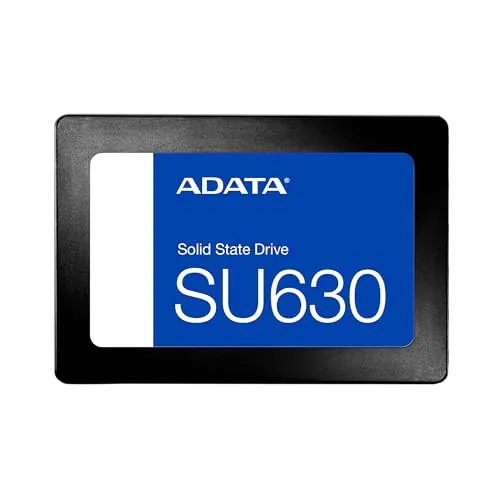
ADATA SU630 240GB SATA SSD
- Up to 520MB/s read and 450MB/s write specifications provide a substantial upgrade over a mechanical hard drive.
Comparison
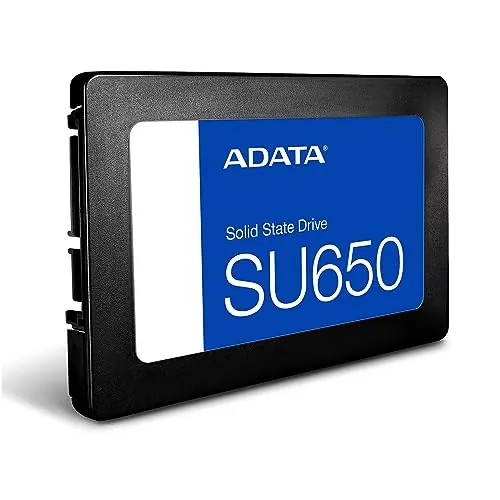
The ADATA SU630 240GB and ADATA Ultimate SU650 1TB are 2.5-inch SATA SSDs with the same listed 520MB/s read and 450MB/s write speeds. The SU650 is the stronger choice for buyers needing 1TB capacity and migration software, while the SU630 is a well-rated basic upgrade with stronger supplied reliability and compatibility scores.
#1 Overall Winner
Contender
Choose the ADATA SU650 1TB for significantly more storage, migration software, and a slightly stronger performance-oriented score profile. Choose the ADATA SU630 240GB for a simple general-use SATA upgrade when limited capacity is enough and its stronger reliability and compatibility scoring better matches your priorities.
Overall winner
Depends on your needs
| Feature | ADATA SU630 240GB SATA SSD | ADATA Ultimate SU650 1TB SATA SSD | Winner |
|---|---|---|---|
Capacity |
240GB |
1TB |
ADATA Ultimate SU650 1TB SATA SSD |
Form factor |
2.5-inch |
2.5-inch |
Tie |
Interface |
SATA 6Gb/s |
SATA 6Gb/s |
Tie |
Advertised read speed |
Up to 520MB/s |
Up to 520MB/s |
Tie |
Advertised write speed |
Up to 450MB/s |
Up to 450MB/s |
Tie |
NAND and protection |
3D QLC NAND |
3D NAND with LDPC error correction |
ADATA Ultimate SU650 1TB SATA SSD |
Migration software |
Not listed |
Free ADATA software listed |
ADATA Ultimate SU650 1TB SATA SSD |
Performance score |
79 |
82 |
ADATA Ultimate SU650 1TB SATA SSD |
Reliability score |
82 |
76 |
ADATA SU630 240GB SATA SSD |
Compatibility score |
85 |
80 |
ADATA SU630 240GB SATA SSD |
Customer rating |
4.7/5 from 9,944 reviews |
4.8/5 from 5,647 reviews |
ADATA Ultimate SU650 1TB SATA SSD |
Value score |
89 |
89 |
Tie |
Both SSDs list identical peak SATA throughput of up to 520MB/s read and 450MB/s write, and both are reported to improve booting and general responsiveness compared with mechanical drives. The SU650 holds a small performance-score advantage and has stronger capacity for data-heavy use, while the SU630’s reports are especially positive for basic operating-system and office-style upgrades. Neither should be selected for interface-leading performance; both are SATA-based drives.
The advertised speed specifications are equal: both list up to 520MB/s reads and 450MB/s writes. The SU650 receives a marginally higher speed score and reviewers cite fast booting and transfers, while SU630 owners also report a clear improvement over hard drives. In sustained or demanding work, expectations should remain appropriate for SATA storage rather than newer interface classes.
The SU630 has the stronger supplied reliability score and extensive positive feedback describing problem-free use. The SU650 also has many positive reliability reports, but its lower score and one customer overheating report introduce more caution. The overheating feedback is anecdotal and occurred alongside problematic Windows updates, so it should not be interpreted as proof of a universal issue. Important data should be backed up on either SSD.
This category is a tie on the supplied scores: both earn 90 for usability and 92 for setup. Reviews for both products describe uncomplicated installation and immediate recognition in compatible systems. The SU650’s listed migration software may simplify a replacement project for users cloning an existing drive, while the SU630 is also repeatedly described as a straightforward plug-in upgrade.
Both products are compact 2.5-inch internal SATA SSDs intended to replace or supplement conventional drive storage. The SU630 has a slightly higher design score, though the supplied information does not identify a major ergonomic or physical-layout advantage. In practical terms, capacity is the more significant design-related difference: the SU630 is a compact 240GB option, while the SU650 concentrates on 1TB storage in the same familiar form factor.
The SU630 has a slightly higher build-quality score, supported by listed shock resistance and a 1.5 million-hour MTBF figure. The SU650 is described in one review as having a plastic case, which is common for this class, and its supplied build score is slightly lower. There is not enough provided evidence to make a broad materials or long-term construction claim beyond those details.
Both products receive the same durability score. The SU630 lists 1500G shock resistance and a 1.5 million-hour MTBF, while the supplied SU650 information highlights low power use and vibration resistance. Neither product’s provided data establishes a clear long-term durability winner, and the absence of detailed warranty information makes regular backup practices especially important.
The SU650 has the higher portability score and lists a 30g weight, although both products are small 2.5-inch internal drives rather than standalone portable drives. Neither is supplied as an external storage solution; an appropriate enclosure would be needed for portable external use. For internal installation, the shared compact SATA form factor is the key practical factor.
The SU650 has the more complete listed feature set. It includes 1TB capacity, LDPC error correction, and free downloadable ADATA file-management and migration software. The SU630 provides 240GB and uses next-generation 3D QLC NAND to target affordability. Both have the same 2.5-inch SATA format and listed headline transfer speeds, but the SU650 offers more practical storage and upgrade tools.
The SU650 has the advantage because it explicitly includes free downloadable ADATA SSD file-management and data-migration software. No companion software or app experience is listed for the SU630. This difference matters most to users planning to clone or migrate an existing installation rather than perform a clean operating-system install.
Both SSDs are strong choices for straightforward installation, sharing a setup score of 92. Customer feedback for each frequently describes an easy install, quick recognition, and successful operating-system upgrades. The SU650’s listed migration software can help with a cloning workflow, while one SU630 review notes the absence of included mounting hardware. Check what your particular system needs before beginning.
The SU630 is the modest winner based on its higher compatibility score and review feedback that includes older BIOS and older-PC use. Both drives are 2.5-inch SATA internal SSDs intended for compatible desktops, and the SU630 specifications also mention PC and notebook hardware. Buyers should verify bay size, SATA connections, and any mounting requirements rather than assume fitment.
Connectivity is a tie. Both drives use SATA 6Gb/s hardware connectivity in a 2.5-inch internal format, so each needs a compatible SATA data connection and power connection in the host system. The SU630 has a slightly higher compatibility score, with reviews noting use in older systems, but the supplied connectivity scores are identical.
The SU630 has the higher supplied power-efficiency score. The SU650 is also described as having low power consumption, so both are suitable solid-state alternatives to mechanical storage where low noise and reduced moving parts are desired. The provided data does not include directly comparable power-draw figures, so the score difference is the clearest available distinction.
Both drives receive the same value score, and both have reviews describing good value. The SU630 is valuable for a limited-capacity, basic hard-drive replacement where its 240GB capacity is sufficient. The SU650 offers a different form of value through 1TB capacity, LDPC error correction, and migration software. The better choice is determined by whether the additional capacity will be used, not by price alone.
Both drives come from ADATA, so this is not a brand-versus-brand decision. The SU630 has a slightly higher supplied brand-trust score, while the SU650’s feedback includes repeat ADATA buyers and favourable comments about quality. The provided information does not include detailed support history, update policy, or warranty terms that would support a wider distinction.
Both products have very strong customer feedback. The SU650 has a 4.8/5 rating from 5,647 reviews and the higher customer-satisfaction score, with praise for capacity, installation, speed, and value. The SU630 has a 4.7/5 rating from a larger 9,944-review base and is consistently praised for value, easy installation, and improvements over hard drives. The SU650 wins narrowly on rating; the SU630 has more review volume.
This is a tie based on the available information. Both products have the same warranty-support score, but no detailed warranty duration, returns process, or after-sales support policy is provided. Buyers should verify the seller’s current coverage and return conditions before purchase, especially if the drive will store important data.
The ADATA Ultimate SU650 1TB is the best overall option for most buyers in this comparison. It matches the SU630’s listed 520MB/s read and 450MB/s write speeds, but adds far more capacity, migration software, LDPC error correction, and slightly stronger performance, speed, feature, portability, and customer-satisfaction scoring. It is the more adaptable choice for a main PC upgrade, game storage, or general file storage.
The ADATA SU630 240GB remains a worthwhile alternative when storage needs are modest. It has stronger supplied reliability, compatibility, power-efficiency, build-quality, design, and brand-trust scores, and its reviews support use as an affordable replacement for an old hard drive. Neither SSD is intended to lead newer storage classes in throughput, and both should be used with regular backups for important data.

Overall winner
Depends on your needs
Neither is a universal winner because their core advantage differs. The SU650 is the more practical choice for users who need 1TB of space, migration software, and slightly stronger performance-related scoring. The SU630 is a sensible choice for a basic 240GB upgrade, with stronger reliability and compatibility scores and positive feedback for older-system upgrades.
No. Both products list read speeds up to 520MB/s and write speeds up to 450MB/s, so their headline sequential-speed specifications are the same. The SU650 has a marginally higher speed score, but capacity and included software are more meaningful practical differences than the quoted maximum transfer figures.
The SU650 is generally the more convenient option for game storage because its 1TB capacity leaves far more space for a library of installed games. Both drives use the same 2.5-inch SATA format and list the same headline read and write speeds, so the principal advantage is capacity rather than a large specified speed difference.
Yes, the supplied feedback supports that use case. Reviews describe successful installation in older laptops and PCs, quicker booting, and compatibility with older BIOS systems. Its 240GB capacity and QLC design make it most appropriate for operating systems, documents, browsing, and ordinary use rather than repeated heavy-write workloads.
This is effectively a tie. Both products receive a setup score of 92 and a usability score of 90, while reviews repeatedly describe installation as easy. Before purchasing, confirm that the computer has an available 2.5-inch SATA bay and the appropriate SATA data and power connections.
The ADATA SU650 offers 1TB of storage, while the ADATA SU630 in this comparison offers 240GB. That makes the SU650 the better fit for users storing large game libraries, backups, applications, or media. The SU630 remains adequate when a smaller operating-system or basic-use drive is all that is required.
The supplied data points more clearly toward general PC use than demanding, continuous write workloads. The SU630’s QLC design is specifically framed as an economy option for normal laptop or desktop use. For either drive, maintain backups, particularly when storing important files or using storage in workloads involving frequent large transfers.
The SU650 has generally positive reliability feedback and a reliability score of 76, with many reviews reporting trouble-free operation. One review reported overheating during problematic Windows updates. That isolated report should be considered, but it does not outweigh the broader positive feedback; sensible airflow and regular backups remain advisable.
}],Both products receive the same value score of 89, so value depends on the required capacity. The SU630 is compelling where 240GB is enough for a basic upgrade. The SU650 can be the more useful purchase for buyers who need 1TB, included migration software, and room for files or games, rather than needing to add another drive sooner.
Check our rankings and expert guides to find the best electronics products for your goals.