#1 Overall Winner
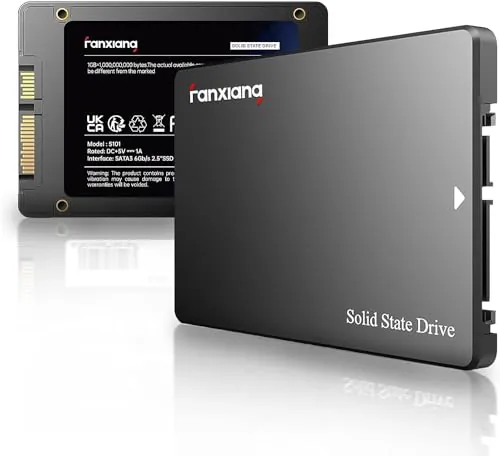
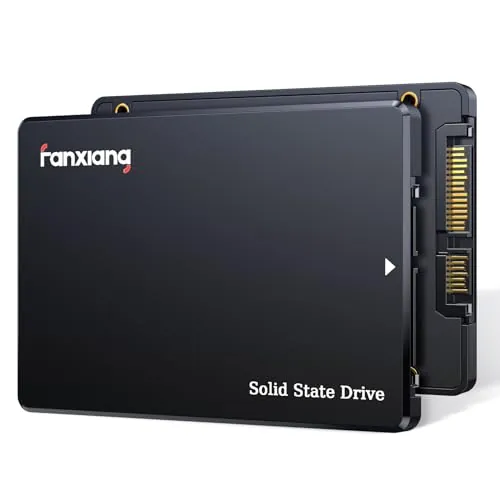
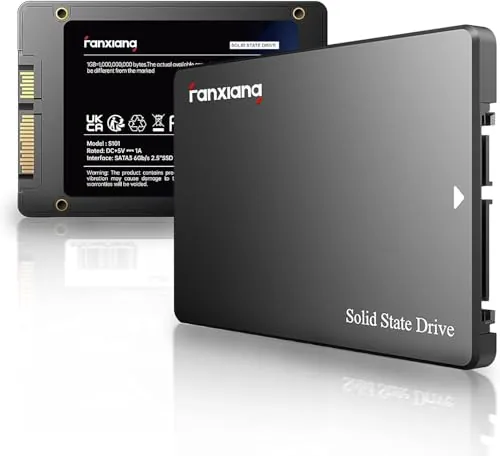
fanxiang S101 128GB SSD
- 128GB 2.5-inch SATA III SSD format for upgrading compatible laptops and desktops.
Comparison
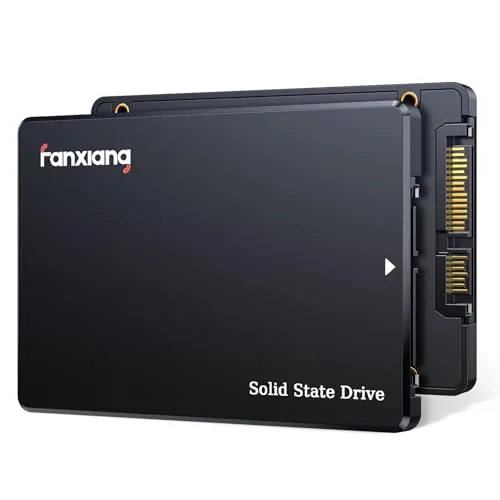
The fanxiang S101 128GB and S101Q 256GB are 2.5-inch SATA SSDs designed to replace slower hard drives in compatible computers. The S101Q is the stronger all-round option, with twice the capacity, slightly faster listed speeds, more detailed drive-management features, and a higher overall score. The S101 remains relevant for light storage needs and a lower initial purchase price.
#1 Overall Winner
Contender
Choose the S101Q 256GB for the better-balanced SATA upgrade: it provides more capacity, higher listed transfer figures, and stronger scores in most relevant areas. Choose the S101 128GB for a basic boot-drive replacement or light-use computer where a smaller capacity is acceptable and the lower listed price is more important. In either case, verify 2.5-inch SATA compatibility and maintain backups.
Overall winner
Depends on your needs
| Feature | fanxiang S101 128GB SSD | fanxiang S101Q 256GB SATA SSD | Winner |
|---|---|---|---|
Capacity |
128GB |
256GB |
fanxiang S101Q 256GB SATA SSD |
Read speed |
Up to 500MB/s |
Up to 530MB/s |
fanxiang S101Q 256GB SATA SSD |
Write or media speed |
350MB/s listed media speed |
Up to 420MB/s write |
fanxiang S101Q 256GB SATA SSD |
Interface and form factor |
2.5-inch SATA III 6Gb/s |
Tie |
NAND and cache details |
3D NAND TLC |
3D NAND with SLC cache |
Depends |
Listed drive-management features |
Not detailed |
TRIM, S.M.A.R.T., ECC, RAID, wear leveling, garbage collection |
fanxiang S101Q 256GB SATA SSD |
Overall score |
71 |
74 |
fanxiang S101Q 256GB SATA SSD |
Setup |
Strong; score 80 |
Stronger; score 88 |
fanxiang S101Q 256GB SATA SSD |
Compatibility |
Mixed review feedback; score 56 |
Higher score 83 |
fanxiang S101Q 256GB SATA SSD |
Reliability |
Mixed feedback; score 54 |
Some concerns; score 61 |
fanxiang S101Q 256GB SATA SSD |
Warranty or service |
3-year quality assurance |
3-year after-sales service and lifetime technical support |
fanxiang S101Q 256GB SATA SSD |
Amazon rating |
4.5/5 from 23,083 reviews |
4.5/5 from 5,646 reviews |
Tie |
Listed price |
32.99 |
49.99 |
fanxiang S101 128GB SSD |
Value score |
79 |
84 |
fanxiang S101Q 256GB SATA SSD |
Both drives are designed to make a compatible system feel more responsive than it would with a traditional hard disk, and reviews for both describe faster booting and application loading after an upgrade. The S101Q has a narrow specification advantage, listing up to 530MB/s read and 420MB/s write compared with the S101's up-to-500MB/s read and listed 350MB/s media speed. The performance scores are close, but the S101Q leads. For basic web, office, and boot-drive use, either can be a meaningful HDD replacement; the S101Q offers more headroom for transfers and a larger working installation.
The S101Q has the better listed speed specification, with up to 530MB/s reads and 420MB/s writes. The S101 lists up to 500MB/s read performance and a 350MB/s media speed, although it has the slightly higher supplied speed score. In practical terms, both are constrained by the SATA interface and should offer a substantial step up from a hard drive for booting and routine file access. The S101Q is the clearer choice for buyers comparing the disclosed transfer figures, while the scoring suggests the difference may not determine every everyday workload.
Reliability is the main area where buyers should remain cautious with both drives. The S101Q has the higher reliability score, and many users report normal operation, but there are also reports of failure within months and concerns in one review relating to larger-capacity variants. The S101 receives more mixed feedback, including reports of failures after use and drives not being recognized. The S101Q is the better-rated option here, not a guarantee of trouble-free long-term service. Keep verified backups of important files regardless of the choice.
Both SSDs are conventional 2.5-inch internal SATA drives, so the physical upgrade process is similar when the host computer has the required bay and connectors. Reviews commonly describe each as easy to install, especially when replacing an older hard drive. The S101Q has the higher usability and setup scores, supported by reports of straightforward drop-in installation. The S101 can also install easily, but its mixed drive-recognition feedback means users may need to check BIOS or UEFI settings, cabling, formatting, and cloning steps more carefully.
Both products use a compact 2.5-inch internal SATA form factor intended for installation inside a compatible device or in a suitable SATA enclosure. The S101Q is listed as 7mm thick, while the S101 dimensions are provided differently and do not establish a directly comparable thickness. The S101Q has the higher design and portability scores, but both are practical alternatives to bulkier mechanical drives. Check drive-bay clearance and the required SATA power and data connections before purchase.
The S101Q has the stronger build-quality score and is listed with a polycarbonate enclosure and shock-resistant characteristics. Reviewers also describe it as well made, although long-term observations remain mixed. The S101 has a lower build-quality score and a less detailed enclosure description, though it is described as a solid-state drive and some reviews say it runs cool and quietly. Neither product's supplied data supports a definitive long-term construction claim, but the S101Q has the advantage in the available information.
The S101Q leads on durability scoring and explicitly lists shock resistance, plus wear-leveling and other data-management technologies. The S101's listing highlights TLC NAND as offering a longer write lifespan than QLC, but it has a lower durability score and more mixed reliability reports. Both solid-state designs avoid moving hard-drive parts, which is useful for a system upgrade, but the supplied information does not establish endurance ratings. The S101Q is the stronger pick based on the data, while backups remain essential.
Both are small 2.5-inch SSDs that can be installed internally or used externally with a compatible SATA-to-USB enclosure. The S101Q has the higher portability score and is listed at 1.6 ounces with a 7mm profile. The S101 is also lightweight according to its listing, but its provided dimensions are less typical for a direct physical comparison. Either is far easier to transport than a larger desktop hard drive, though an enclosure and cable add to external-use convenience.
The S101Q has the broader stated feature set. Its listing identifies 3D NAND, SLC cache, garbage collection, wear leveling, RAID, ECC, TRIM, S.M.A.R.T., and shock resistance. The S101 instead emphasizes its 3D NAND TLC chips, basic SATA III performance, and cross-platform compatibility. The S101Q's feature score is higher because its product details provide more explicit management, monitoring, and protection functions. Buyers who want a simple SATA replacement may not need every listed function, but the S101Q is more fully specified.
The S101Q wins setup based on its higher score and frequent review reports of easy replacement in older laptops and desktops. The S101 is also often described as straightforward to install, clone, and boot from. With either drive, setup can involve opening the device, connecting SATA power and data, initializing or formatting the drive, installing an operating system or cloning an existing disk, and checking BIOS or UEFI recognition. The S101's mixed recognition feedback makes those checks especially important.
Both drives are listed for desktops, laptops, all-in-one PCs, and multiple operating systems, but the S101Q is the stronger compatibility choice in the supplied scoring. The S101Q also states backward compatibility with SATA II and SATA interfaces. S101 reviews include reports that some computers or adapters did not recognize the drive, even though other users had no mounting issues. Before buying either, verify that the target device uses a 2.5-inch SATA drive rather than M.2 or NVMe storage and check whether brackets, cables, or adapters are needed.
Both drives use SATA III 6Gb/s connectivity and are backward compatible with older SATA generations according to the S101Q listing. Both are intended for compatible desktop, laptop, and gaming-console use, and both list Windows, Linux, and Mac OS compatibility. The S101Q scores substantially higher for connectivity and compatibility. This matters because some S101 feedback reports that a system or adapter did not fully recognize the drive, whereas the S101Q has more favorable integration feedback overall. Actual results still depend on the host device, cables, enclosure or adapter, and initialization.
The S101Q has the higher power-efficiency score, while both drives should offer the operational benefits of solid-state storage over a mechanical hard drive in a compatible system. The S101Q's stronger overall hardware scores support the advantage in this comparison, but the provided data does not include measured power draw, idle consumption, or thermal figures for either model. Buyers should treat the scoring difference as directional rather than as a quantified battery-life estimate.
The S101 has the lower listed price, but the S101Q has the higher value score. That result is reasonable because the S101Q doubles capacity, lists slightly higher speeds, supplies a broader feature set, and scores better for compatibility, setup, and customer satisfaction. The S101 can still be good value for a narrowly defined need: a basic 128GB boot drive for a light-use system. For most users, 256GB provides more practical room for software and updates, making the S101Q the more rounded value despite its higher listed price.
Both products come from fanxiang, so there is no brand-versus-brand advantage. The S101Q receives a slightly higher brand-trust score, but both scores are moderate and both listings include mixed reliability-related feedback. The provided data supports judging the products more by their capacity, listed features, compatibility, and review patterns than by a major difference in manufacturer confidence. Read the current listing terms and keep backups when using either drive for important data.
Both drives have a supplied Amazon rating of 4.5 out of 5. The S101 has a much larger review count, while the S101Q has the higher customer-satisfaction score. Positive feedback for both commonly focuses on faster boots, easy installation, and good perceived value. The recurring caution is reliability: S101 reviews include recognition and failure reports, while S101Q reviews include some early-failure and capacity concerns connected to the wider listing. The S101Q leads in the scoring, but neither product has uniformly positive long-term feedback.
Both listings state three-year coverage. The S101 includes a three-year quality assurance statement, while the S101Q lists three years of after-sales service and lifetime technical support. The warranty-support scores are equal, so the information does not prove a material support-performance difference. The S101Q's wording is broader because it explicitly mentions lifetime technical support. Buyers should confirm the applicable current terms, seller, and return process before purchase.
The fanxiang S101Q 256GB is the best overall option in this comparison. It scores higher overall and provides double the capacity, slightly stronger listed transfer speeds, more detailed storage-management features, and better supplied scores for setup, compatibility, durability, power efficiency, value, and customer satisfaction. It is the safer default recommendation for most compatible laptop or desktop upgrades. The fanxiang S101 128GB remains a valid alternative for a light-use system where 128GB is sufficient and the lower listed price is the deciding factor. It also explicitly identifies TLC NAND in its product details and receives strong feedback for boot-speed improvements. Neither drive has flawless reliability feedback, however. The S101Q leads rather than eliminates that concern, so users should confirm hardware compatibility, install carefully, and maintain backups of important data.
Overall winner
Depends on your needs
The fanxiang S101Q 256GB is the stronger overall choice in the provided scoring, with advantages in capacity, features, setup, compatibility, value, and overall score. The S101 128GB still makes sense for a basic, lower-cost SATA upgrade when 128GB is enough and its stated TLC NAND is a priority.
The S101Q has 256GB of stated capacity, double the 128GB offered by the S101 in this comparison. That additional space is useful for an operating system, applications, updates, and personal files. The 128GB S101 is better suited to light storage needs or a basic operating-system installation.
The S101Q has the higher listed maximum speeds: up to 530MB/s read and 420MB/s write. The S101 lists up to 500MB/s read and a 350MB/s media speed. Both are SATA III drives intended to improve responsiveness substantially compared with a mechanical hard drive in a compatible computer.
Both products are 2.5-inch internal SATA SSDs, and reviews for each commonly describe installation as straightforward. The S101Q has the stronger setup score. Before ordering, confirm that the device has a 2.5-inch SATA bay or an appropriate adapter, and verify that its firmware settings can recognize a SATA drive.
The S101Q 256GB is the more flexible option for an old laptop because it combines higher stated speeds with double the capacity and stronger compatibility and setup scores. The S101 128GB can still be a sensible choice for a light-use machine when storage requirements are limited and the laptop supports a 2.5-inch SATA drive.
Both listings state compatibility with Windows, Linux, and Mac OS. Actual use still depends on the computer having compatible 2.5-inch SATA hardware and on correctly initializing, formatting, or installing the drive where necessary. Review feedback for the S101 includes some recognition issues, while the S101Q scores higher for compatibility.
The S101Q has the higher reliability score, but neither model has completely uniform reliability feedback. Reviews for the S101 mention occasional failures and recognition problems. Reviews for the S101Q include some reports of early failure and concerns associated with other capacities. Keep important data backed up regardless of the selected drive.
The S101Q earns the higher value score because it offers twice the stated capacity, slightly higher listed speeds, and a broader listed feature set. The S101 is listed at a lower purchase price and remains a practical value choice only when 128GB is sufficient. Storage needs, compatibility, and data-backup practices should guide the decision.
Check our rankings and expert guides to find the best electronics products for your goals.