#1 Overall Winner
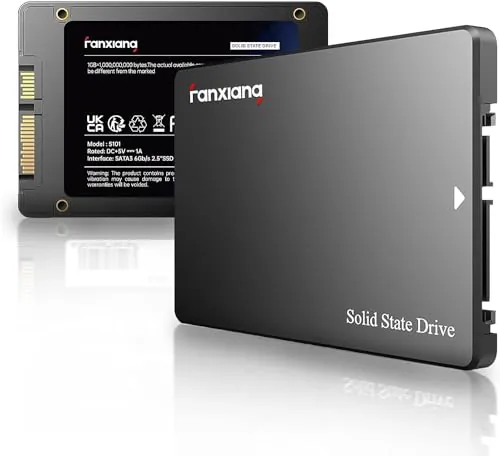
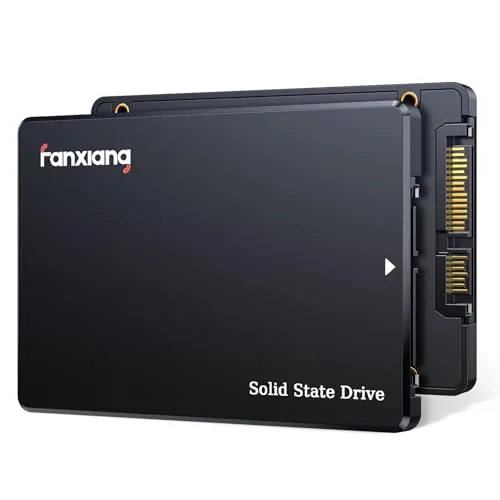
fanxiang S101 1TB SSD
- 1TB capacity provides substantially more space than the S101Q 256GB model.
Comparison
The fanxiang S101 1TB and fanxiang S101Q 256GB are 2.5-inch SATA SSDs designed to replace slower hard drives in compatible computers. The S101 is the capacity and speed-score choice, while the S101Q earns the higher overall score through stronger setup, compatibility, usability, and efficiency results.
#1 Overall Winner
Contender
Choose the fanxiang S101 1TB for storage-heavy laptop or desktop upgrades and stronger supplied speed results. Choose the fanxiang S101Q 256GB for an easier, more compatibility-focused boot-drive upgrade when 256GB is enough. Both require a compatible 2.5-inch SATA connection.
Overall winner
Depends on your needs
| Feature | fanxiang S101 1TB SSD | fanxiang S101Q 256GB SSD | Winner |
|---|---|---|---|
| Overall score | 72 | 74 | fanxiang S101Q 256GB SSD |
| Capacity | 1TB | 256GB | fanxiang S101 1TB SSD |
| Read speed | Up to 550MB/s listed | Up to 530MB/s listed | fanxiang S101 1TB SSD |
| Listed write or media speed | 480MB/s media speed | Up to 420MB/s write | fanxiang S101 1TB SSD |
| Performance score | 82 | 79 | fanxiang S101 1TB SSD |
| Usability and setup | 80 usability; 78 setup | 86 usability; 88 setup | fanxiang S101Q 256GB SSD |
| Compatibility | 58 | 83 | fanxiang S101Q 256GB SSD |
| Reliability | 55 | 61 | fanxiang S101Q 256GB SSD |
| Flash and management features | 3D NAND TLC; hardware encryption listed | 3D NAND, SLC cache, ECC, TRIM, S.M.A.R.T., RAID and wear leveling listed | fanxiang S101Q 256GB SSD |
| Portability | 0.13lb; 82 score | 1.6oz; 78 score | fanxiang S101 1TB SSD |
| Power efficiency | 72 | 82 | fanxiang S101Q 256GB SSD |
| Customer satisfaction | 4.5/5 from 23,083 reviews | 4.5/5 from 5,646 reviews | Tie |
| Support coverage | 3-year service; lifetime technical support | 3-year service; lifetime technical support | Tie |
The S101 has the edge for raw stated performance, with higher performance and speed scores and a listed read speed of up to 550MB/s. The S101Q lists up to 530MB/s reads and 420MB/s writes, which remains within typical SATA SSD territory and is supported by reviews describing faster older PCs. Both are intended to make a larger practical difference versus an HDD than between each other. The S101 is preferable for buyers prioritizing the supplied speed results, while the S101Q emphasizes a more balanced upgrade experience.
The S101 leads the supplied speed scoring, 83 to 80, and lists up to 550MB/s read speed compared with up to 530MB/s for the S101Q. Its stated 480MB/s media speed is also above the S101Q's stated 420MB/s write speed, although those specification labels are not identical. In practical terms, both are SATA SSD upgrades rather than high-bandwidth NVMe drives, and both have review evidence of faster boot and loading behavior than HDDs.
Neither SSD is free of reliability caution. The S101 receives a lower reliability score and has reports of drive failure or recognition problems, although many customers report normal operation. The S101Q scores somewhat higher and has many positive reports, but its reviews also include early-failure reports and a serious complaint about capacity and stability on a different 4TB variant. Back up important data regardless of which model is chosen.
The S101Q wins for usability based on the supplied scores and review pattern. Buyers often describe a direct replacement process and rapid improvement in older systems. The S101 is also frequently described as easy to install, but its feedback includes more reports of problems with cloning, initialization, formatting, or external-adapter recognition. For a first SSD upgrade, the S101Q has the stronger evidence of lower setup friction.
Both drives use the same practical 2.5-inch internal SATA form factor, making them suited to standard laptop and desktop drive bays. The S101 is listed at 3.94 by 2.72 by 0.28 inches and 0.13 pounds. The S101Q is listed at 3.94 by 2.76 by 0.28 inches and 1.6 ounces. Their design scores are equal, so the key physical decision is not appearance but whether your device supports a 2.5-inch SATA drive.
The S101Q has the higher build-quality score and is described in some reviews as well-made. It uses a polycarbonate enclosure and lists shock resistance. The S101 uses an ABS+PC enclosure and has a lower build-quality score. Neither listing provides detailed information about internal construction beyond their stated flash technology, so this comparison should not be treated as a long-term durability guarantee.
The S101Q has the higher durability score and lists a shock-resistant design, while its supplied feature list includes wear leveling and ECC. The S101 uses 3D NAND TLC and is described as aiming for a longer write lifespan than QLC in its listing. However, both products have mixed reliability feedback, so the available data does not support a definitive long-term durability claim for either model.
Both products are slim, lightweight 2.5-inch drives that are easy to carry and can be used in an appropriate external SATA enclosure. The S101 has the higher portability score and a listed weight of 0.13 pounds, while the S101Q is listed at 1.6 ounces. This difference is unlikely to be decisive for internal installation; storage capacity and compatibility are more important deciding factors.
The S101 lists 3D NAND TLC and hardware encryption among its supplied specifications. The S101Q has a broader stated feature set: 3D NAND, SLC cache, garbage collection, wear leveling, RAID, ECC, TRIM, and S.M.A.R.T. support, plus shock resistance. These specifications give the S101Q the feature advantage on paper, although the S101's TLC claim may appeal to buyers specifically evaluating flash type. Both include three years of after-sales service and lifetime technical support.
The S101Q has the advantage for setup, with the higher setup score and frequent review praise for quick installation in older systems. The S101 can also be simple to fit, and reviews describe successful cloning and quick boots, but its setup feedback is less consistent. Users moving an existing system should plan their cloning or clean-install process in advance and ensure the drive is initialized and detected correctly.
The S101Q is the clear score-based winner for compatibility. It explicitly lists backward compatibility with SATA II and SATA, while also listing Windows, Linux, Mac OS, laptops, desktops, and all-in-one computers. The S101 lists similar device and operating-system support but has a much lower compatibility score because some reviews describe recognition issues. In either case, verify the interface, physical bay, cable, and firmware settings before purchase.
Both drives connect through SATA 6Gb/s and are intended for internal use in compatible computers. The S101Q explicitly states backward compatibility with SATA II and SATA, contributing to its higher compatibility score. Both listings state support for Windows, Linux, and Mac OS, but the S101 has more mixed customer reports of system recognition. External use depends on the enclosure or adapter selected, not the drive alone.
The S101Q has the stronger power-efficiency score, 82 versus 72. Both are solid-state drives, so neither has the spinning mechanism of an HDD, but the supplied data does not provide measured power-consumption figures. The score advantage supports choosing the S101Q where efficiency is a priority, while it should not be interpreted as a precise runtime difference for any particular laptop.
Both drives score highly for value and receive review praise for revitalizing older computers. The S101 has a slight value-score advantage and supplies 1TB rather than 256GB, making it compelling for buyers who will use the added capacity. The S101Q remains a strong value for smaller boot-drive upgrades because it combines easy setup, broad stated compatibility, and a more complete listed feature set. Reliability feedback should be weighed alongside capacity and performance.
Both products are from fanxiang and have moderate brand-trust scores, with the S101Q slightly ahead. The listings provide the same stated three-year after-sales service and lifetime technical support. However, customer feedback for both includes questions about reliability, and one S101Q review reports uncertainty about flash details on another variant. Buyers who prioritize brand confidence should review the exact listing, seller, support terms, and recent reviews before ordering.
Both drives have a supplied 4.5 out of 5-star rating and equal customer-satisfaction scores. The S101 has a much larger review count, 23,083 versus 5,646, and its recurring praise centers on speed, capacity, value, boot times, and installation. The S101Q reviews similarly praise performance and easy upgrades. Both review sets also include isolated but important negative reports related to reliability, recognition, or capacity.
The stated support offering is effectively tied. Both listings promise three years of after-sales service and lifetime technical support. The provided data does not explain warranty exclusions, return handling, replacement timelines, or whether support varies by retailer or region. Confirm the current terms on the exact purchase listing, especially if the SSD will be used for important files or as a system drive.
The fanxiang S101Q 256GB is the best overall option in this comparison because it has the higher overall score and stronger results for usability, setup, compatibility, reliability, build quality, durability, and power efficiency. It is the more balanced pick for a basic SATA system-drive replacement where 256GB is enough.
However, the fanxiang S101 1TB is often the more practical purchase for buyers who need storage space. Its 1TB capacity is substantially more flexible, and it leads the supplied performance and speed scores. It is the better fit for larger libraries and files, but its mixed recognition and reliability reports deserve attention. Both are 2.5-inch SATA drives with similar stated support coverage and positive HDD-upgrade feedback. The final choice should come down to whether you need capacity and speed headroom or the S101Q's stronger setup and compatibility profile.

Overall winner
Depends on your needs
The fanxiang S101Q 256GB has the higher overall score, driven by stronger usability, setup, compatibility, reliability, and power-efficiency results. The fanxiang S101 1TB remains the better fit when storage capacity and the higher speed and performance scores matter more, provided its mixed reliability and recognition feedback is acceptable.
The fanxiang S101 has 1TB of capacity, while the S101Q model compared here has 256GB. That makes the S101 the more practical choice for larger game installations, media collections, or files that would quickly exceed a 256GB system drive. The S101Q is better suited to lighter storage requirements.
The S101 leads on the supplied performance and speed scores. Its listing specifies up to 550MB/s read speed and 480MB/s media speed, while the S101Q lists up to 530MB/s reads and 420MB/s writes. Both are SATA SSDs intended to improve responsiveness substantially compared with an older mechanical hard drive.
The S101Q is the stronger choice for installation convenience based on its higher usability and setup scores. Reviews commonly describe it as easy to install in older computers. The S101 also receives positive installation feedback, but some buyers reported cloning, formatting, or drive-recognition issues that may require more troubleshooting.
Both listings state compatibility with laptops, desktops, and all-in-one PCs, along with Windows, Linux, and Mac OS. They are 2.5-inch SATA drives, so buyers should first confirm that their device has an available compatible SATA connection and physical drive bay. Neither listing identifies these drives as NVMe products.
The S101Q has the higher reliability score, but neither drive has unqualified reliability feedback. Reviews of both products include positive long-term or normal-use reports alongside some reports of failure. The S101 also has mixed recognition feedback, while an S101Q review raises capacity concerns about a different 4TB variant rather than the 256GB model compared here.
Either drive can be a useful replacement for a compatible hard disk, and reviews for both describe faster boots and improved everyday responsiveness. Choose the S101Q for a simpler, smaller-capacity system-drive upgrade. Choose the S101 when an old PC needs substantially more room for applications and files as well as stronger speed scores.
Both product listings state that fanxiang provides three years of after-sales service and lifetime technical support. This is useful for installation questions, but buyers should review the current seller terms and return conditions before purchase. The supplied data does not provide further details about replacement procedures or coverage exclusions.
Check our rankings and expert guides to find the best electronics products for your goals.